
The difference between formal and informal landscapes comes down to geometry. A formal garden uses symmetry, straight lines, and plants clipped into shapes, usually arranged along a central axis. An informal garden uses curves, balance without symmetry, and plants left closer to their natural form. Most home gardens end up somewhere in between, and knowing what makes each style work helps you decide where yours should sit.
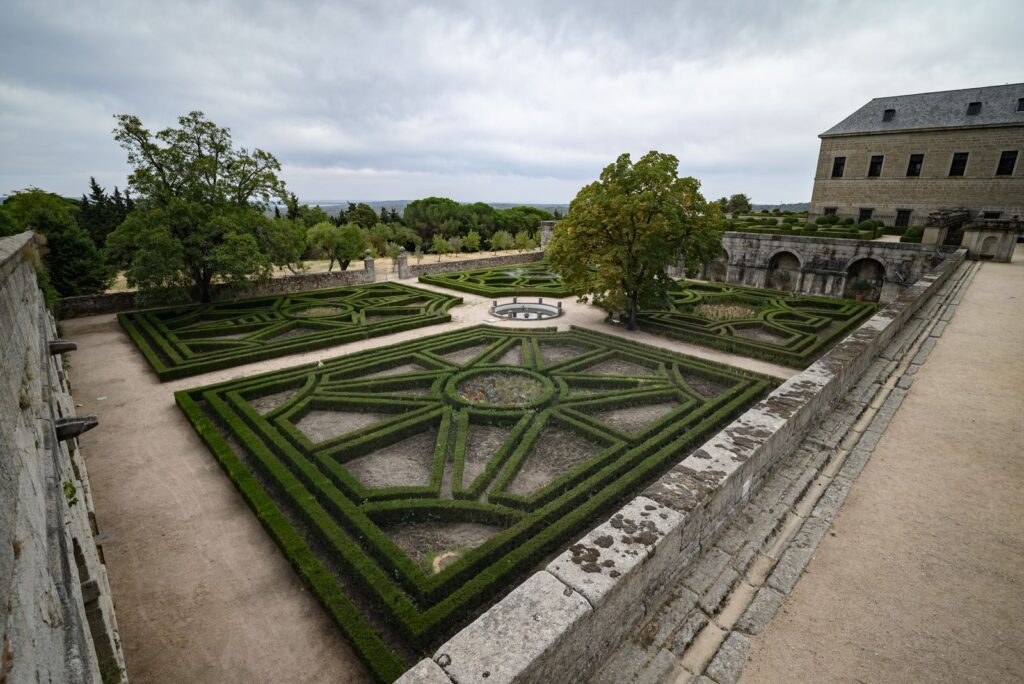
Formal vs. Informal Gardens at a Glance
| Formal | Informal | |
|---|---|---|
| Layout | Symmetrical, often mirrored on a central axis | Asymmetrical but balanced |
| Lines | Straight paths, rectangles, circles | Curving beds and paths |
| Plants | Clipped hedges, topiary, repeated plants | Mixed perennials, shrubs, and grasses in natural shapes |
| Color | Restrained, often green with one or two flower colors | Looser, often more varied |
| Hardscape | Cut stone, brick, gravel, fountains, urns | Natural stone, gravel, wood, bark |
| Upkeep | Regular clipping to hold the shapes | Editing and dividing, but less precise work |
| Suits | Symmetrical, traditional houses | Cottages, ranches, informal or modern houses |
What Makes a Garden Formal
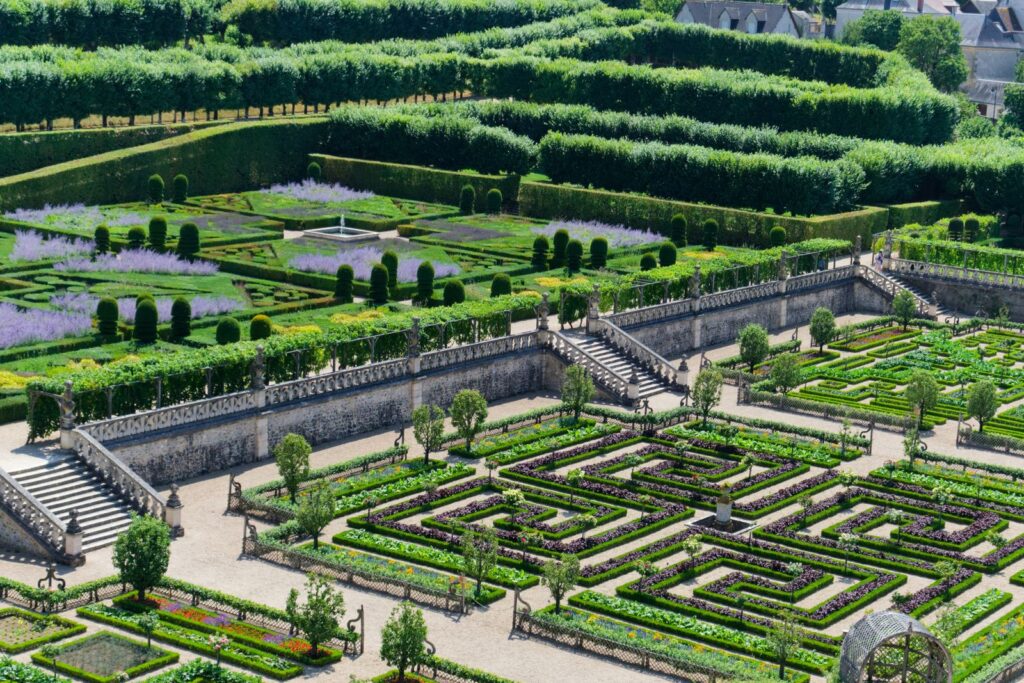
Formal gardens impose order on a landscape. The classic example is Versailles, which the Palace of Versailles credits to André Le Nôtre, gardener to Louis XIV. He arranged the grounds around two great axes, with clipped groves, fountains, and parterres laid out in geometric compartments. Italian Renaissance gardens use the same ideas on terraced hillsides.
The features that make a garden read as formal are:
- A central axis. A straight path or view line runs from the house or a gate to a focal point, with matching elements on each side.
- Clipped evergreens. Boxwood, yew, holly, and hornbeam take hard pruning and hold a crisp shape all year.
- Parterres. Low hedges planted in patterns, with gravel or flowers filling the spaces between them.
- Repetition and a short color palette. The same plant in matching pairs or rows, and few flower colors.
- A clear focal point. A fountain, urn, statue, or bench at the end of the axis.
You don’t need a palace for this. A pair of matching planters by the front door, a straight path to the step, and a low clipped hedge around a rectangle of lawn are enough to make a small front yard look formal.
What Makes a Garden Informal
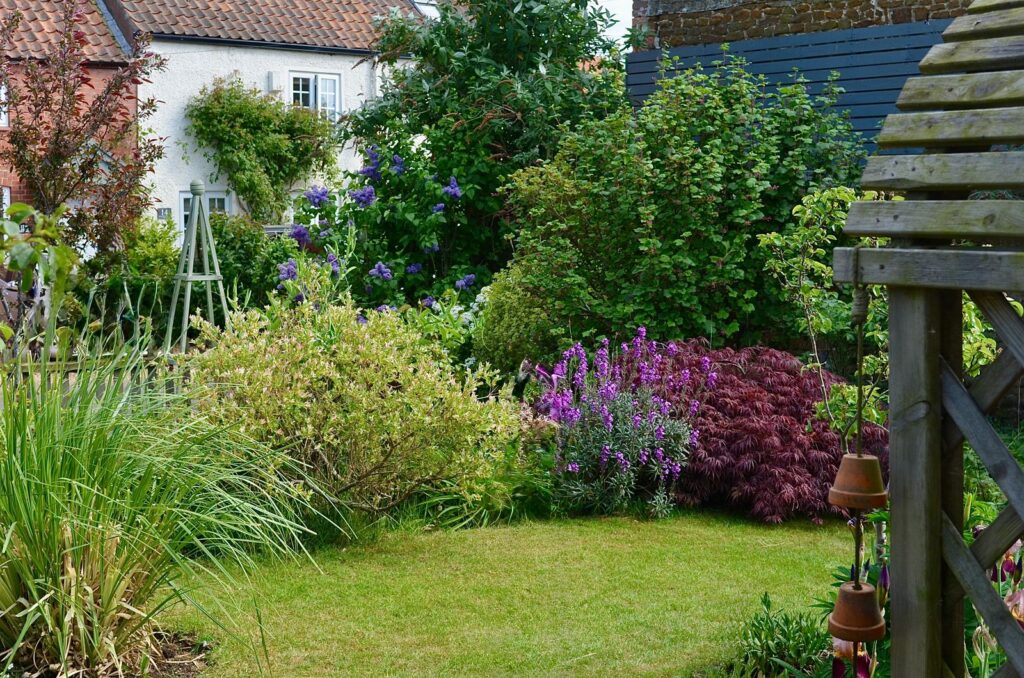
Informal gardens take their cues from nature. In 18th-century England, designers such as Lancelot “Capability” Brown swept away geometric gardens in favor of rolling lawns, curving lakes, and loose clumps of trees, the style now called the English landscape garden. The cottage garden is a smaller, much busier informal style, with flowers, herbs, and shrubs packed together. Today’s naturalistic and prairie-style plantings are informal too, built from grasses and long-blooming perennials in drifts.
- Curves. Beds and paths bend around trees and open into lawn or seating areas.
- Balance without symmetry. A large shrub on one side might be balanced by a group of smaller ones on the other.
- Plants in natural shapes. Shrubs are pruned to stay healthy, not into geometric forms, and perennials are planted in drifts rather than rows.
- Natural materials. Fieldstone, gravel, bark, and wood rather than cut stone.
Informal doesn’t mean no work. Self-seeders need thinning and perennials need dividing every few years. Left alone, an informal garden soon looks neglected rather than natural. Native plants make it easier, and they bring in pollinators. People seem to find these gardens more relaxing, too: a 2016 study in Frontiers in Psychology found that viewers rated informal gardens as more restorative than formal ones. Our guide to wildlife-friendly gardens has ideas.
Which Style Suits Your Home?
- Look at the house. A symmetrical front with a centered door, such as a Colonial or Georgian house, suits a formal layout. Cottages, bungalows, ranches, and houses with an off-center entrance usually look better with informal planting.
- Be honest about upkeep. A formal garden needs its hedges clipped regularly to look right, and one dead plant leaves an obvious gap in a matched row. An informal garden forgives a missed weekend or a lost plant.
- Think about the site. Formal layouts suit flat, regular lots and town gardens with walls or fences around them. Slopes, rock outcrops, and big trees in awkward places are easier to work with in an informal design.
Mixing Formal and Informal
Many of the best gardens combine the two. One common approach is to keep the area nearest the house formal and let the garden loosen up as it moves away. Another is to use a formal framework, such as straight paths and clipped hedges, and fill the beds inside it with loose, abundant planting. Sissinghurst in Kent is a famous example of that second approach. Repeating a few materials and plants across both areas keeps the garden feeling like one design.
For more on individual styles, from cottage to Japanese to desert, see our guide to landscape design styles, and for a closer look at one informal favorite, our English garden design ideas.
Frequently Asked Questions
What is the difference between a formal and an informal garden?
A formal garden is built on symmetry, straight lines, and clipped plants, usually along a central axis. An informal garden uses curves, balance without symmetry, and plants left closer to their natural shapes.
Is a Japanese garden formal or informal?
By Western definitions it’s informal, because the layout is asymmetrical and modeled on natural scenery. That said, Japanese gardens are carefully controlled, with precise pruning and placement of every stone.
Which garden style is lower maintenance?
Usually informal. Formal gardens need hedges and topiary clipped regularly to hold their shapes. Informal gardens still need weeding, thinning, and dividing, but the work is less exact.
What plants are best for a formal hedge?
Boxwood, yew, holly, and hornbeam all take regular clipping and keep a dense, crisp outline. Choose one that’s hardy in your area and suits the height you want.
Can I mix formal and informal garden styles?
Yes. A common approach is to keep the area near the house formal and let the planting loosen up farther away, or to fill a formal framework of straight paths and hedges with loose, abundant planting.