
A great-looking backyard doesn’t have to cost thousands of dollars.
Some of the biggest improvements are surprisingly inexpensive. A few yards of mulch can instantly clean up planting beds. A gravel path can cost a fraction of a paved walkway. Solar lighting, DIY planters, and simple seating areas often provide more visual impact than expensive landscaping projects.
Whether you’re working with $100 or $1,000, these budget-friendly backyard landscaping ideas can help you create a more attractive and usable outdoor space without hiring a contractor.
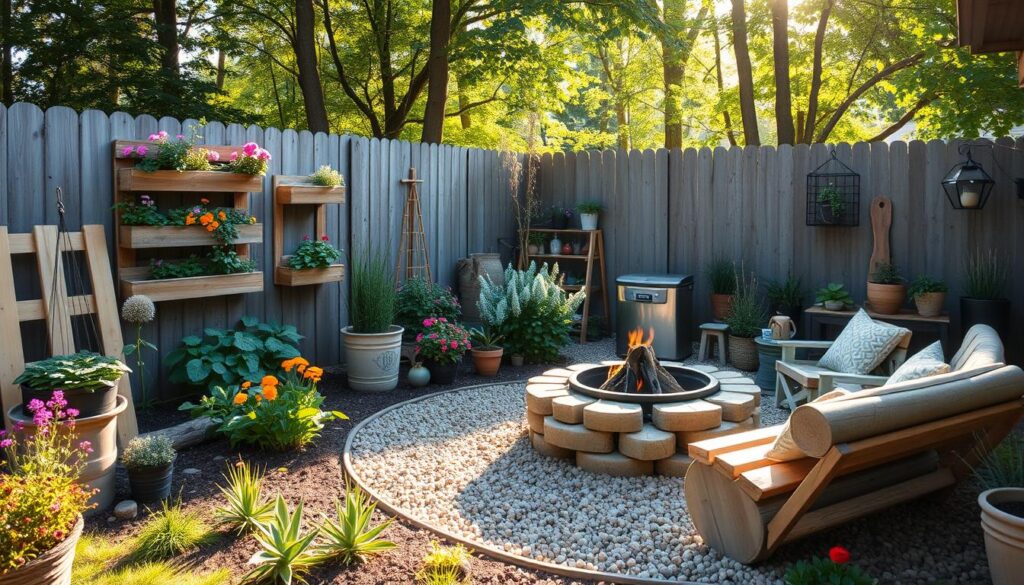
You do not need a full backyard renovation to make your yard look better
Start with the projects that give you the biggest visual improvement for the least money: clean edges, fresh mulch, simple lighting, gravel paths, container plants, and a defined seating area.
Before buying anything, walk your yard and look for three problems:
- bare dirt or patchy grass
- messy garden bed edges
- no clear place to sit, walk, or gather
Fixing those three things can make a backyard feel planned instead of unfinished.
Best Budget Backyard Landscaping Ideas
1. Add Fresh Mulch
Fresh mulch is one of the cheapest ways to clean up a backyard. It makes garden beds look finished, helps control weeds, and keeps soil moisture more stable.
Estimated cost: $30-$150
Difficulty: Easy
Best for: Flower beds, trees, fence lines, and foundation planting
For the best result, edge the bed first. Even inexpensive mulch looks much better when the border is clean.
2. Create a Gravel Path
A gravel path is much cheaper than pavers or poured concrete. It also works well in side yards, garden areas, and informal backyard spaces.
Estimated cost: $75-$300
Difficulty: Easy to moderate
Best for: Walkways, garden paths, side yards
Use landscape fabric underneath the gravel to reduce weeds. Add edging along both sides so the gravel does not spread into the lawn.
3. Use Solar Landscape Lights
Solar lights are an easy way to make a backyard feel more finished at night. Place them along paths, around seating areas, or near garden beds.
Estimated cost: $25-$100
Difficulty: Easy
Best for: Walkways, patios, flower beds, and fence lines
Avoid placing too many lights in a straight line. A softer, staggered layout usually looks more natural.
4. Build a Simple Seating Area
You do not need a full patio to create a useful outdoor space. A small gravel pad, a few chairs, and a side table can turn an unused corner into a sitting area.
Estimated cost: $100-$500
Difficulty: Moderate
Best for: Small backyards, fire pit areas, and shaded corners
Choose a flat area first. If the ground is uneven, level it before adding gravel, pavers, or furniture.
5. Add Container Plants
Container plants are perfect if you want color without digging new beds. Use them near patios, doors, fences, and seating areas.
Estimated cost: $20-$200
Difficulty: Easy
Best for: Patios, decks, porches, and small yards
Use larger pots when possible. One large container usually looks better than several tiny ones scattered around the yard.
6. Define Garden Bed Borders
A clean border can make an old garden bed look intentional again. You can use stone, brick, metal edging, wood, or simple trench edging.
Estimated cost: $20-$250
Difficulty: Easy to moderate
Best for: Flower beds, trees, walkways, and fence lines
This is a small detail that makes a big difference. Messy edges make even nice plants look neglected.
7. Hide Ugly Areas
Every backyard has something unattractive: trash cans, AC units, hose reels, utility boxes, or bare fence sections.
Use simple fixes like lattice panels, tall planters, shrubs, or decorative screens.
Estimated cost: $50-$300
Difficulty: Easy
Best for: Utility areas, side yards, patios, and fence lines
Do not block access to anything that needs service. Leave enough room to reach equipment when needed.
8. Refresh the Lawn Edges
A sharp lawn edge can make the entire yard look better, even if you do nothing else.
Estimated cost: Free-$100
Difficulty: Easy
Best for: Lawns, sidewalks, driveways, patios, and garden beds
Use a manual edger, string trimmer, or half-moon edging tool. Clean lines instantly make a yard look maintained.
9. Add a DIY Fire Pit Area
A basic fire pit area can be built with gravel, retaining wall blocks, and simple seating.
Estimated cost: $150-$600
Difficulty: Moderate
Best for: Larger backyards and gathering areas
Check local rules before building a fire pit. Some cities and HOAs restrict open flames or require certain clearances.
10. Plant Low-Maintenance Perennials
Perennials cost more upfront than annual flowers, but they come back year after year. That makes them a better long-term value.
Estimated cost: $50-$300
Difficulty: Easy
Best for: Flower beds, borders, and pollinator gardens
Choose plants suited to your climate and sun exposure. A cheap plant in the wrong location is not a bargain.
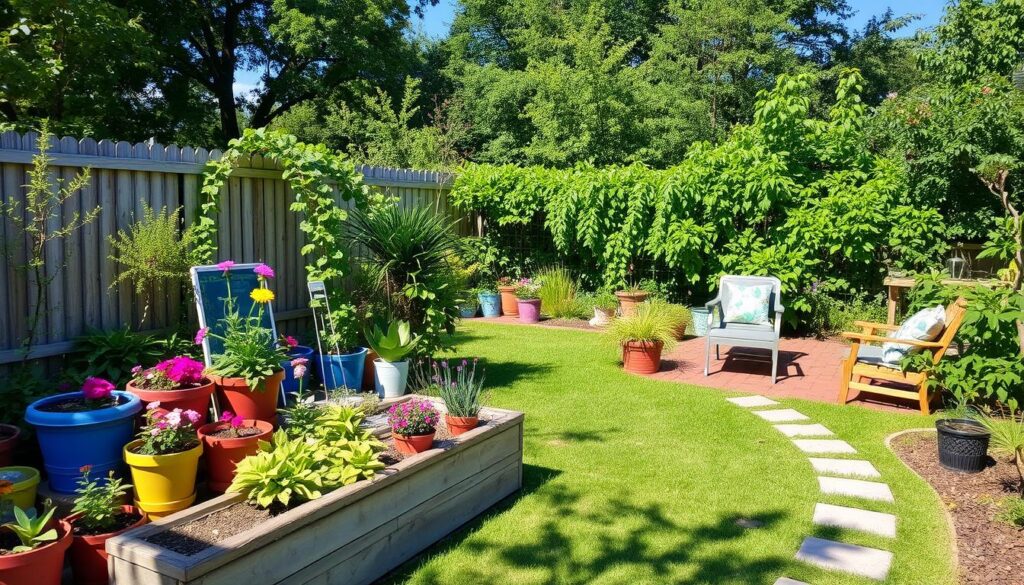
Budget Backyard Landscaping Plan
If you only have $100, focus on mulch, edging, and a few solar lights.
If you have $250, add container plants or a small gravel path.
If you have $500, create a defined seating area with gravel, chairs, lighting, and plants.
If you have $1,000, you can usually combine several upgrades: mulch, edging, lighting, a gravel path, and a small patio or fire pit area.
The best budget landscaping projects are the ones that make the yard look cleaner, more usable, and easier to maintain.
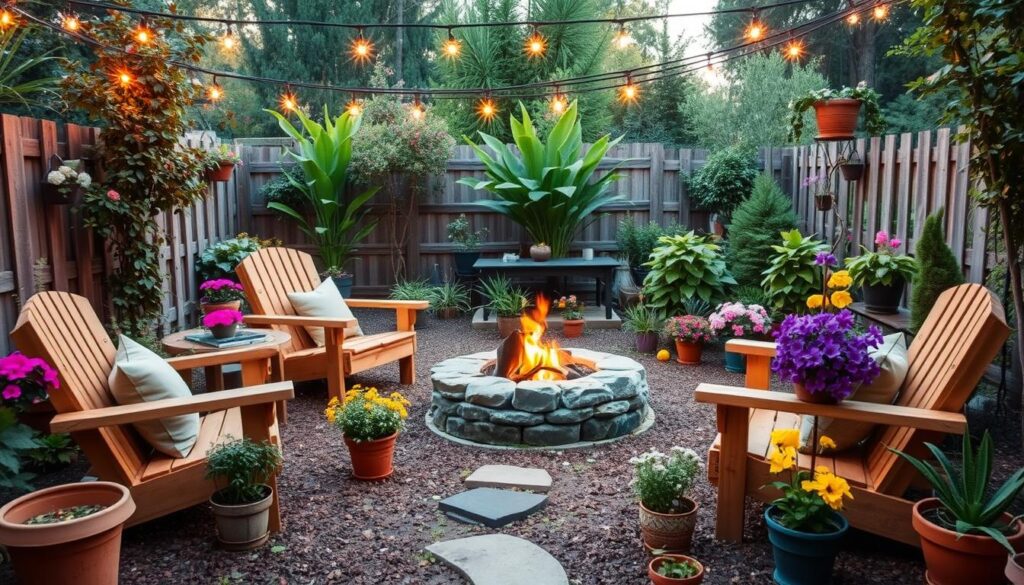
Common Budget Landscaping Mistakes
Buying Plants Before Planning the Space
Plants should come after the layout. Decide where paths, seating, beds, and focal points go first.
Ignoring the Edges
Messy edges make a yard look unfinished. Clean borders around beds, lawns, and walkways are one of the cheapest upgrades you can make.
Using Too Many Small Decorations
A few larger planters, lights, or focal points usually look better than a lot of small pieces spread around the yard.
Skipping Weed Control
Mulch and gravel look good at first, but weeds can ruin the look fast. Use landscape fabric where appropriate and keep up with basic maintenance.
Choosing High-Maintenance Plants
Cheap plants are not cheap if they need constant watering, trimming, or replacing. Choose plants that fit your climate, soil, and sunlight.d makes your garden more special.
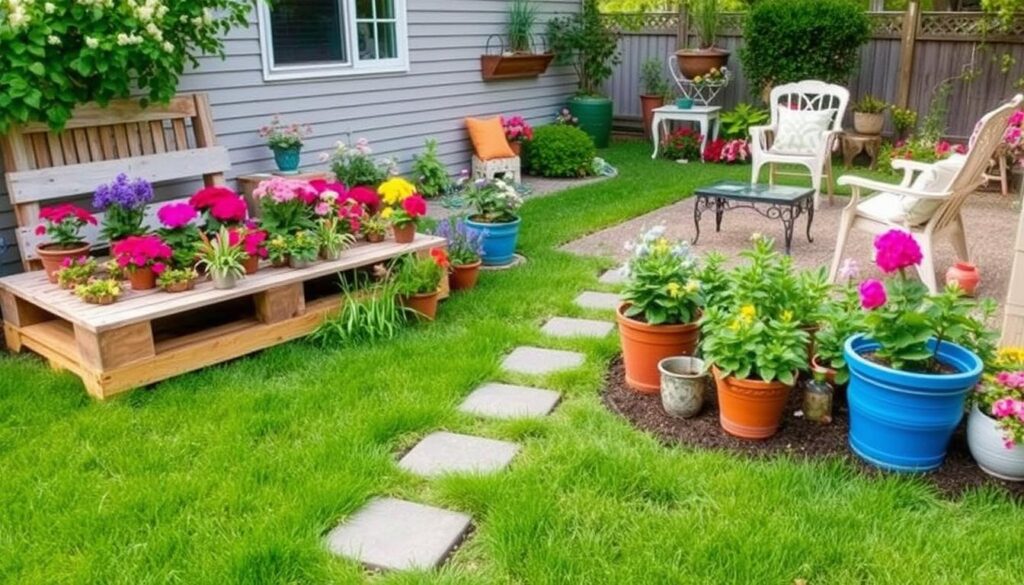
Look around your community for free or cheap materials. Some places give away mulch and compost. Also, watch for sales on gardening stuff. Stores often cut prices on plants at the season’s end. This lets you save for next year’s garden.
Planning is key for saving money outdoors. Work on one project at a time. This way, you don’t spend too much at once or feel stressed. Also, using old materials for new paths or borders saves money. It also makes your garden stand out.
With smart ideas and effort, your backyard can be amazing without costing a fortune.
Final Thoughts
Backyard landscaping does not have to be expensive.
Start with the basics: clean edges, fresh mulch, simple lighting, defined paths, and a usable seating area. Those changes make the biggest difference for the money and can usually be done over a weekend.
Once the yard looks cleaner and more organized, you can add bigger projects later.
Common Backyard Landscaping Questions
What is the cheapest way to improve a backyard?
Adding fresh mulch is usually the most affordable improvement. It can dramatically improve the appearance of flower beds and trees for less than many other landscaping projects.
How much should I budget for backyard landscaping?
A simple DIY landscaping refresh can often be completed for $100 to $500. Larger projects involving patios, retaining walls, or extensive planting may cost several thousand dollars.
What landscaping projects add the most curb appeal?
Mulch, defined garden borders, landscape lighting, decorative planters, and well-maintained pathways often provide the best visual return for the money spent.
Is gravel cheaper than pavers?
Yes. Gravel is generally one of the least expensive pathway materials available, while pavers typically cost more in both materials and labor. (yardutopia.com)
What are some easy weekend landscaping projects?
Installing solar lights, spreading mulch, building simple garden borders, creating a gravel path, planting flowers, and building a small fire pit are projects many homeowners can complete in a weekend. (yardutopia.com)