
The easiest garden path to build yourself is gravel or wood chips laid between edging. You can finish one in a weekend with a shovel, a rake, and a wheelbarrow. Stepping stones are even simpler, and pavers or brick take more work but last for decades. Below are 10 DIY garden path ideas, roughly from cheapest and easiest to most work, followed by the basic steps that apply to almost any path.
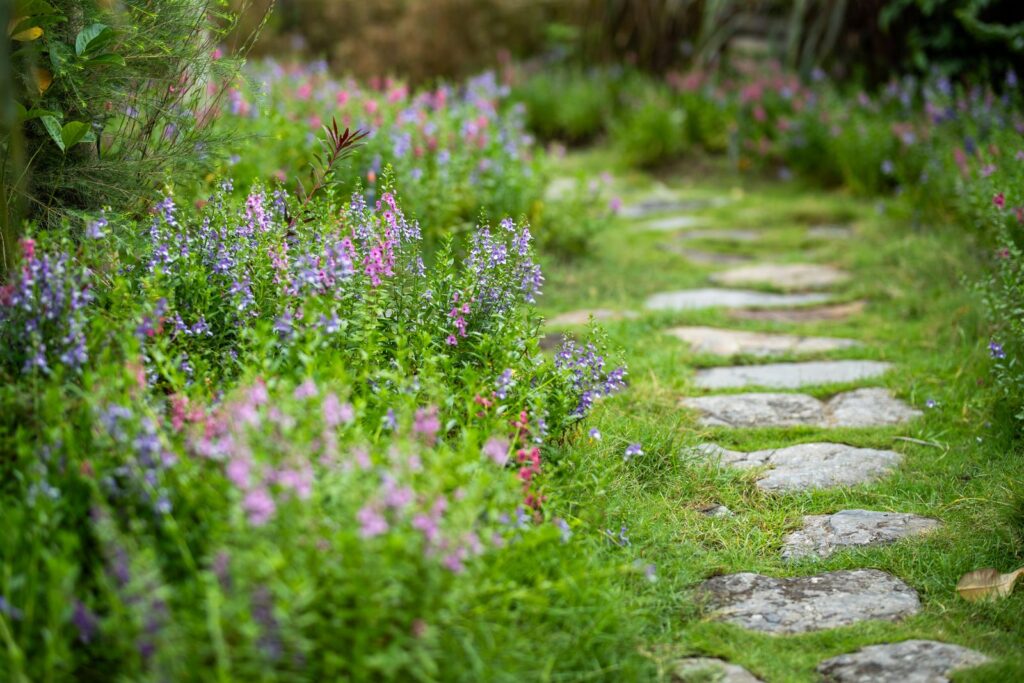
Plan the Path First
Walk the route you already take, because a path that fights the way people move gets ignored and cut across. Mark it on the ground with a garden hose or a can of marking paint and live with it for a few days before you dig.
Width matters more than people expect. A narrow side path through a bed can be 2 feet wide, but a main path that you’ll push a wheelbarrow along should be at least 3 feet. That’s the same 36-inch minimum the ADA standards set for an accessible walkway. Allow 4 to 5 feet if two people will walk side by side.
10 Easy DIY Garden Path Ideas
1. Wood Chip or Mulch Path
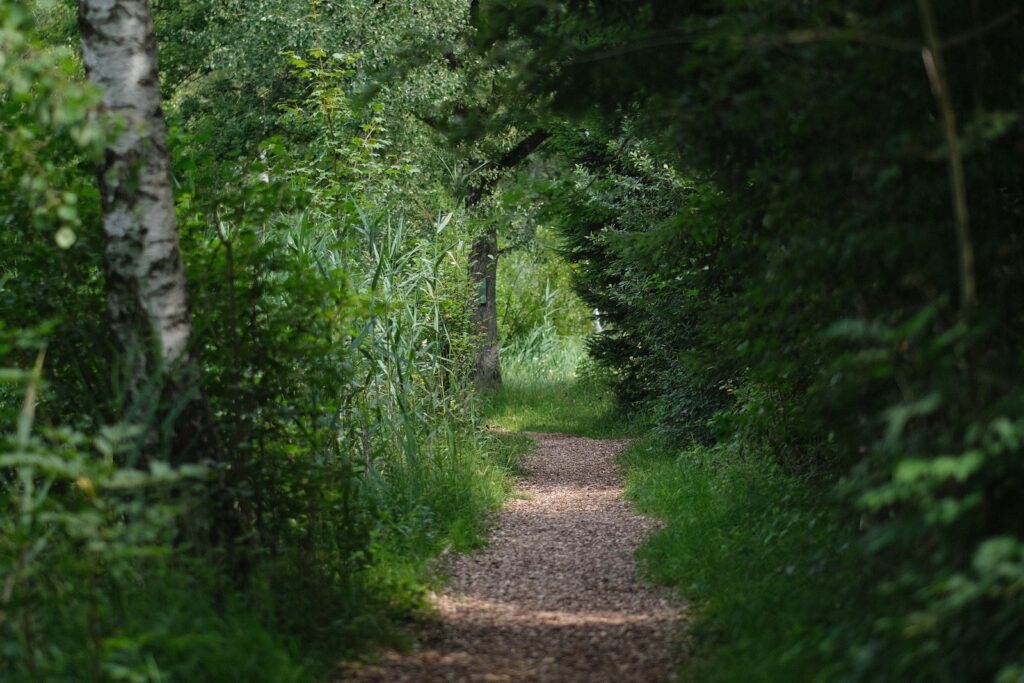
The cheapest path of all, and often free if a tree service will drop off chips. Spread 3 to 4 inches of coarse wood chips between edging, and top it up every year or two as it breaks down. It’s soft underfoot and feels at home in a vegetable garden or woodland. Skip the landscape fabric underneath. WSU Extension notes that fabric cuts air movement into the soil, and weeds soon grow in the debris that collects on top of it anyway.
2. Pea Gravel Path
Small, rounded pea gravel is cheap and drains well. It shifts and spreads, though, so it needs sturdy edging, and it’s hard going for wheelbarrows and strollers. Lay 2 to 3 inches over a compacted base.
3. Crushed Stone or Decomposed Granite Path
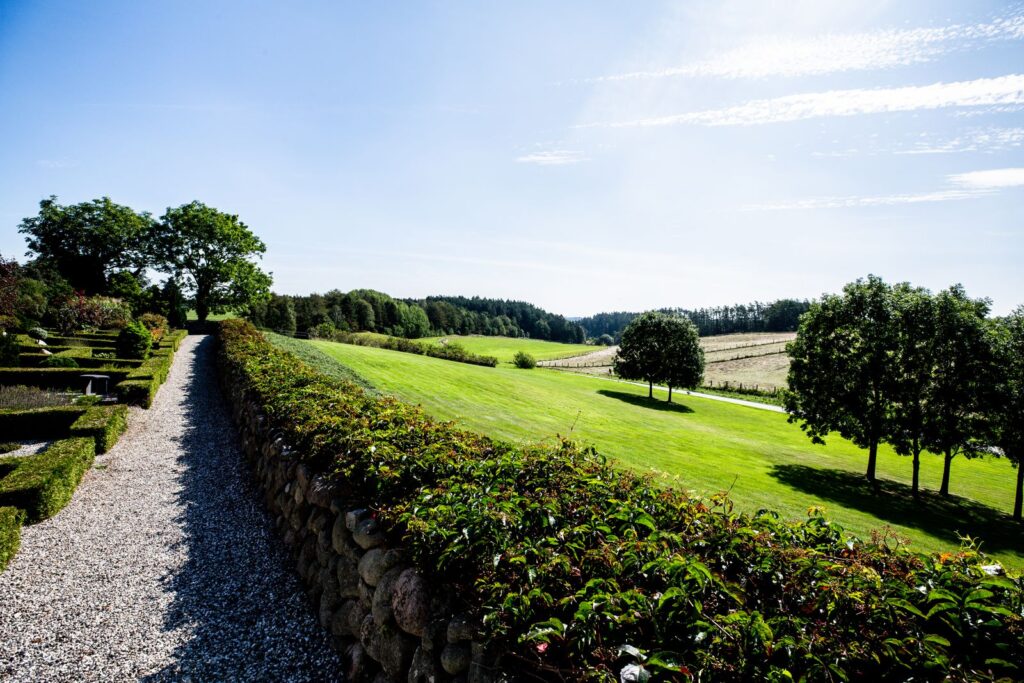
Angular crushed stone and decomposed granite lock together when you tamp them, making a firm surface that’s much easier to walk and wheel on than pea gravel. Wet each layer lightly and tamp it as you go. This is the best all-round gravel for a main path.
4. Stepping Stones in the Lawn
Lay the stones on the grass where you want them, mark around each one with a spade, and cut out the turf. Set each stone on an inch of sand so its top sits level with the soil, which lets you mow straight over it. Space them to match your stride, usually about 24 inches from the center of one stone to the next.
5. Stepping Stones Set in Gravel
Large flat stones set in gravel never need mowing, and the stones give you solid footing. Set the stones first on a compacted base, then fill around them with gravel to the same height.
6. Flagstone Path
Irregular flagstones fitted together like a puzzle make a natural-looking path. Set them on a sand or fine gravel bed and wiggle each one until it doesn’t rock. Fill the joints with gravel, sand, or a low creeping groundcover such as creeping thyme. Choose stones at least 1.5 to 2 inches thick so they don’t crack, with a textured rather than smooth face, since smooth flagstone and slate get slippery when wet or icy.
7. Reclaimed Brick Path
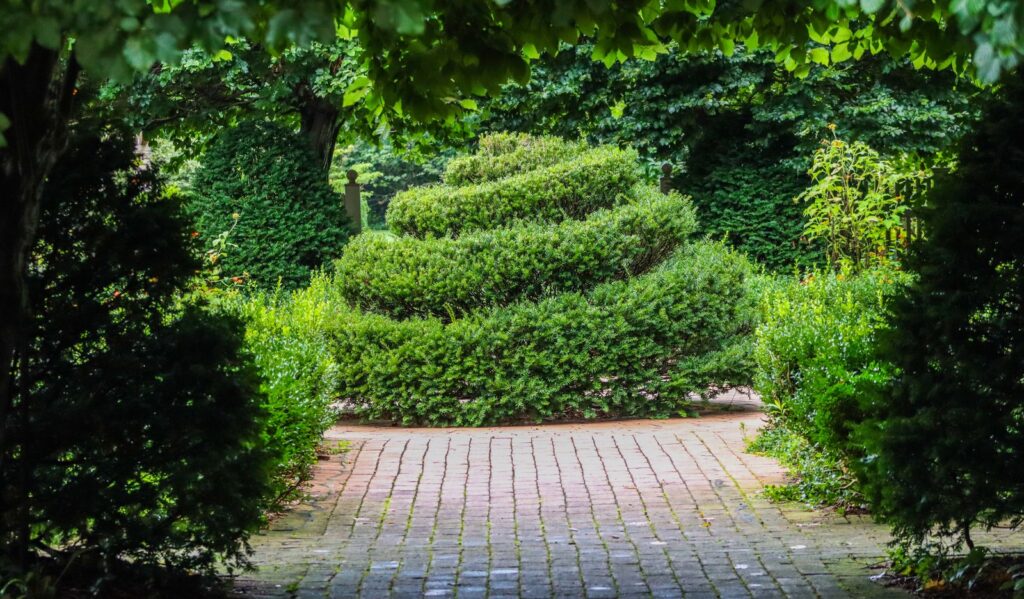
Old bricks from a demolition or a classified ad give a path instant age. Use solid bricks rated for paving, since hollow or soft bricks crumble outdoors. A herringbone pattern locks together best for paths with heavy use, while running bond, a simple staggered pattern, is easier to lay.
8. Concrete Paver Path
Pavers are the most durable DIY path and the most work. They need a deeper base of compacted gravel, a screeded sand bed, edge restraints, and joint sand swept in at the end. Our step-by-step guide to DIY walkway installation covers each stage in detail.
9. Molded Concrete Path
Reusable plastic molds let you pour a path that looks like cobblestone or fieldstone, a section at a time. Mix bagged concrete, fill the mold, smooth it, lift the mold, and repeat. Add a concrete colorant to the mix if you want a tint.
10. Wood Plank or Boardwalk Path
A low boardwalk works well over soggy ground or between raised beds. Use lumber rated for ground contact, and screw the decking to runners laid on gravel so the wood isn’t sitting in wet soil. Leave a small gap between boards for drainage. Wood can get slippery when wet and mossy, so it suits sunny spots best.
Garden Path Materials Compared
| Material | Relative cost | Difficulty | Best for |
|---|---|---|---|
| Wood chips | $ | Easy | Vegetable gardens, woodland paths |
| Pea gravel | $ | Easy | Low-traffic side paths |
| Crushed stone or DG | $ | Easy | Main paths, wheelbarrows |
| Stepping stones | $ to $$ | Easy | Lawns, informal routes |
| Flagstone | $$ | Moderate | Natural, cottage gardens |
| Reclaimed brick | $ to $$ | Moderate | Traditional gardens |
| Concrete pavers | $$ | Harder | Busy, permanent paths |
| Molded concrete | $$ | Moderate | A stone look on a budget |
| Wood boardwalk | $$ | Moderate | Wet ground, between beds |
How to Build a Garden Path: The Basics
- Mark the edges with a hose, string, or marking paint.
- Dig out the path. Remove the turf and dig about 3 to 4 inches deep for gravel or chips, deeper for pavers.
- Install edging. Steel, aluminum, stone, or brick edging keeps loose materials in place and the grass out.
- Add and tamp a base. For gravel, stone, and paver paths, spread and compact a few inches of crushed gravel. Chip paths can go straight on the soil.
- Lay the surface and rake or set it level, with a slight crown or slope so rain runs off.
For more low-cost yard projects, see our cheap backyard ideas, and for choosing between stone, pavers, and other hard surfaces, our hardscaping guide.
Frequently Asked Questions
What is the cheapest material for a garden path?
Wood chips, which are often free from local tree services. Pea gravel and crushed stone are the next cheapest. Both cost far less than pavers or flagstone.
How wide should a garden path be?
Side paths through beds can be about 2 feet wide. Make main paths at least 3 feet wide so a wheelbarrow fits, and 4 to 5 feet if two people will walk side by side.
How deep should a gravel path be?
Dig about 3 to 4 inches, compact a gravel base, and finish with 2 to 3 inches of surface gravel. Paver paths need a deeper base.
Do I need landscape fabric under a garden path?
Under gravel, a layer of fabric helps keep the stone from sinking into the soil. Under wood chips, skip it. Fabric cuts air movement into the soil, and weeds still grow in the debris that settles on top.
How far apart should stepping stones be?
About 24 inches from the center of one stone to the center of the next suits most adults. Lay them out and walk the route before you set them, then adjust to your own stride.