
A water-saving garden in a dry climate rests on a few habits: group plants by how much water they need, keep lawn to the areas you actually use, choose plants suited to your rainfall, water with drip lines instead of sprinklers, and cover bare soil with mulch. Together these are the principles of xeriscaping, a word Denver Water coined in 1981 from the Greek “xeros,” meaning dry. Done well, it doesn’t look like gravel and cactus. It looks like a full, colorful garden that needs far less water.
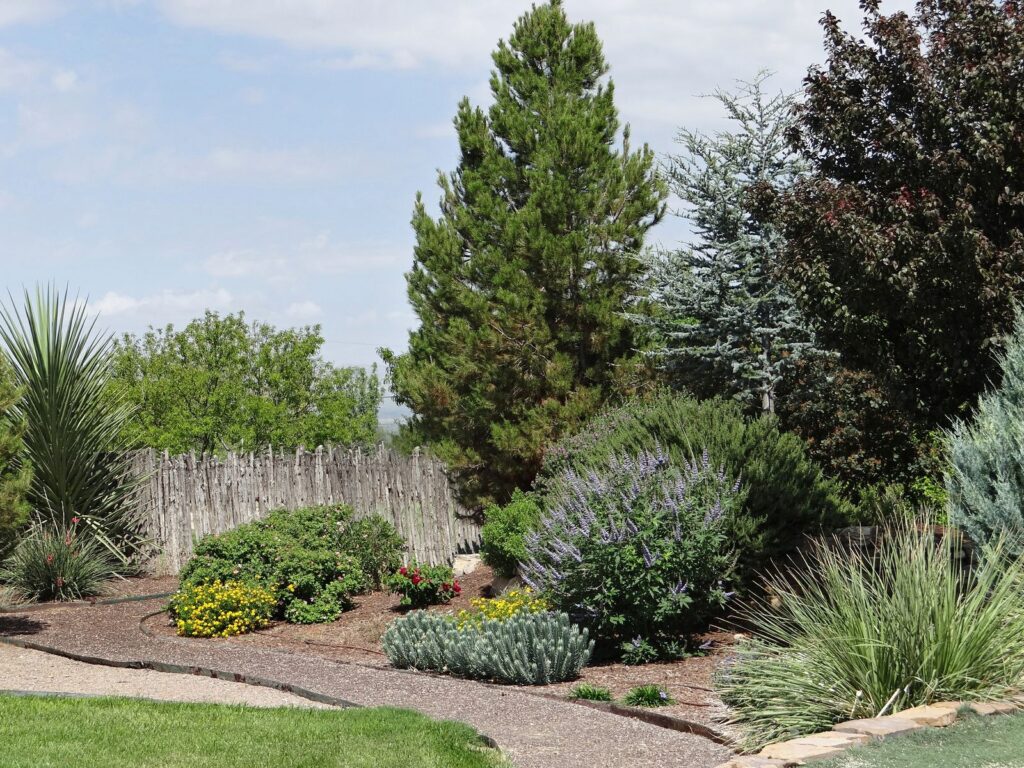
It’s worth the effort. The EPA’s WaterSense program says the average U.S. household uses more water outdoors than for showering and washing clothes combined, mainly for landscape irrigation.
The 7 Principles of Xeriscaping
1. Plan in Water Zones
Sketch your yard and divide it into zones by water need. Put the thirstiest plants, like vegetables and a small lawn, closest to the house where they’re easy to water and enjoy. Moderate-water shrubs and perennials go in the middle, and the toughest, driest plants go at the edges. Grouping plants this way, often called hydrozoning, means each zone gets only the water it needs.
2. Keep Lawn Where You Use It
Lawn is usually the biggest water user in a yard. Keep grass for play areas and paths you walk on, and replace the rest with planting beds, groundcovers, or hardscape. Choose a drought-tolerant grass suited to your region. Our sustainable landscaping guide covers how to shrink a lawn.
3. Improve the Soil, Within Reason
Compost helps sandy soil hold water and helps clay drain. It’s most useful in vegetable beds and lawn areas. Many native and desert plants prefer lean soil and do poorly in rich, heavily amended beds, so match the soil prep to the plants you’re growing.
4. Choose Plants for Your Rainfall
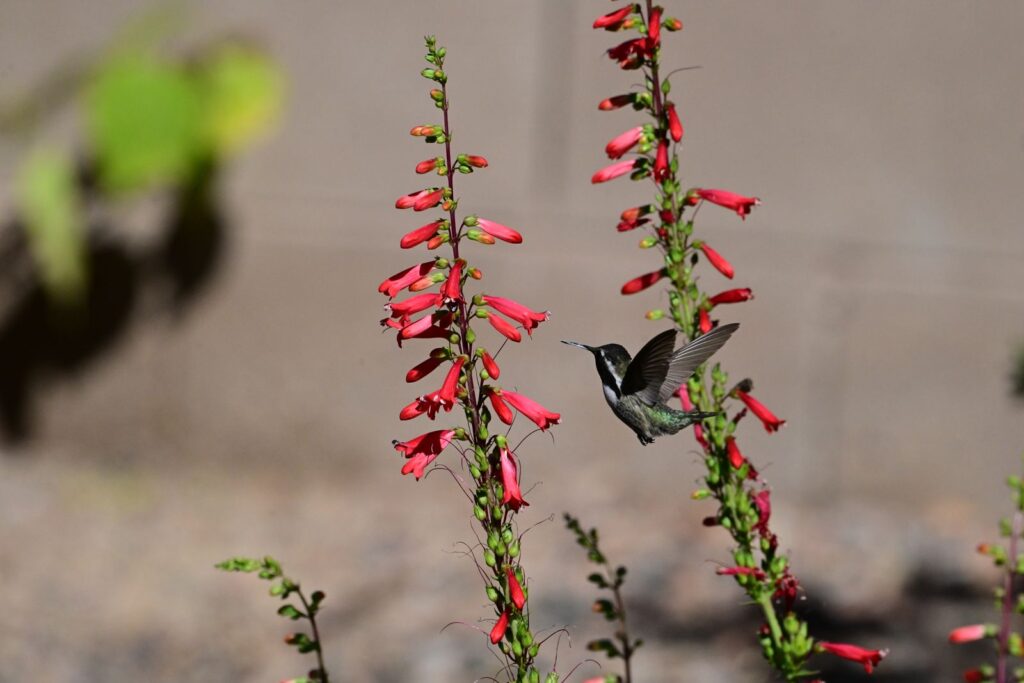
The best water-saving plants are the ones that grow naturally in climates like yours. Natives are a strong starting point, and your local extension service or water utility usually publishes a list for your area. A few widely grown low-water choices:
| Plant | Type | Why it works |
|---|---|---|
| Lavender | Perennial herb | Thrives in sun and well-drained soil, and pollinators love it |
| Penstemon | Perennial | Many native species across the West, tubular flowers for hummingbirds |
| Blanket flower | Perennial | Long summer bloom in heat and poor soil |
| Yarrow | Perennial | Tough, spreading, flat flower clusters |
| Russian sage | Perennial | Silvery foliage and lavender-blue spikes all summer |
| Sedum | Succulent | Groundcover and border plant for hot, dry spots |
| Agave and yucca | Succulent | Bold structure in hot, arid regions |
| Blue grama | Native grass | Low-water lawn alternative on the plains |
Even drought-tolerant plants need regular water for their first year or two while their roots establish. For more plant ideas by style, see our guides to desert landscaping, Mediterranean gardens, and pollinator gardens.
5. Water Efficiently
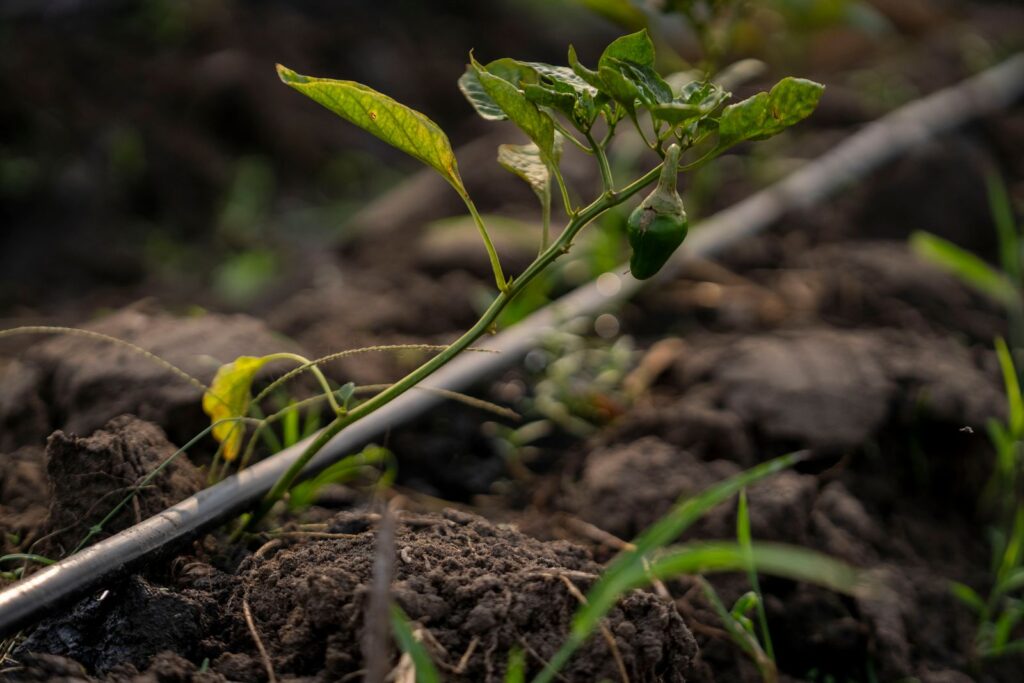
Drip irrigation and soaker hoses put water at the roots, where little is lost to evaporation or overspray. Water early in the morning, since the EPA advises avoiding midday watering when the sun evaporates much of it. Water deeply and less often to encourage deep roots. If you have an in-ground sprinkler system, a WaterSense-labeled smart controller adjusts watering to the weather. Your local water utility can tell you how much and how often to water in your area.
6. Mulch Everything
A 2- to 3-inch layer of mulch keeps soil cool, slows evaporation, and blocks weeds that compete for water. Use shredded bark or wood chips around most plants, and gravel or decomposed granite around desert plants and succulents, which prefer dry crowns. Keep mulch a few inches away from stems and trunks.
7. Maintain It Lightly
A xeriscape isn’t a no-maintenance yard, just a lower-maintenance one. Pull weeds while they’re small, top up mulch, check drip lines for clogs and leaks each spring, and gradually cut back watering as plants establish.
Catch Rainwater
A rain barrel under a downspout stores roof runoff for watering beds and pots. Use one with a sealed lid and screen to keep out mosquitoes and debris, and set it on a sturdy, level base. Check your state’s rules first, since some dry states limit collection. In Colorado, for example, Colorado State University Extension explains that most homes may use up to two rain barrels with a combined 110 gallons, for outdoor use only. Untreated roof water isn’t safe to drink.
Use Hardscape Wisely
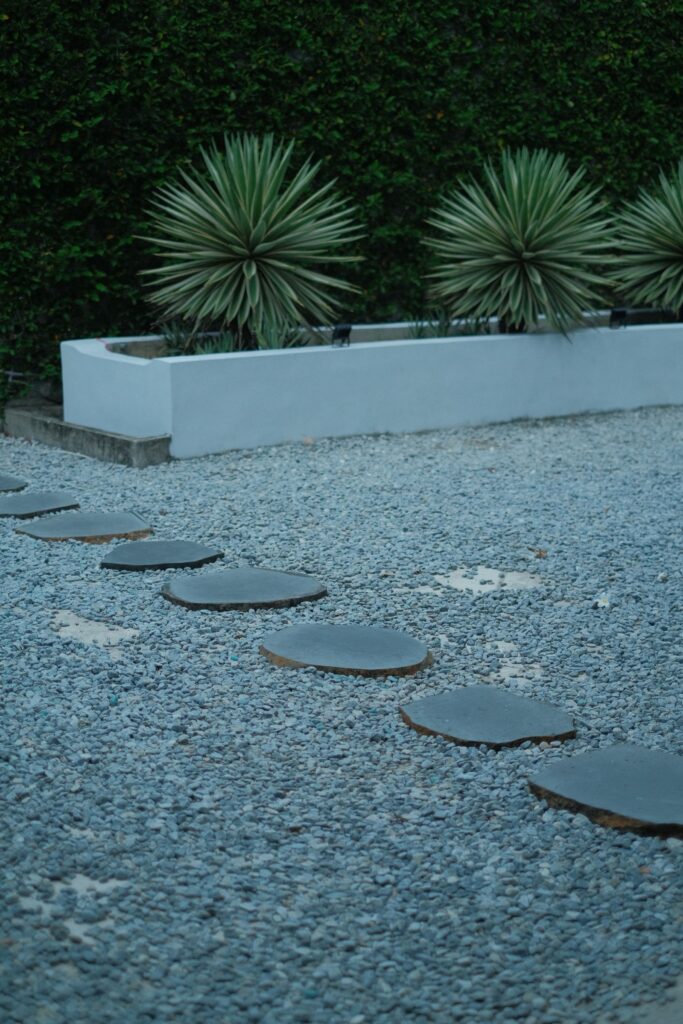
Patios, paths, and seating areas need no water and give a dry garden structure. Choose permeable surfaces like gravel, decomposed granite, or open-jointed pavers so rain soaks in instead of running off. Our DIY garden path guide compares materials. Shade from a tree, pergola, or wall also cuts water loss from nearby plants. For getting through extreme heat, see our heatwave guide.
Frequently Asked Questions
What is xeriscaping?
Xeriscaping is landscaping designed to need little supplemental water. Denver Water coined the term in 1981 from the Greek word xeros, meaning dry. It relies on grouping plants by water need, limiting lawn, choosing suitable plants, efficient irrigation, and mulch.
Does xeriscaping mean rocks and cactus?
No. A well-designed xeriscape can be full of flowering perennials, shrubs, and grasses. It simply uses plants suited to the local rainfall and waters them efficiently.
When is the best time to water in a dry climate?
Early morning. The EPA advises avoiding midday watering, when the sun evaporates much of the water before it reaches the roots. Water deeply and less often to build deep roots.
Is it legal to collect rainwater?
In most states, yes, but rules vary. In Colorado, for example, most homes may use up to two rain barrels with a combined 110 gallons, for outdoor watering only. Check your state’s rules before installing one.
Do drought-tolerant plants need watering?
Yes, at first. Most need regular water for their first year or two while their roots establish. After that, many need only occasional deep watering during long dry spells.