The cheapest desert yard is one built from what the desert already does well: gravel instead of grass, native plants bought small, and water delivered only where it’s needed. Most of the ideas below cost little up front, and several save money every month after. One of them can even earn you a rebate. The plant advice is aimed at the low deserts of the Southwest, such as Phoenix and Tucson, but most of it works anywhere hot and dry.
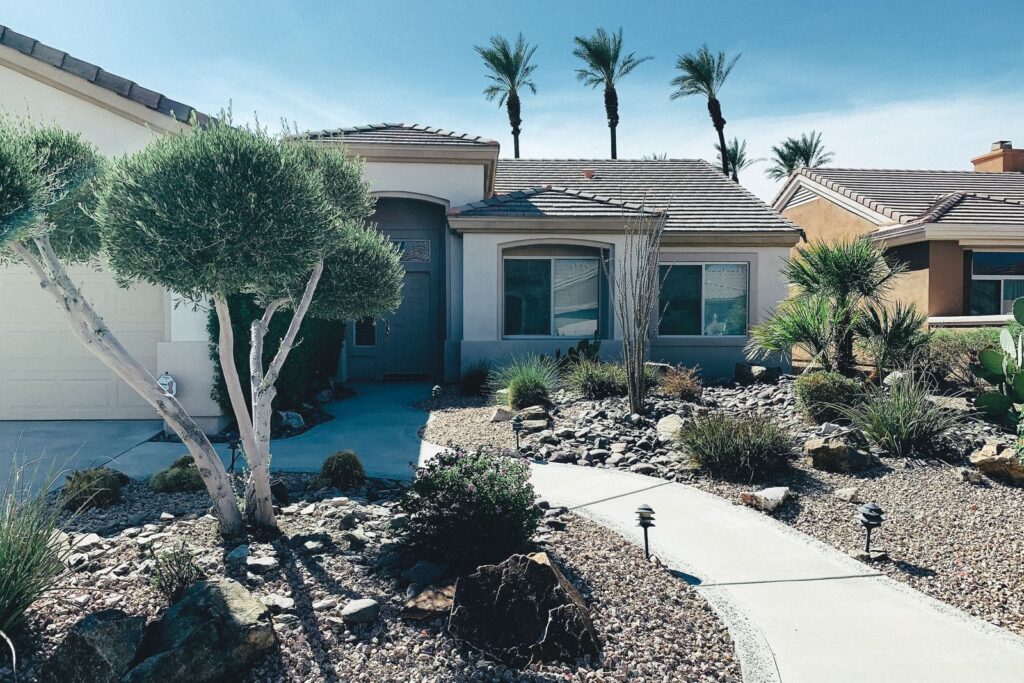
10 Budget-Friendly Desert Landscaping Ideas
1. Swap Grass for Decomposed Granite
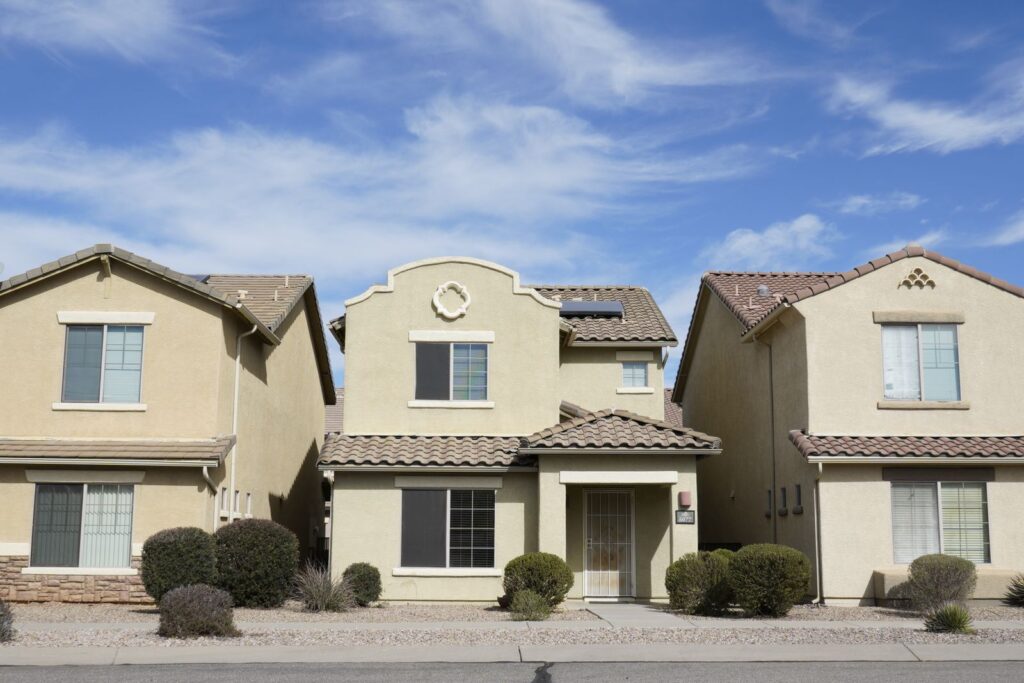
Decomposed granite, or DG, is the standard desert groundcover for good reason. It’s cheap, and it packs down into a firm, walkable surface that never needs water. HomeAdvisor’s 2026 cost guide puts it at $40 to $80 a ton, or roughly $160 to $900 to cover a 400-square-foot area, depending on depth and delivery. Spread it 2 to 3 inches deep, and pick a color that matches your house or the nearby hills so the yard looks settled rather than new.
2. Get Paid to Remove Your Lawn
Many Southwest water utilities pay homeowners to replace grass with desert landscaping. In Mesa, for example, Axios reports that homeowners can get up to $2,100 for replacing at least 500 square feet of grass. Programs change often and most won’t pay for work you’ve already done, so call your city’s water conservation office before you dig.
3. Plant Small, and Plant in Fall
One-gallon and five-gallon plants cost a fraction of big specimens, and they often catch up within a few years because they settle in faster. Timing matters as much as size. The Arizona Municipal Water Users Association recommends planting from late September through early December, while the soil is still warm enough for roots to grow and before the next summer’s heat. Plants that go in during June spend the summer just trying to survive, and many don’t.
4. Group Plants by Water Need and Use Drip
Put thirsty plants together near the house and the toughest natives farther out, then run a drip line with a separate valve for each group. Drip puts water at the roots instead of spraying it into the air, and a basic kit costs less than a season of wasted water. Change the timer with the seasons. AMWUA suggests adjusting your schedule at least four times a year, since desert plants need far less water in winter.
5. Build Around Cacti, Agaves, and Yuccas
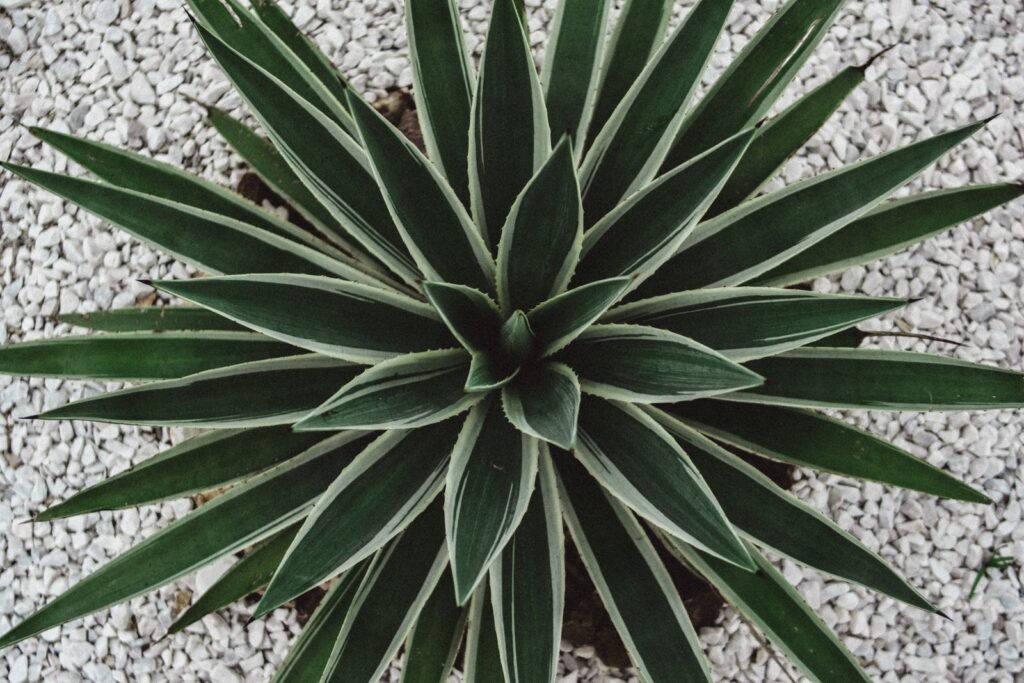
Sculptural plants such as agave, prickly pear, barrel cactus, red yucca, and desert spoon give a yard structure with almost no water once they’re established. Mix tall and round shapes, and leave room for their mature size, because a full-grown agave can be several feet across. In higher deserts with hard frosts, check each plant’s cold tolerance. Some popular succulents, such as aloe and many agaves from farther south, are damaged by a hard freeze.
6. Use Boulders as Focal Points
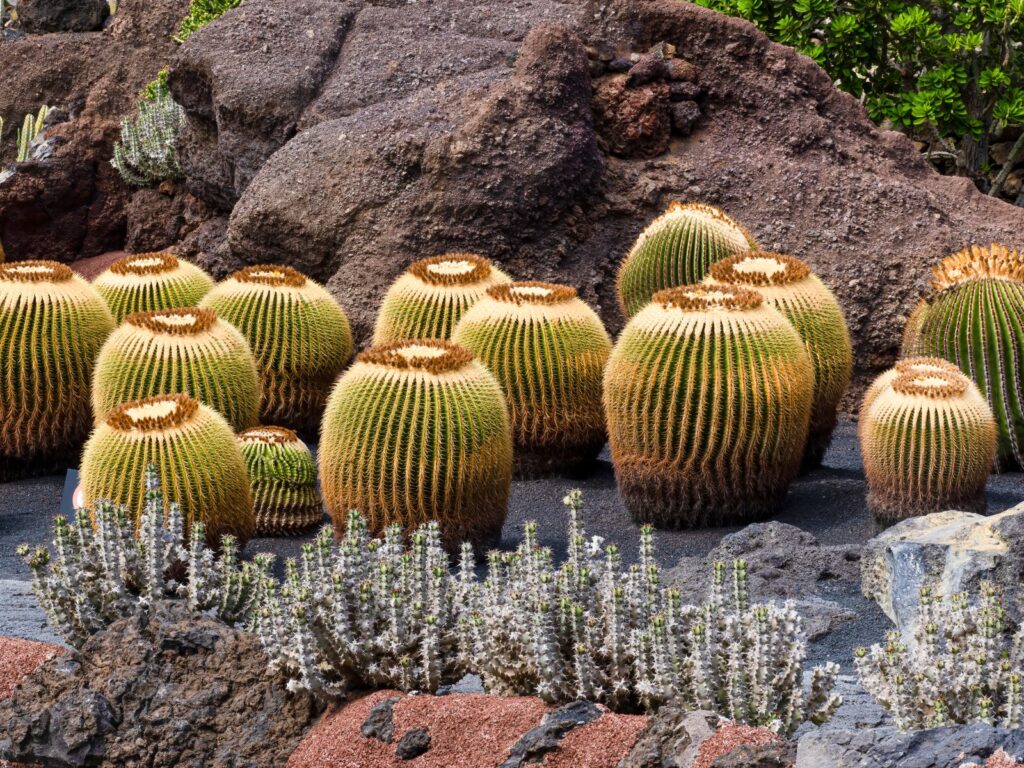
A few large boulders do more for a gravel yard than dozens of small rocks. Bury each one about a third of the way so it looks like it belongs there rather than dropped from a truck. Local stone is usually the cheapest, because you aren’t paying to haul it far, and it matches the landscape around you.
7. Add Low-Water Grasses
Grasses soften all that rock and move in the wind. Deer grass and bull grass are Southwest natives that form big, tidy clumps, and blue grama is a native that stays low. Pink muhly isn’t native to the desert, but it’s a low-water favorite for its pink fall plumes. Cut clumping grasses back once a year in late winter, and they need little else.
8. Sow Wildflowers for Spring Color
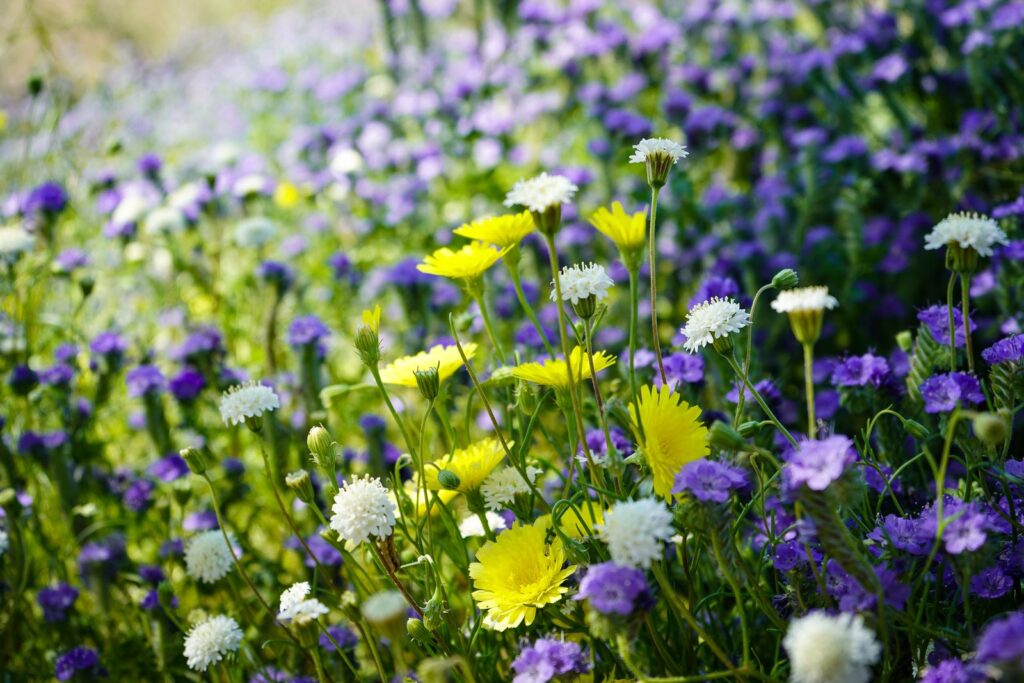
A packet of native wildflower seed costs a few dollars and can cover a bare patch in color by spring. AMWUA notes that fall is the time to sow wildflower seed for spring bloom. In the low desert, sowing from October into December lets the seeds catch the winter rains. Rake the ground lightly, scatter the seed, and press it in. Desert marigold, globe mallow, lupine, and poppies are good starters, and many reseed themselves for next year.
9. Plant One Good Shade Tree
An all-rock yard bakes in summer. One desert tree, such as a palo verde, mesquite, or desert willow, shades a patio and can cut cooling costs if it shades the west or south side of the house. The U.S. Department of Energy notes that shading an air conditioner alone can make it up to 10% more efficient. Plant the tree in fall and give it deep, infrequent water while it establishes.
10. Add a Small Recirculating Fountain
A pond loses a lot of water to desert evaporation. A bubbling bowl or small wall fountain gives you the sound of water for far less, because the pump recycles the same few gallons. Birds and bees will find it fast. Keep it topped up in summer, and scrub it weekly so it doesn’t breed mosquitoes. For more ideas, see our guide to backyard water features.
Desert Landscaping Mistakes That Cost Money
- Planting in summer. New plants need months of mild weather to grow roots before the heat. Wait for fall.
- Overwatering desert plants. More cacti and agaves die from rot than from drought. Water deeply and let the soil dry between waterings.
- Buying plants without checking mature size. A cute 1-gallon agave can outgrow a narrow bed and end up pressing against a wall or path.
- Going all rock, no shade. Gravel with nothing growing in it is cheap but hot, and it looks unfinished. A tree and a few plant groupings make it a yard.
For a fuller plan, see our guide to desert landscaping, and our water-saving garden design ideas. For plant choices in Arizona, AMWUA’s free Landscape Plants for the Arizona Desert lists sun, water, and size needs for hundreds of plants.
Frequently Asked Questions
What is the cheapest way to landscape a desert yard?
Replace grass with decomposed granite, which costs about $40 to $80 a ton, then add native plants bought in 1-gallon or 5-gallon sizes. Check whether your city pays a rebate for removing grass before you start.
When is the best time to plant in the desert?
In the low desert, fall. The Arizona Municipal Water Users Association recommends late September through early December, when the soil is warm enough for roots to grow and plants have months to settle in before summer.
What plants are best for low-maintenance desert landscaping?
Agave, prickly pear, barrel cactus, red yucca, desert spoon, and native grasses such as deer grass. Once established, they need little water and almost no pruning.
Do I need landscape fabric under gravel?
It isn’t required. Fabric slows weeds for a while, but windblown dirt settles on top and weeds grow in it anyway. A pre-emergent weed control and pulling weeds while they’re small often work as well.
How do I keep a desert yard from looking bare?
Group plants instead of scattering them, add one shade tree, and use a few large boulders as focal points. Native wildflowers sown in fall add color in spring.