
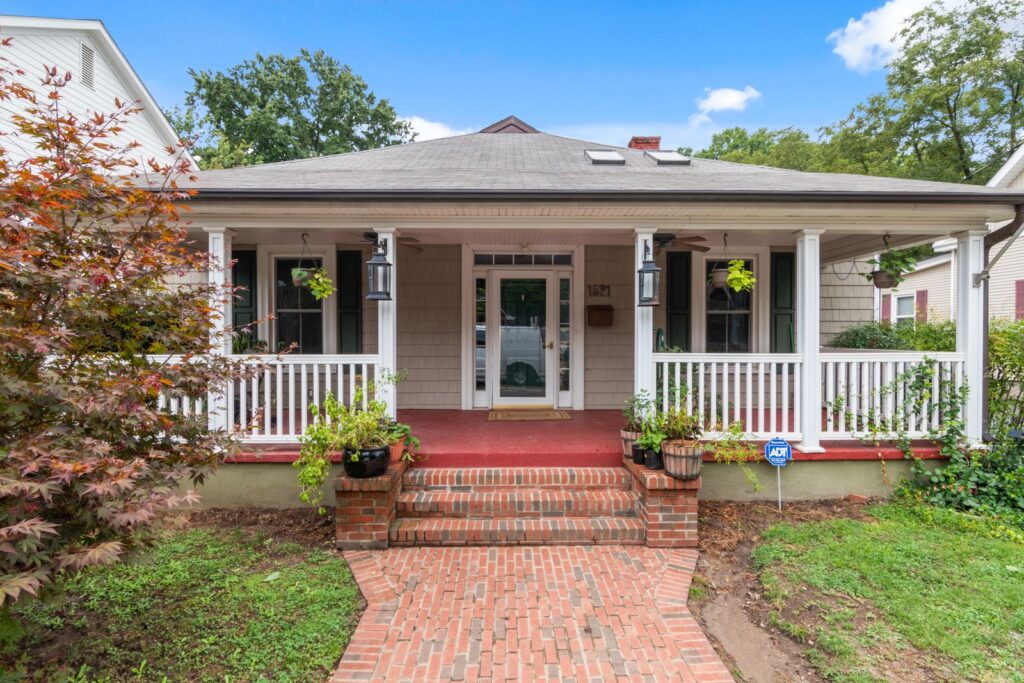
A paver walkway that stays flat for years comes down to what’s underneath it. In short: dig out about 7 to 9 inches, compact at least 4 inches of crushed gravel in layers, screed an inch of sand, lay the pavers, lock the edges, and sweep sand into the joints. Below are the steps, plus the mistakes that make walkways sink.
Project at a Glance
- Difficulty: intermediate
- Time: one to two weekends for a typical front walk
- Cost: for comparison, Lawn Love’s 2026 cost guide puts professionally installed paver walkways at $13 to $27 per square foot. Doing it yourself saves the labor, which is a large share of that.
- Key tool: a plate compactor, which you can rent by the day
Plan the Walkway
Run the walk along the route people already take, usually the most direct line from the driveway or street to the door. Make it at least 3 feet wide so one person can walk comfortably, and 4 to 5 feet if two people will walk side by side. Plan for the surface to slope about 1/4 inch per foot away from the house, so water drains off rather than toward the foundation.
Before you dig, call 811 to have underground utility lines marked. It’s free, and many states require it.
Tools and Materials
- Tools: shovel and flat spade, wheelbarrow, stakes and string, line level and 4-foot level, tape measure, rake, a hand tamper, a rented plate compactor, a rubber mallet, two 1-inch screed pipes and a straight board, and a masonry saw or block splitter for cuts.
- Materials: pavers, crushed gravel base (3/4-inch minus), coarse concrete sand for bedding, edge restraint with spikes, and polymeric sand for the joints. On clay soil, add a roll of geotextile fabric.
- Safety gear: work gloves, knee pads, eye and hearing protection, and a dust mask or respirator when cutting, since cutting concrete pavers releases silica dust.
To estimate the gravel, multiply the walkway’s area in square feet by the base depth in feet. A 3-by-30-foot walk with a 4-inch base needs 90 x 0.33, or about 30 cubic feet, a little over a cubic yard. Buy about 10% extra pavers to allow for cuts.
How to Install a Paver Walkway
1. Mark the Outline
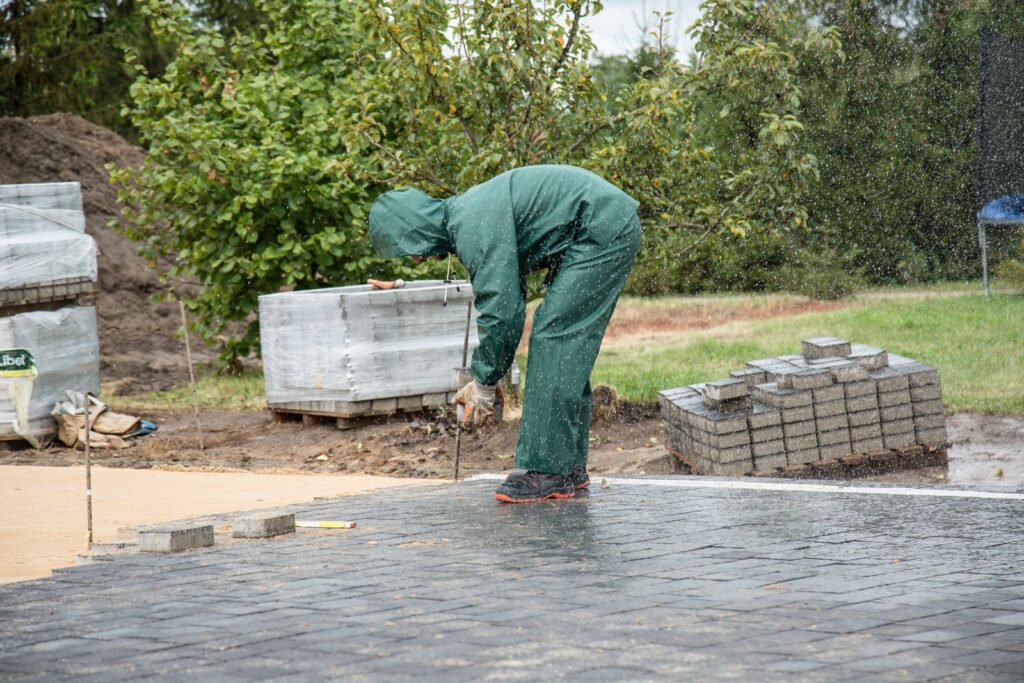
Mark the edges with stakes and string for straight sections, or a garden hose for curves, then spray-paint the line. Make the excavation about 6 inches wider than the walkway on each side, so the edge restraint has solid gravel to sit on.
2. Dig to the Right Depth
The Interlocking Concrete Pavement Institute calls for at least 4 inches of compacted aggregate base under walkways and patios, with a 1-inch sand bed on top, and notes that cold climates and soft soils need a thicker base. Add the paver thickness, usually about 2 3/8 inches, and you’re digging about 7 to 9 inches below the finished surface. Remove the sod, roots, and loose topsoil, keep the slope away from the house, and compact the soil at the bottom.
3. Build and Compact the Base
If you have heavy clay, lay geotextile fabric first so the gravel doesn’t sink into the soil. Then spread the crushed gravel in layers about 2 inches thick. Dampen each layer and run the plate compactor over it before adding the next. Compacting in layers is what keeps a walkway from settling. Compacting only the top leaves soft gravel underneath. Check the surface with a string line as you go so it follows your slope.
4. Screed the Sand Bed
Lay two 1-inch pipes on the base, spread coarse concrete sand between them, and pull a straight board across the pipes to leave an even 1-inch layer. Remove the pipes and fill their grooves. Don’t use play sand or stone dust, and don’t walk on or compact the screeded sand.
5. Lay the Pavers
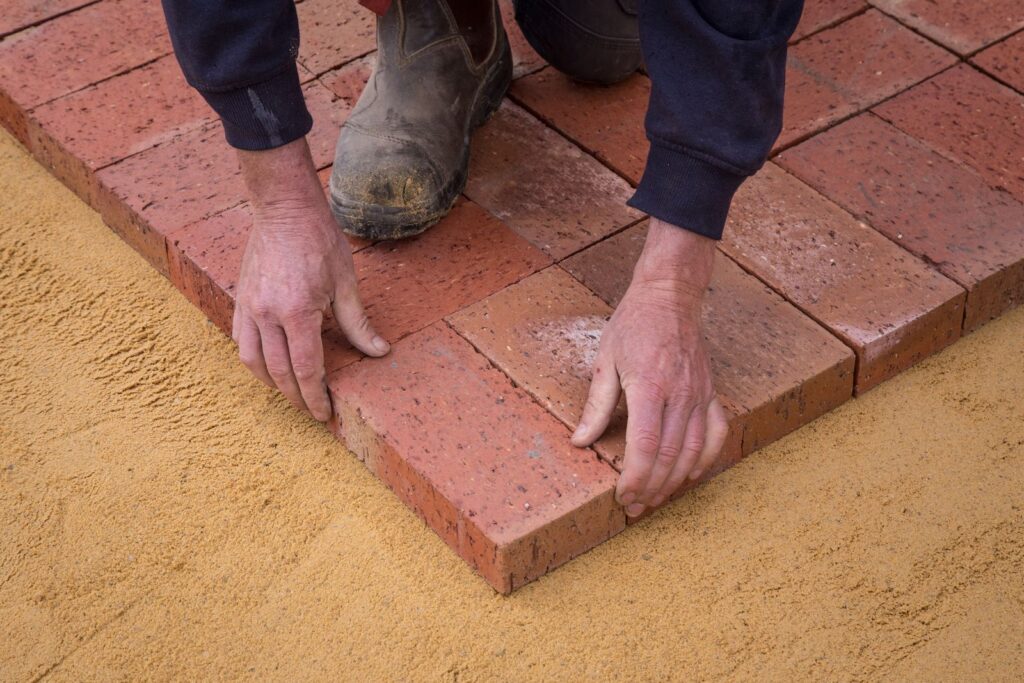
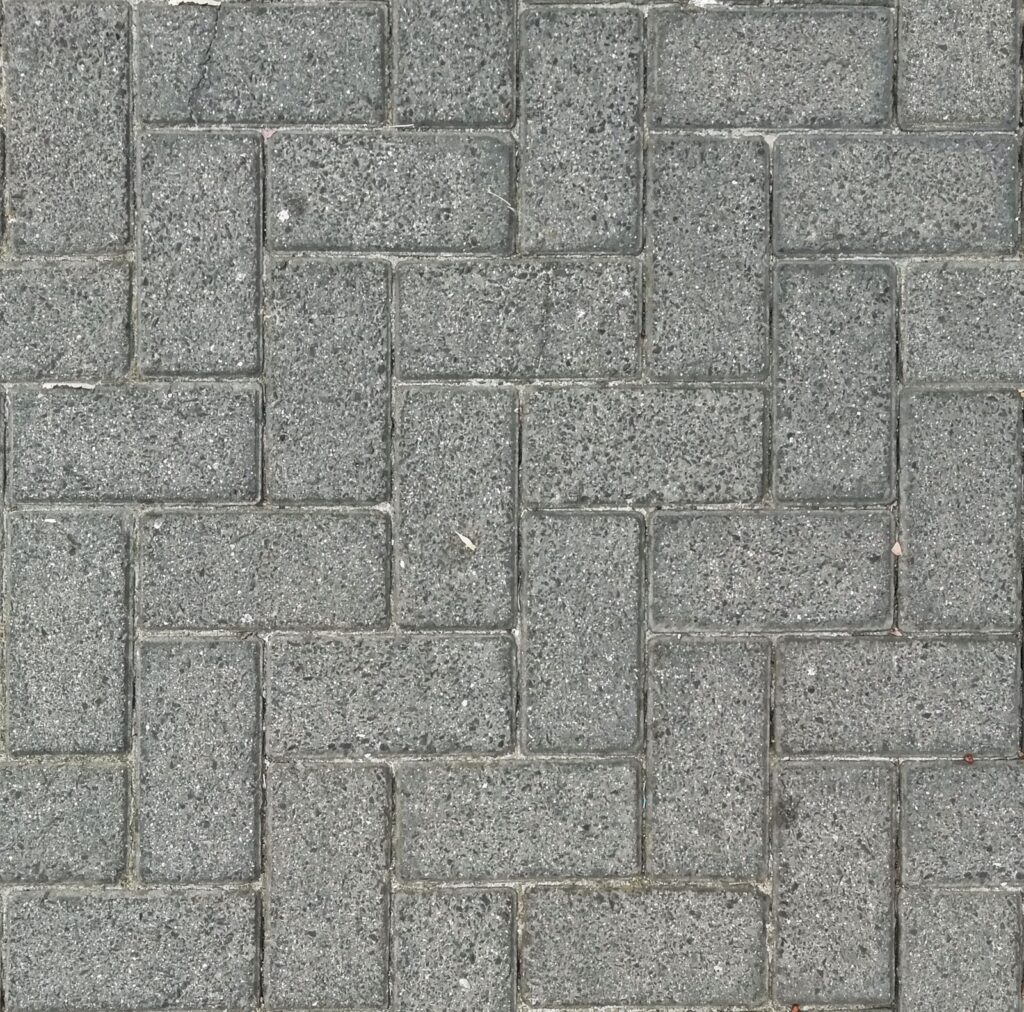
Start at a straight edge, such as the step or the driveway, and set each paver straight down onto the sand rather than sliding it. Work from the pavers you’ve already laid so you don’t disturb the bed. Running bond is the easiest pattern for a walk, and herringbone locks together best. Check alignment with a string line every few rows, and cut edge pieces with a saw or splitter.
6. Install the Edge Restraint
Pavers spread apart without something holding the sides. Set plastic or aluminum edge restraint tight against the outer pavers and drive the spikes through it into the gravel base. A buried concrete or stone edge works too.
7. Compact and Fill the Joints
Run the plate compactor over the pavers, ideally with a protective pad, to seat them in the sand. Sweep polymeric sand into the joints until they’re full, compact again, and sweep off every bit of sand left on the surface. Then mist the walk following the bag’s instructions, which hardens the sand so it resists weeds, ants, and washing out.
Gravel and Stepping Stone Walkways
A gravel or stepping stone walk is cheaper and quicker, and it uses the same basic idea: a compacted base and solid edging. Our DIY garden path ideas cover ten simpler path types with widths and depths for each.
Common Mistakes That Make Walkways Sink
- Too little base, or base compacted only on top. This is the most common reason pavers settle.
- No slope. Water that can’t run off soaks the base and heaves it in freezing weather.
- Too much sand. A bedding layer much thicker than an inch shifts and ruts.
- No edge restraint. The outer pavers creep outward and the joints open up.
- Laying pavers on dirt. Soil swells and shrinks with moisture, so pavers set directly on it go uneven within months.
Care and Repairs
Sweep the walk regularly and pull any weeds before they root deep. If you pressure-wash it, use a wide fan tip and expect to top up the joint sand afterward, because a strong jet blasts sand out of the joints. Sealing is optional. It deepens the color and resists stains but has to be reapplied every few years. If a paver sinks or rocks, pry it out, add or re-level the sand underneath, reset it, and refill the joints. For keeping the edges of the walk planted and tidy, see our guide to low-maintenance front yard landscaping.
Frequently Asked Questions
How deep should a paver walkway base be?
The Interlocking Concrete Pavement Institute calls for at least 4 inches of compacted gravel base under walkways, plus a 1-inch sand bed. With the pavers on top, that means digging about 7 to 9 inches. Use a thicker base on clay soil or where the ground freezes hard.
Can I lay pavers directly on dirt?
No. Soil swells and shrinks as it gets wet and dries out, so pavers set directly on it go uneven within months. A compacted gravel base drains water and spreads the load.
Do I need a plate compactor?
For a paver walkway, yes. A hand tamper can’t compact a gravel base as firmly, and a soft base is the main reason walkways sink. Most rental stores rent plate compactors by the day.
What kind of sand goes under pavers?
Coarse concrete sand, screeded to about 1 inch. Avoid play sand and stone dust under the pavers, and use polymeric sand in the joints.
Do I need landscape fabric under a paver walkway?
Not for weeds, since the base and joint sand handle that. On heavy clay, a layer of geotextile fabric under the gravel keeps the base from sinking into the soil.
About the Author
Kate is the pen name Yard Utopia’s guides are published under. Each guide is researched from university extension services, government agencies, and manufacturer guidance, with the sources linked in the text. Our About page explains how we write and check them.