
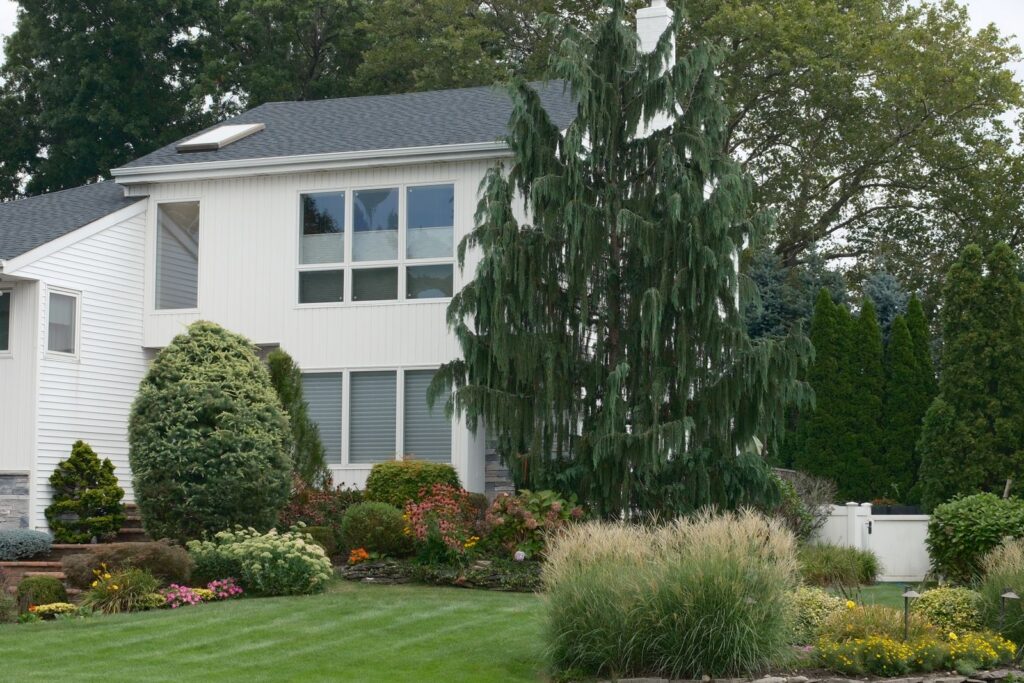
An easy front yard comes from a few decisions made up front: less lawn, fewer but larger planting beds, plants that fit their space at full size, a thick layer of mulch, and water delivered by drip on a timer. Get those right and the yard mostly looks after itself.
Design Choices That Cut Maintenance
Shrink the Lawn
Lawn is the highest-maintenance part of most front yards: weekly mowing, edging, feeding, and watering. Keep a simple shape you can mow in a few passes, and turn awkward strips, slopes, and the area under trees into planting beds or groundcover. Our sustainable landscaping guide has more on replacing lawn.
Plant for the Mature Size
This is the biggest time-saver of all. A shrub planted where it has room to reach its full size never needs cutting back to fit. UF/IFAS Extension’s Florida-Friendly Landscaping program makes this its first principle. Choose plants that mature at the size you want, and they need far less pruning. Check the label for height and width at maturity, not the size in the pot, and keep shrubs back from windows and walkways.
Use Fewer, Bigger Beds
One or two generous beds with smooth curves are easier to mow around and edge than lots of small islands. Plant in groups of three or five of the same plant rather than one of everything, which looks more deliberate and is simpler to care for.
Mulch Everything That Isn’t Lawn
Two to three inches of shredded bark or wood chips keeps most weeds from sprouting and holds in moisture. Keep it a few inches away from stems and trunks, and top it up once a year.
Put Water on a Timer
Drip lines or soaker hoses on a simple timer water beds at the roots without you dragging a hose around. Group plants with similar water needs so one zone doesn’t drown its neighbors.
Low-Maintenance Plants for Front Yards
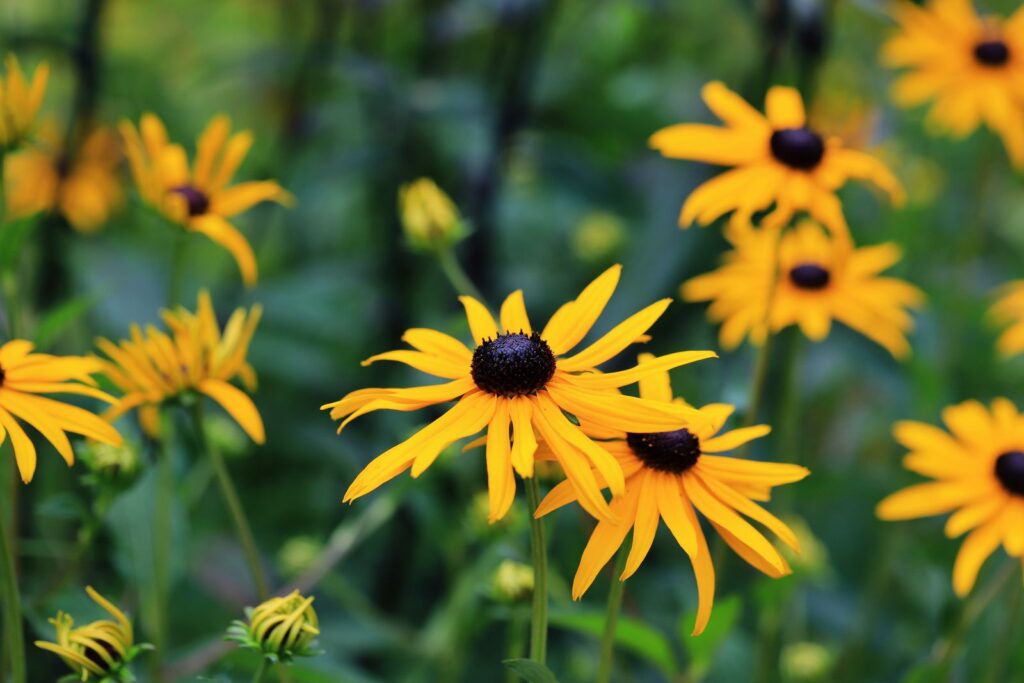
The best low-maintenance plants are ones suited to your climate, soil, and light. Native plants are a good place to start, and the National Wildlife Federation’s Native Plant Finder lists natives by ZIP code. These are reliable choices across much of the country:
| Plant | Type | Light | Why it’s easy |
|---|---|---|---|
| Inkberry holly | Evergreen shrub (native) | Sun to part shade | Stays green, needs little pruning |
| Virginia sweetspire | Shrub (native) | Sun to shade | Spring flowers, red fall color |
| Dwarf fothergilla | Shrub (native) | Sun to part shade | Compact, white spring flowers, fall color |
| Creeping juniper | Evergreen groundcover | Full sun | Drought tolerant, covers slopes |
| Coneflower | Perennial (native) | Full sun | Long bloom, feeds pollinators |
| Black-eyed Susan | Perennial (native) | Full sun | Tough, blooms through late summer |
| Catmint | Perennial | Full sun | Drought tolerant, deer resistant |
| Sedum ‘Autumn Joy’ | Perennial | Full sun | Thrives in dry spots, fall flowers |
| Little bluestem | Grass (native) | Full sun | No watering once established, copper fall color |
| Foamflower | Groundcover (native) | Part to full shade | Spring flowers under trees |
Most perennials die back in winter, so pair them with evergreens like inkberry or juniper to keep the yard from looking bare between November and spring. In hot, dry climates, agave, red yucca, and autumn sage are better bets. See our desert landscaping ideas, and for help matching plants to your region, our guide to choosing plants for your climate.
Soil: Add Compost, Not Sand
A soil test from your local extension office tells you what your soil needs. That way you don’t buy fertilizer it doesn’t. If you have heavy clay, resist the urge to mix in sand. University of Saskatchewan gardening specialists warn that sand and clay can set into a concrete-like mix. It also takes huge amounts of sand to change clay at all. Spread compost on top of the soil each year instead.
Common Mistakes That Create More Work
- Planting too close. Small nursery shrubs look sparse at first, so people crowd them. In three years they’re fighting each other and the house.
- Piling mulch against trunks. Mulch volcanoes around trees and shrubs keep the bark wet and invite rot.
- Too many kinds of plants. One of everything means every plant needs different care. Repeat a few that work.
- Leaving narrow lawn strips. A strip of grass too narrow to mow in one pass is all edging and no lawn.
For ideas that make a front yard look its best from the street, see our guide to front yard curb appeal.
Frequently Asked Questions
What is the easiest front yard landscaping to maintain?
A smaller, simply shaped lawn with mulched beds of shrubs and perennials that suit your climate and fit their space at full size. Add drip irrigation on a timer and most of the routine work disappears.
What are the best low-maintenance plants for a front yard?
Reliable choices include inkberry holly, Virginia sweetspire, creeping juniper, coneflower, black-eyed Susan, catmint, sedum, and little bluestem. Check that each one suits your region, sun, and soil.
How do I keep a low-maintenance front yard looking good in winter?
Mix evergreen shrubs or groundcovers in with your perennials, and leave ornamental grasses and sturdy seed heads standing until spring. A clean path and edged beds keep the yard looking tidy even when little is growing.
Should I put landscape fabric under the mulch?
No. Weeds soon grow in the debris that collects on top of the fabric, and it limits air movement into the soil. A 2 to 3 inch layer of mulch on bare soil does the job better.
How can I cut down on mowing?
Shrink the lawn to a simple shape you can mow in a few passes, and turn narrow strips, slopes, and shady spots under trees into planting beds or groundcover.