
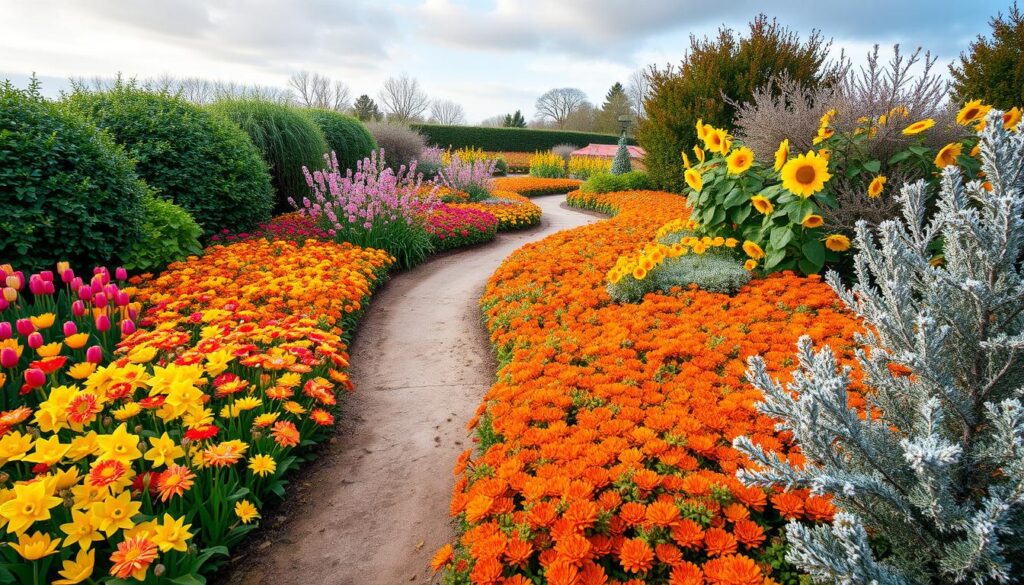
Vibrant, color-filled gardens are a delight all year. They offer something new from January to December. Creating a successful seasonal landscape requires careful planning. But the rewards of a beautiful outdoor space make it worth it.
Whether you choose easy-to-swap annual containers or carefully picked perennial beds, picking the right plants is crucial. They should match your regional climate and landscape style. This ensures a low-maintenance, drought-tolerant backyard retreat.
The USDA Plant Hardiness Zone Map and the Canadian Planting Zone Map are very helpful. They guide you on the best trees, shrubs, and flowers for your area. By choosing plants that fit your zone, you can have vibrant, healthy plants all year.
Key Takeaways
- Leverage seasonal planting to create a year-round backyard oasis
- Select plants suited to your USDA or Canadian planting zone for best results
- Incorporate a mix of annuals, perennials, and evergreens for continuous color
- Utilize containers for easy seasonal swaps of flowering plants
- Prioritize low-maintenance, drought-tolerant species for a thriving landscape
Understanding Planting Zones and Garden Planning
Choosing the right plants is key to a beautiful, easy-to-care-for garden. The United States Department of Agriculture (USDA) and Canadian Planting Zone Maps are great tools. They help you pick plants that will do well in your local weather.
Using USDA and Canadian Zone Maps
The USDA Plant Hardiness Zone Map breaks the U.S. into 13 zones, each with two subzones. It’s based on the average winter low. This info is vital for picking plants that can handle your winters.
The Canadian Planting Zone Map gives insights into growing conditions in Canada. It includes info on growing seasons, high temperatures, and rainfall.
Knowing your planting zone helps you choose the best plants for your garden. Whether you’re using USDA and Canadian zone maps, planning your garden, or looking for advice, it’s crucial.
Organizing and Planning Your Seasonal Garden
Creating a detailed plan is essential for a stunning, easy-to-maintain garden. Think about the bloom times and growth habits of different plants. This way, your garden will have color and interest all year.
Incorporating Trees for Year-Round Color
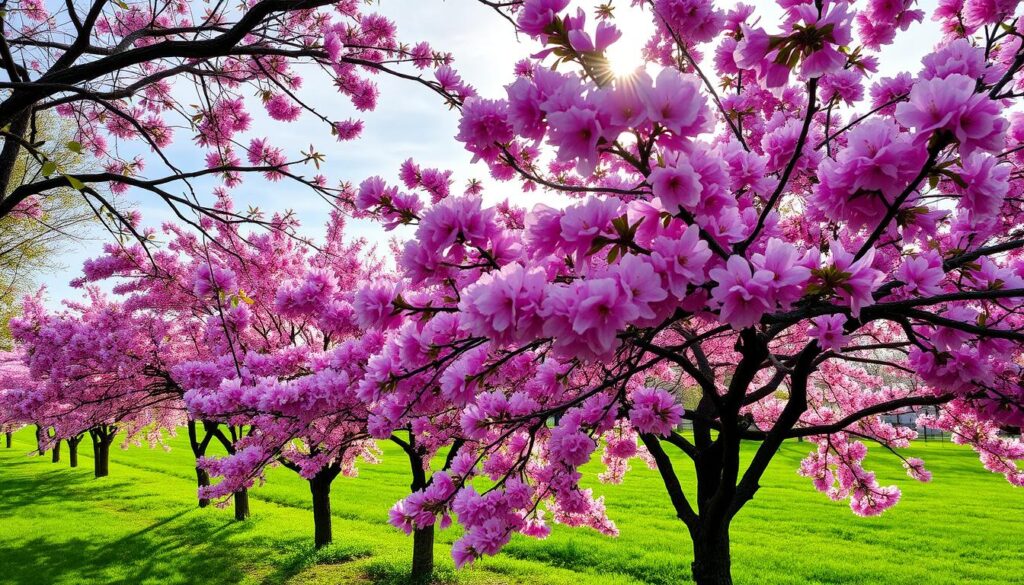
Trees and shrubs are key in any landscape design. They add structure, height, and interest all year. They can turn a backyard into a oasis. Though they cost more at first, their long-term benefits are worth it for any low-maintenance landscape.
Flowering and Evergreen Tree Varieties
For year-round color, mix flowering and evergreen tree varieties. Deciduous trees like Red Maple, Dogwood, and Crabapple bloom in spring and show off in fall. Evergreens like Junipers and Arborvitae keep your space green all year.
Benefits of Trees in Landscape Design
- Provide year-round interest with varying colors, textures, and shapes
- Offer shade to help cool your home and garden
- Attract birds and other wildlife with food and shelter
- Enhance privacy and create a backyard oasis
- Improve air quality and reduce noise pollution
Placing trees wisely can change a simple yard into a lush, welcoming space. It’s a place you and your family can enjoy for many years.
Shrubs: A Colorful Focal Point
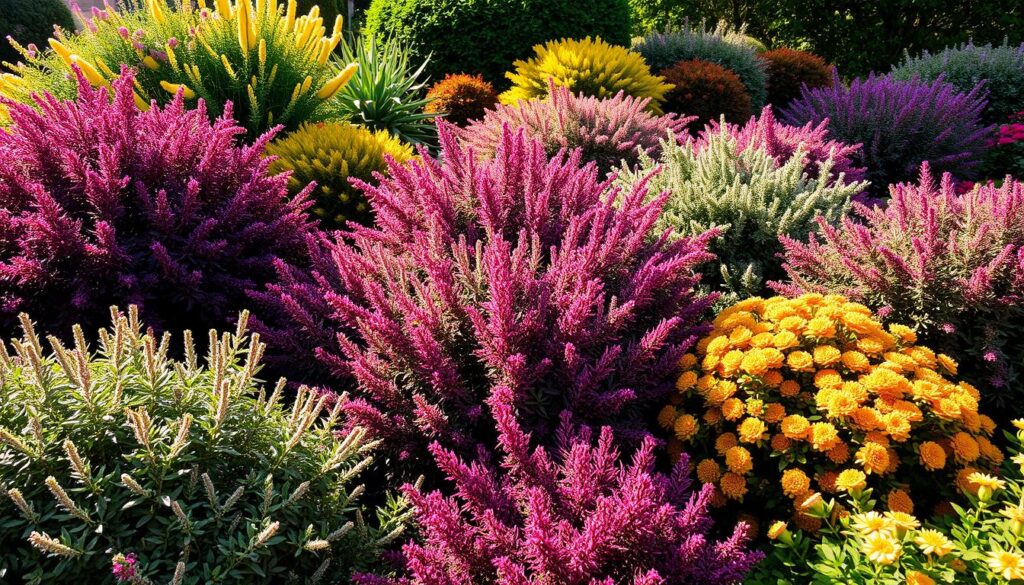
Shrubs are the unsung heroes of landscape design. They offer vibrant blooms and lush foliage. This can turn any outdoor space into a true backyard oasis. Recently, there’s been a growing trend to use more shrubs in gardening.
One key benefit of shrubs is their ability to add color all year. By choosing different flowering shrubs that bloom at different times, you can have color in your garden all season. This goes from the first spring buds to the last fall colors.
| Shrub Type | Bloom Season | USDA Hardiness Zones |
|---|---|---|
| Forsythia | Early Spring | 5 to 8 |
| Lilac | Late Spring | 3 to 8 |
| Hydrangea | Summer | 3 to 9 |
| Witch Hazel | Late Fall | 3 to 8 |
When planning your shrub-centric landscape, think about the different forms and textures. Layering tall, medium, and low shrubs can make your garden look amazing. It adds depth and interest to your flower beds.
Keeping your shrubs healthy is important. Prune them in the fall to keep them looking good. With the right tools, like a long pruning saw or a Japanese trim sickle, you can easily shape and maintain your shrubs. This way, they’ll keep being the colorful focal points of your garden for years.
Perennials for Continuous Blooms
Perennials are key to a lively, easy-to-care-for garden. They come back year after year, adding color and texture all season. To keep your garden colorful, pick perennials that bloom at different times and include some that bloom in winter.
Staggering Perennial Bloom Times
Perennials bloom for a season, lasting from a few weeks to several months. To keep your garden lively, mix early, mid, and late bloomers. Favorites include coreopsis, catmint, and some salvia types.
Some perennials bloom again, adding more color to your garden. Phlox paniculata, daylily, and Shasta daisy are great for this.
Winter-Blooming Perennial Options
In some areas, winter-blooming perennials like Christmas rose, winter iris, Persian violet, and pansies are a delight. They add color when it’s cold, making your garden beautiful all year.
Choosing perennials with different bloom times and adding winter bloomers makes your garden a colorful show. It will be beautiful from spring to fall.
Seasonal Planting Guide for Landscape Styles
Creating a lively landscape all year round needs careful planning and the right plants. Whether you dream of a lush garden or a modern oasis, knowing your landscape style is key. This guide will help you pick the perfect seasonal plants for landscaping for your dream backyard oasis.
In contemporary landscaping, focus on height, texture, and muted colors. Ornamental grasses, succulents, and evergreen shrubs make a striking base. Add drought-tolerant plants for seasonal interest. On the other hand, traditional landscapesuse a wide range of flowering plants and vibrant colors.
Think about your flower bed layouts based on your landscape style. Formal gardens have symmetrical plantings and geometric patterns. Informal areas go for naturalistic groupings and meandering pathways. Mixing annuals, perennials, and shrubs makes a low-maintenance landscape that looks great all year.
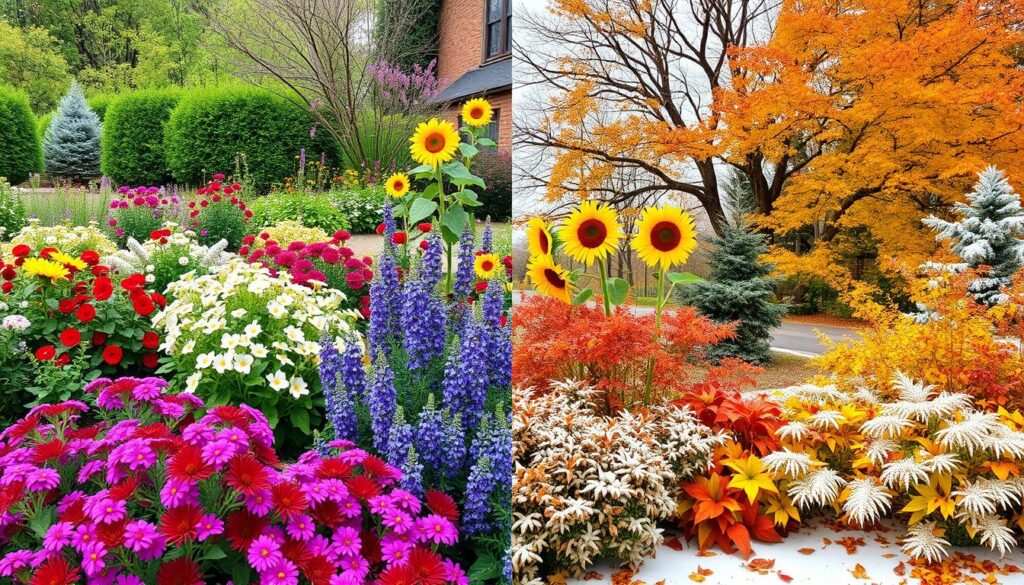
Understanding different landscape styles and regional gardening advice lets you create a personalized planting guide. Whether you want a lush cottage garden or a modern retreat, this guide will help you transform your landscape into a true backyard haven.
Annuals: Vibrant Single-Season Splashes
Annual flowers are great for adding color to your garden. They bloom brightly for just one season. While they need more care than perennials, they come in many varieties to match your garden style.
Popular Annual Flower Choices
In New Jersey and New York, some top annual flowers are:
- Begonias – These plants love partial shade and bloom in white, pink, and red.
- Impatiens – Perfect for shady spots, they bloom all summer and into early fall.
- Pansies – They resist frost and bloom in spring and fall, adding colors to your garden.
- Marigolds – These flowers are easy to grow and bloom in orange and yellow, producing many flowers in summer.
Looking for plants that are easy to care for or want to make a statement? These flowers are perfect for adding color to your garden.
Attracting Butterflies and Hummingbirds
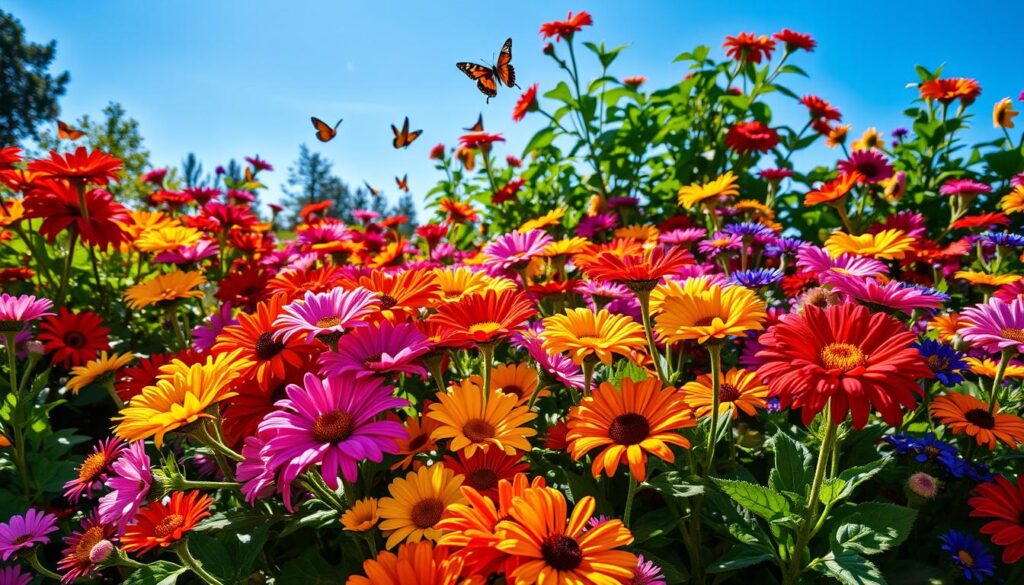
Turn your backyard into a lively wildlife haven with plants for butterflies and hummingbirds. These creatures bring magic and movement to your garden. It becomes a true regional gardening gem.
Hummingbird-Friendly Plants
Hummingbirds love flowers with red or orange shapes because they’re easy to get nectar from. Good plants for them are Trumpet Honeysuckle, Bee Balm, and Hummingbird Sage. These flowers will keep hummingbirds coming back all season.
Butterfly-Attracting Blooms
Butterflies like many flowers, like Milkweeds, Violets, Marigolds, Cosmos, Zinnias, and Asters. These colorful flowers will make your garden buzz with activity. A mix of these plants will make your garden a lively spot for butterflies.
Choosing the right plants for butterflies and hummingbirds can make your outdoor space a welcoming place for them. Enjoy the beauty of these winged visitors and make your backyard a delight all year.
Conclusion
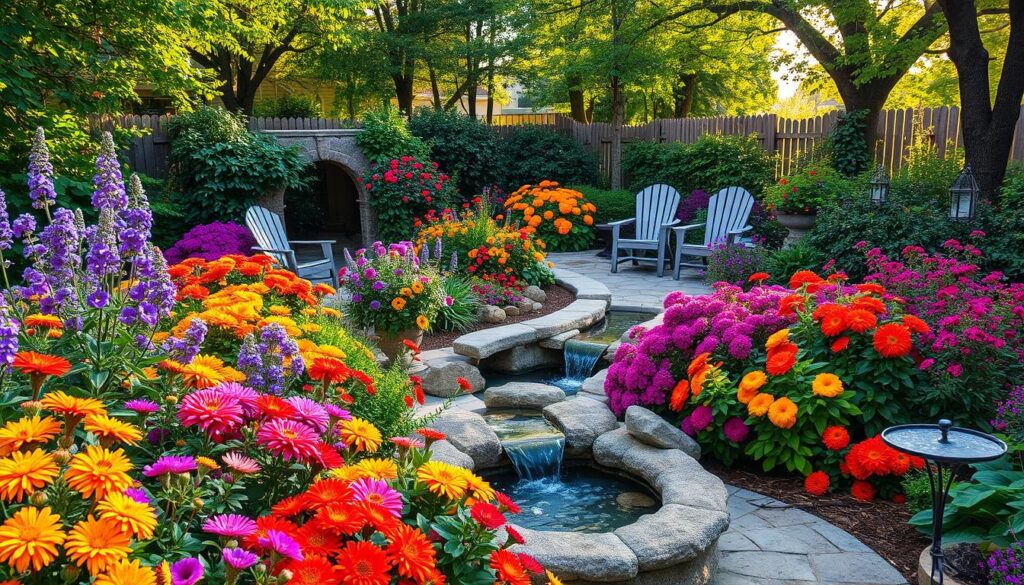
To create a colorful, season-long landscape, you need to plan well. Know your local planting zones and pick the right trees, shrubs, perennials, and annuals. Add elements to attract butterflies and hummingbirds for a backyard oasisthat’s always a delight.
This seasonal planting guide gives you the tools to make your outdoor spaces your own. It shows how to turn your garden into a personal reflection of your style and preferences.
Whether you want a low-maintenance landscape or a drought-tolerant display, this guide has you covered. It offers regional gardening advice and flower bed layouts for your dream landscaping design. It helps you choose the best plants for landscaping and adds features that attract wildlife.
So, start planning your seasonal planting guide for landscape styles. Let your outdoor space grow into a vibrant, personal garden. With the right steps, you’ll have a vibrant, low-maintenance landscape that will impress everyone for years.
FAQ
What are the best trees, shrubs, perennials, and annuals to include in a colorful seasonal garden?
The best plants for your garden vary by location. Consider flowering trees like Forsythia and Lilac. Also, choose evergreen shrubs like Rhododendron and Azalea.
Perennials such as Violets and Asters are good choices. Annuals like Begonias and Marigolds add vibrant colors.
How can I use the USDA and Canadian Planting Zone Maps to select the right plants for my garden?
The USDA and Canadian Planting Zone Maps are key. They show which plants will grow well in your climate. These maps help you pick plants based on temperature, growing seasons, and rainfall.
What are some tips for organizing and planning a seasonal garden?
Plan a garden with a mix of plants that bloom at different times. This keeps your garden colorful all year. Think about where each plant will go and how they’ll grow together.
What are the benefits of incorporating trees into my landscape design?
Trees add color, texture, and interest to your garden all year. They also provide shade and can produce flowers and fruit. Choose a mix of flowering and evergreen trees for color and structure.
How can I use shrubs to create a colorful focal point in my garden?
Shrubs bring vibrant flowers and foliage to your garden. Pick shrubs that bloom at different times. This way, you’ll have color all season. Well-placed shrubs can be stunning focal points.
What are some tips for planning a perennial garden with continuous blooms?
For a garden with color all year, choose perennials that bloom at different times. Include winter bloomers like Christmas Rose, spring bloomers like Tulips, and summer/fall bloomers like Asters.
What are some popular annual flowers that can add vibrant, single-season color to my garden?
For a pop of color, try Begonias, Impatiens, Pansies, and Marigolds. These annuals come in bright colors that enhance your garden’s look.
How can I attract butterflies and hummingbirds to my garden?
To attract butterflies, plant Milkweeds, Violets, Cosmos, and Asters. For hummingbirds, choose flowers with red or orange shapes, like Trumpet Honeysuckle. A wildlife-friendly garden with nectar-rich plants adds movement and color.