
Edible landscaping means using fruit trees, berry bushes, herbs, and vegetables as part of your yard’s design instead of hiding them in a separate vegetable plot. A blueberry hedge, a dwarf apple as the focal tree, thyme between stepping stones, and rainbow chard in the front of a flower bed all feed you and still look good. UF/IFAS Extension sums it up as replacing plants that are strictly ornamental with ones that produce food. Here’s how to plan one and which plants to use.
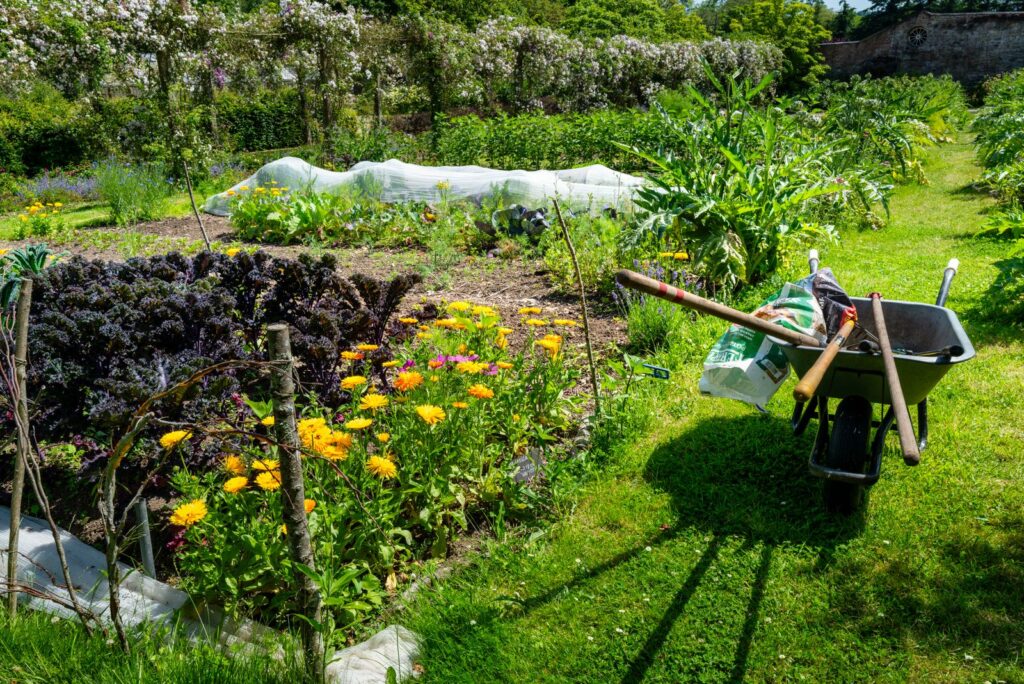
Start With Sun and Soil
Most food plants need a sunny spot and well-drained soil. Fruit trees and fruiting vegetables like tomatoes, peppers, and squash want at least 6 to 8 hours of direct sun. Leafy greens and many herbs will still produce in part shade. Watch your yard for a day and note where the sun falls before you choose plants.
Then test the soil. Most edibles do best around pH 6.0 to 7.0, but blueberries need acidic soil, around pH 4.0 to 5.0 according to University of Minnesota Extension, so they often need their own amended bed.
Test for Lead Near Older Houses
This matters more for edibles than for flowers. University of Maryland Extension recommends testing all vegetable garden soils for lead, because chipping or peeling paint raises lead levels in the soil right next to older buildings. The EPA recommends not growing vegetables in soil with more than 400 ppm of total lead. The main risk is swallowing contaminated soil, not lead taken up by plants, so if your soil is high, grow leafy greens and root crops in raised beds of clean soil, wash produce well, and keep beds a few feet away from old painted walls.
Design in Layers, Like Any Garden
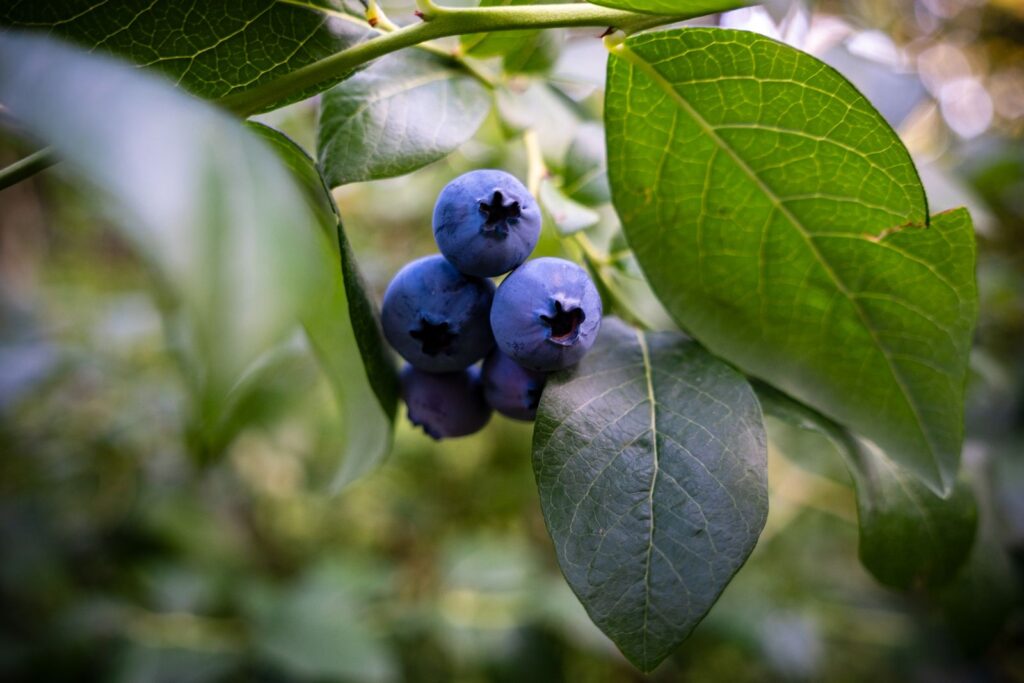
An edible landscape follows the same rules as an ornamental one: a few trees for structure, shrubs to fill out the beds, and smaller plants in front. The difference is that each layer also produces something.
| Layer | Edible choices | What they add to the design |
|---|---|---|
| Trees | Dwarf apple, pear, plum, fig, or citrus in warm climates | Spring flowers, shade, a focal point |
| Shrubs | Blueberry, currant, serviceberry, rosemary | Hedges and borders. Blueberries also turn red in fall. |
| Perennials | Rhubarb, asparagus, chives, sage, artichoke in mild climates | Bold leaves, feathery foliage, flowers |
| Annuals | Rainbow chard, kale, peppers, basil, lettuce | Color and texture at the front of beds |
| Ground covers | Strawberries, creeping thyme, oregano | Edging and fill between stepping stones |
| Vines | Grapes, hardy kiwi, pole beans, cucumbers | Cover for arbors, trellises, and fences |
| Edible flowers | Nasturtium, calendula, violas | Bright color, and they attract pollinators |
Check the details before you buy. Hardy kiwi, for example, usually needs a male and a female plant to fruit, unless you choose a self-pollinating variety like ‘Issai’, according to NC State Extension. Many apples and plums also need a second variety nearby for pollination. Our guide to choosing the right plants covers matching each plant to your site.
Ways to Work Edibles Into Your Yard
- Swap, don’t start over. Replace a few ornamental shrubs with blueberries or currants, or a flowering tree with a dwarf fruit tree, as plants need replacing anyway.
- Edge beds with herbs and greens. Chives, parsley, and frilly lettuce make tidy, low borders along paths.
- Mix vegetables into flower beds. Rainbow chard, purple basil, and peppers look at home among annual flowers. Interplant with nasturtiums and marigolds for color.
- Grow up, not out. Train pole beans, cucumbers, or grapes on a trellis, fence, or arbor to save space and add height.
- Use containers. Pots of herbs, peppers, or a dwarf citrus by the back door are easy to reach and easy to move.
- Plan for gaps. Annual vegetables leave holes when you harvest them, so tuck them among perennials or replant quickly with a fall crop. Our seasonal planting guide helps with timing.
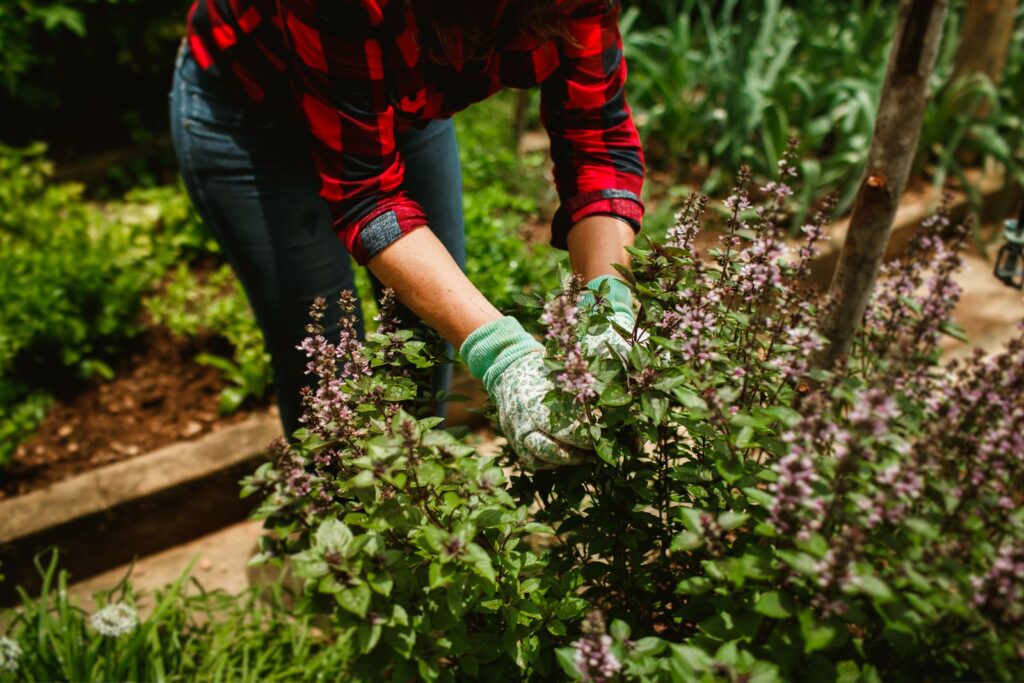
Keep mint in a pot. It spreads by runners and will take over a bed. If you’re working with a small yard, our small garden design guide has layout ideas, and raised garden beds give you clean soil and easy access.
Edibles in the Front Yard
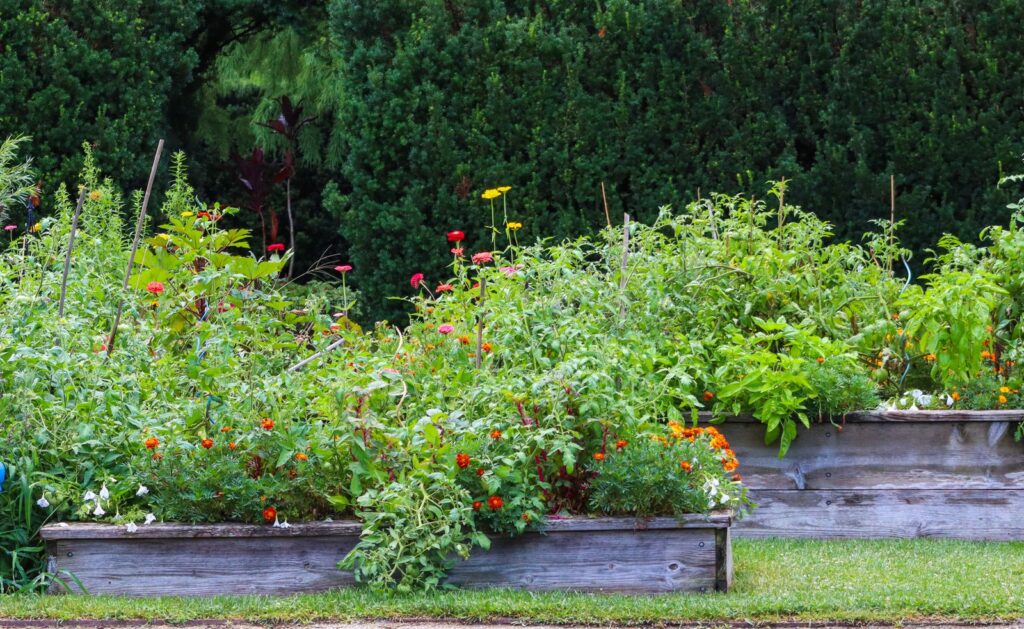
Front yards are often the sunniest spot, so they’re worth using. Keep the planting neat so it reads as a garden rather than a farm plot: clear edges, mulched beds, a defined path, and ornamental-looking edibles like blueberries, rosemary, and chard toward the street. Check your HOA rules and any local ordinances before you plant vegetables in a front yard. Our front yard landscaping guide covers the basics of a tidy layout.
Caring for an Edible Landscape
Edibles need more attention than most ornamentals: regular water while fruit is forming, compost or a balanced fertilizer each year, pruning for fruit trees and berries, and frequent harvesting. Because you’ll eat what you grow, UF/IFAS advises choosing pesticides and fertilizers that are safe for food plants. Read the label, and don’t use products meant only for ornamentals near your edibles.
Planting flowers among your crops brings in pollinators and beneficial insects, and our pollinator garden guide lists good companions. Mulch the beds and add compost each year; our composting guide shows how to make your own. Be patient with fruit: trees and berry bushes take a few years to bear well. Expect to share some with birds and squirrels, or net berries as they ripen, and in deer country plan on a fence.
Frequently Asked Questions
What is edible landscaping?
Edible landscaping uses food plants such as fruit trees, berry bushes, herbs, and vegetables as part of a yard’s design, instead of keeping them in a separate vegetable plot. They do the same jobs as ornamentals, like hedges, focal trees, and edging, while also producing food.
What are the easiest edible plants for landscaping?
Herbs like rosemary, chives, thyme, and sage are easy and look good year after year. Blueberries make attractive shrubs if your soil is acidic, strawberries work as a ground cover, and rainbow chard and kale add color to flower beds.
How much sun does an edible landscape need?
Fruit trees and fruiting vegetables like tomatoes and peppers need at least 6 to 8 hours of direct sun. Leafy greens and many herbs will still produce in part shade.
Is it safe to grow food near my house?
Usually, but test the soil first. University of Maryland Extension recommends testing all vegetable garden soil for lead, especially next to older buildings where paint may have chipped. If lead is high, grow leafy greens and root crops in raised beds of clean soil.
Can I plant vegetables in my front yard?
In most places, yes, but check your HOA rules and local ordinances first. Keep the planting tidy, with clear edges, mulch, and ornamental-looking edibles near the street.