
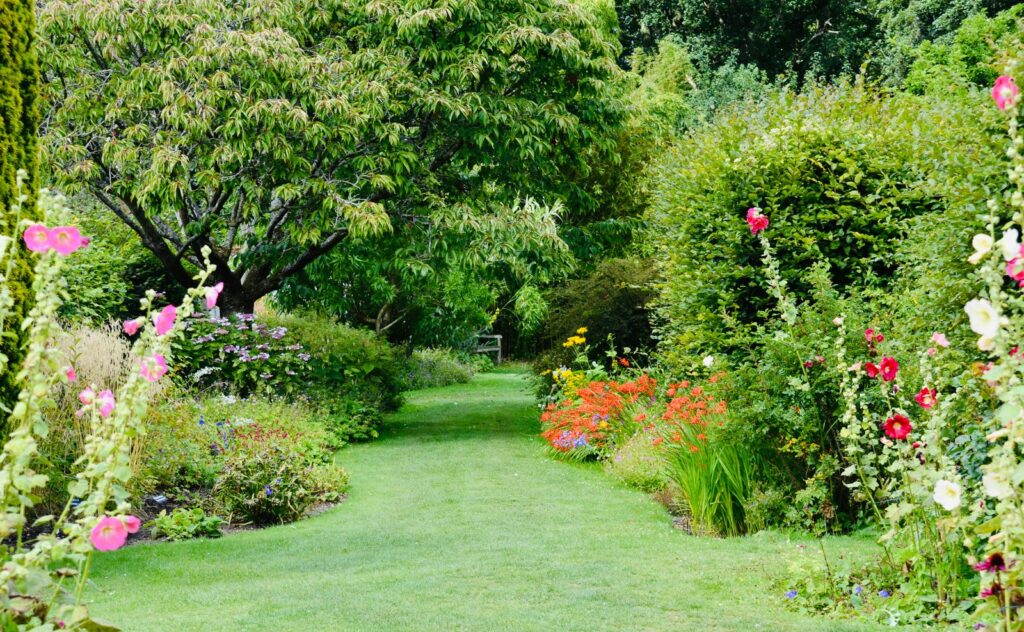
A classic English garden pairs firm structure with generous, layered planting. Hedges, paths, a lawn, and an arbor or bench give it bones. Deep mixed borders of perennials, roses, and shrubs, planted in drifts of color, fill it in. Done well, it looks abundant and a little relaxed but never messy. Here’s what goes into one and how to get the look in an ordinary backyard.
Two English Traditions
“English garden” can mean two different things. The 18th-century English landscape garden, made famous by Capability Brown, is a park of rolling lawn, lakes, and clumps of trees with very few flowers. The style most people picture today is the English flower garden of the late 1800s and early 1900s, with its rich borders, roses, and hedged garden rooms. That’s the style this guide covers, and it’s one of several in our guide to landscape design styles. For how it compares with formal European gardens, see our guide to formal vs. informal landscapes.
The Elements of an English Garden
The Mixed Border
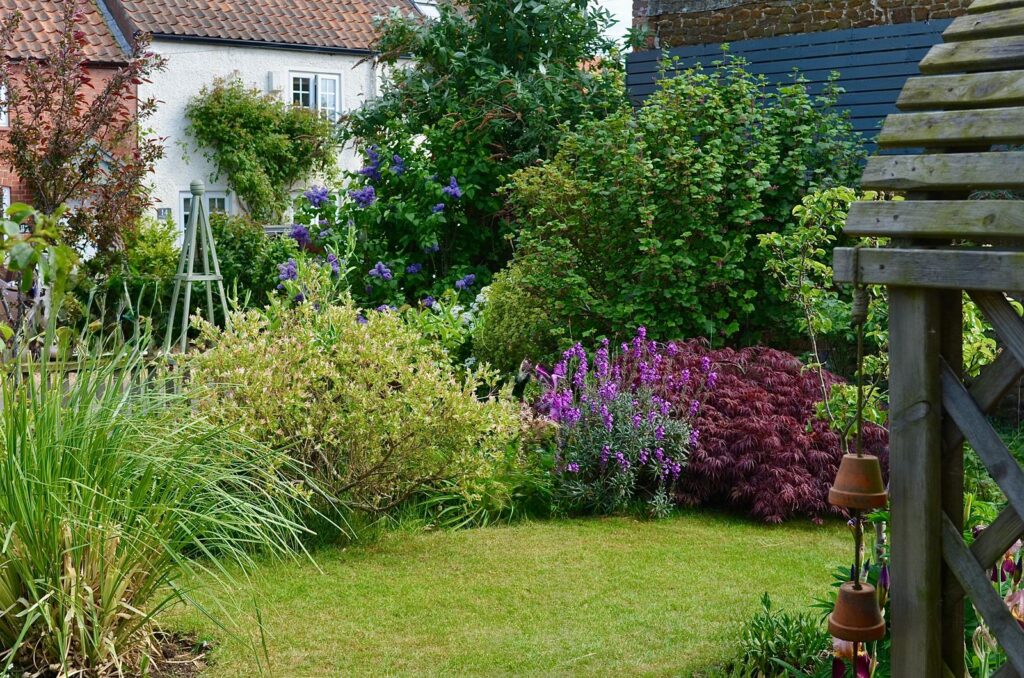
The deep flower border is the heart of the style, and Gertrude Jekyll was its most influential designer. At her own garden, Munstead Wood, the National Trust describes how she used plants like a painter’s palette, laying drifts of color along the border from cool whites and blues to hotter colors in the center. Borders mix shrubs, perennials, bulbs, and annuals, with the tallest plants at the back and the shortest at the front.
Garden Rooms
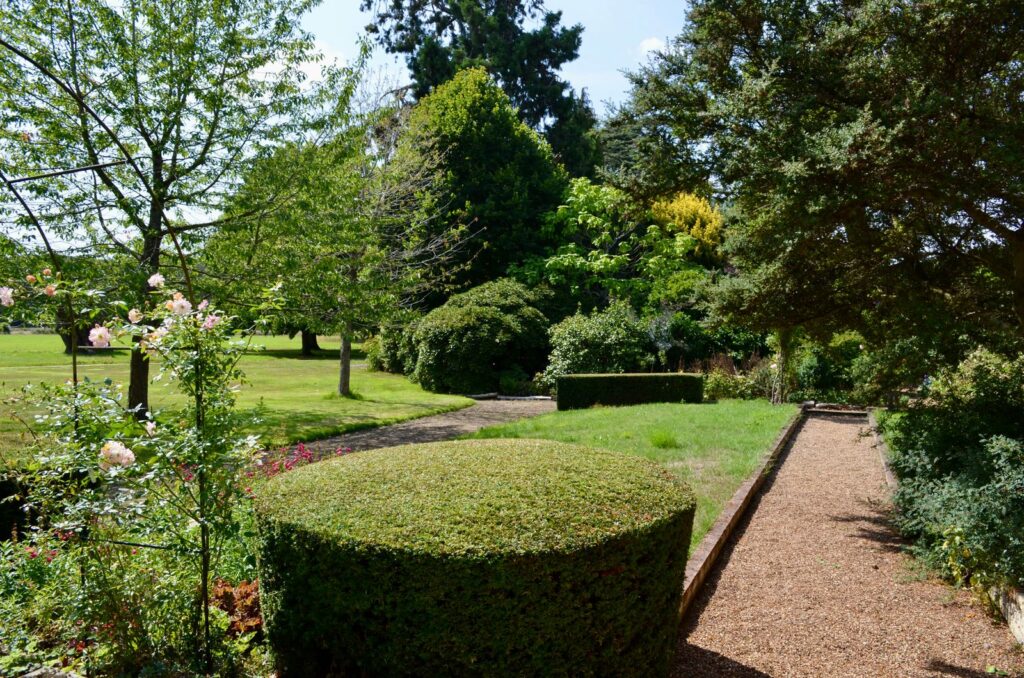
Many English gardens are divided into separate “rooms” by hedges or walls, each with its own character. The best-known example is Hidcote in Gloucestershire, where the National Trust cares for a series of intimate hedged rooms near the house. In a backyard, the same idea can be as simple as a hedge or trellis that separates a seating area from the lawn. Evergreen hedges of boxwood or yew, sometimes clipped into balls or cones, keep that structure in place through winter after the borders are cut back.
Roses and Climbers
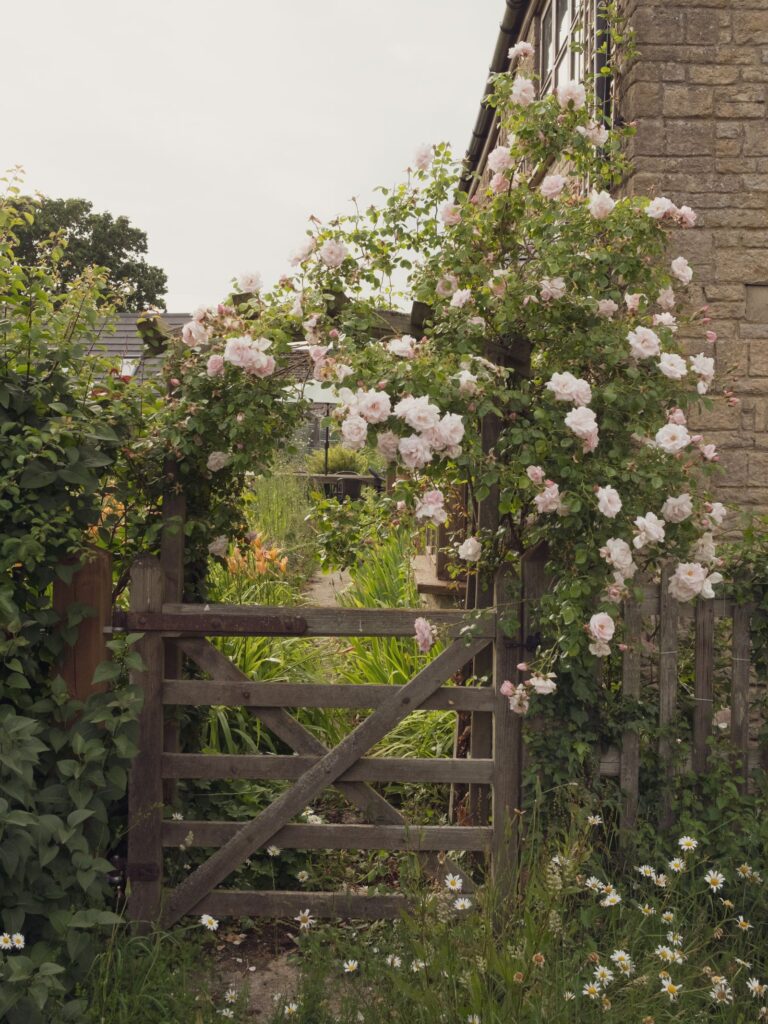
Roses trained over arches, along walls, and up through shrubs are almost a requirement. Clematis is the classic partner, often grown through a rose so the two bloom together. Choose fragrant roses for spots near a seat or path, and add other scented plants such as lavender, phlox, and honeysuckle where people will brush past them.
Lawn, Paths, and Places to Sit
A simple lawn gives the eye a rest from all that planting. Gravel or old brick paths lead through the borders, and a bench, birdbath, or sundial gives each view a focal point. An arbor over the path into the next room adds height and frames the view.
The Cottage Garden: The Informal Cousin
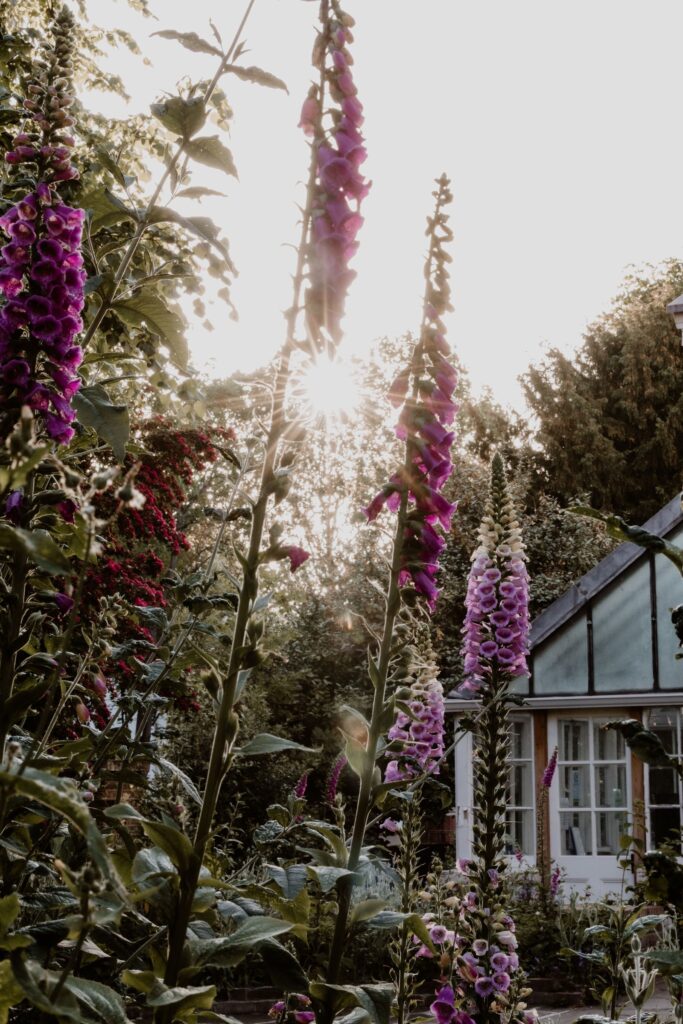
The cottage garden is the looser, smaller version: flowers, herbs, and sometimes vegetables packed together with little structure beyond a path and a fence. Self-seeding plants like foxgloves fill gaps on their own, so no two years look quite the same. William Robinson and Gertrude Jekyll both championed this relaxed planting style in the late 1800s.
Plants for an English-Style Garden
| Plant | Role | Note |
|---|---|---|
| Climbing and shrub roses | Arches, walls, borders | Choose disease-resistant varieties |
| Clematis | Climber with roses | Likes cool roots and sun on top |
| Foxglove | Tall spires, self-seeds | Poisonous to people and pets |
| Delphinium | Tall back-of-border blue | Struggles in hot summers |
| Peony | Early summer flowers | Long-lived, little care |
| Hardy geranium | Front-of-border filler | Tough, long blooming |
| Catmint | Edging, soft blue | Drought tolerant |
| Lavender | Edging, scent | Needs sun and drainage |
| Garden phlox | Mid-border color, scent | Choose mildew-resistant types |
| Boxwood or yew | Hedges and edging | Gives the borders structure |
Foxglove is beautiful but every part is toxic, and the ASPCA lists it as poisonous to dogs and cats, so place it away from where children and pets play.
Many English garden classics are at their best in cool, damp summers. Where summers are hot, humid, or dry, keep the look but swap in plants that cope: salvias, coneflowers, yarrow, and Russian sage give the same soft, layered effect. Our guide to choosing plants for your climate can help, and our pollinator garden guide lists natives that fit the style.
How to Create an English Garden at Home
- Set the structure first. Decide where the lawn, paths, hedges, and any arbor go before you buy a single perennial.
- Make the borders deep. A border needs to be at least 4 to 5 feet deep to layer plants from front to back, and deeper is better. Add a narrow path at the back for weeding.
- Plant in drifts. Group each plant in threes, fives, or sevens, and repeat key plants along the border so it reads as one design.
- Layer by height and season. Put tall plants at the back and short ones at the front, and mix spring bulbs, early summer perennials, and late bloomers so something is always flowering.
- Add a focal point and a seat. A bench at the end of a path or a birdbath in a border gives the eye somewhere to land. In a small yard, one deep border along a fence and a single arbor can carry the whole look. Our small garden design guide has more ideas.
Keeping It Looking English
This style needs regular attention. Stake tall perennials in spring before they flop, deadhead to keep flowers coming, and divide crowded clumps every few years. Mulch the borders to hold moisture and keep weeds down. Leave some seed heads standing into winter for the birds, then cut the border back in late winter or early spring. For more on the season-by-season jobs, see our seasonal landscaping guide.
Frequently Asked Questions
What makes a garden an English garden?
A firm structure of hedges, paths, and lawn, filled with generous, layered planting. Deep mixed borders of perennials, roses, and shrubs planted in drifts of color are the signature feature, often with hedged garden rooms, climbing roses, and a bench or arbor as a focal point.
What is the difference between an English garden and a cottage garden?
An English flower garden is built around structure: a lawn, clipped hedges, defined borders, and separate garden rooms. A cottage garden is smaller and looser, with flowers, herbs, and vegetables packed together and little structure beyond a path and a fence.
What flowers are in a traditional English garden?
Roses, clematis, foxgloves, delphiniums, peonies, hardy geraniums, catmint, lavender, and garden phlox are the classics, with boxwood or yew for hedging. Foxglove is poisonous, so plant it away from children and pets.
Can I have an English garden in a hot climate?
Yes. Keep the structure and the layered look, but swap plants that struggle in heat, such as delphiniums, for ones that cope, like salvias, coneflowers, yarrow, and Russian sage.
Is an English garden high maintenance?
More than most styles. Tall perennials need staking, flowers need deadheading, and clumps need dividing every few years. Choosing tough perennials, mulching the borders, and planting fewer annuals keeps the work down.