
You can build a working compost bin in an afternoon from a roll of hardware cloth, four pallets, or a plastic trash can. The two things that matter most are size and gaps: Colorado State University Extension says a bin needs to be at least 3 feet by 3 feet to hold the heat that breaks material down, and the EPA recommends no gaps larger than 1/4 inch if you want to keep rodents out. Here are four designs, from simplest to sturdiest.
Pick the Spot First
Choose level ground that drains well and is easy to reach year-round, close enough to the kitchen that you’ll actually carry scraps out. The EPA advises keeping the bin off a fence line and near a water source, and notes that a pile breaks down in sun or shade. Leave room to work around it with a fork and wheelbarrow.
4 DIY Compost Bin Designs
| Design | Cost | Time to build | Best for |
|---|---|---|---|
| Wire mesh bin | Low | Under an hour | Leaves and garden waste |
| Pallet bin | Free to low | 1 to 2 hours | Most backyards |
| Trash can bin | Low | Under an hour | Small yards and food scraps |
| Two-bay wooden bin | Medium | Half a day | Steady compost, easy turning |
Tools and Materials
- Tools: work gloves, tape measure, wire cutters or tin snips, a drill with a 1/4-inch bit, a screwdriver or impact driver, and a mallet for stakes.
- Wire bin: about 10 feet of 3-foot-tall hardware cloth or welded wire, wire ties or clips, and two or three stakes.
- Pallet bin: four HT-stamped pallets, exterior screws or heavy zip ties, two hooks or latches, and optional 1/4-inch hardware cloth for lining.
- Trash can bin: a plastic can with a locking lid, about 30 gallons or larger.
- Two-bay bin: six posts, untreated or cedar boards, and exterior screws.
1. Wire Mesh Bin
This is the quickest bin to build. Colorado State Extension notes that a 10-foot length of hardware cloth makes a bin about 3 feet across.
- Unroll about 10 feet of 3-foot-tall hardware cloth or welded wire fencing and wear gloves, since the cut ends are sharp.
- Bend it into a circle and tie the ends together with wire, or clip them so you can open the bin later.
- Drive two or three stakes or rebar pieces inside the ring to keep it upright.
Wire lets in lots of air but dries the pile out, so you may need to water it or cover it with a tarp. Chicken wire is cheaper but flimsier and needs more posts. To turn the pile, unclip the ring, set it up next to the pile, and fork everything back in.
2. Pallet Bin
Four pallets make a sturdy square bin about 3 feet on each side, often for free. UF/IFAS Extension suggests making the front removable so you can get at the compost.
- Check the stamp. Use pallets marked HT, which means heat-treated. UC Agriculture and Natural Resources warns against pallets stamped MB, which were fumigated with methyl bromide.
- Stand three pallets in a U shape and join the corners with screws, wire, or heavy zip ties.
- Attach the fourth pallet as the front with hooks or latches so it swings or lifts off.
- For rodent-proofing, line the inside and the ground beneath with 1/4-inch hardware cloth.
3. Trash Can Bin
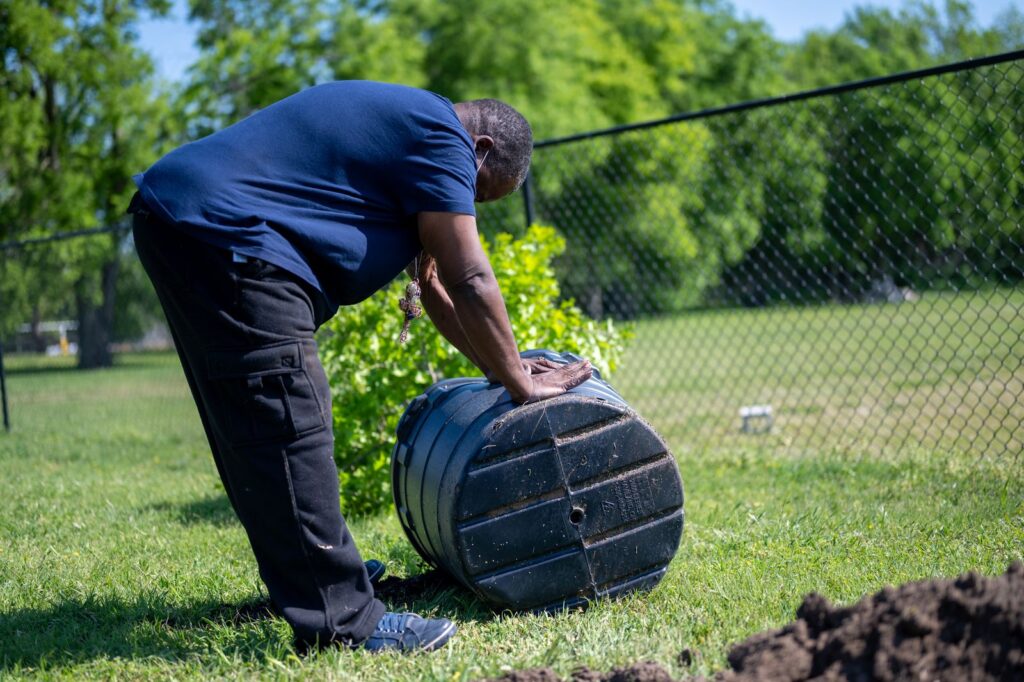
A plastic trash can with a tight lid is the most compact option and the easiest to keep animals out of. Drill rows of small holes around the sides and a few in the bottom for air and drainage, keeping each hole no larger than 1/4 inch. Set the can on bare soil or a few bricks over a square of hardware cloth. Because it holds less, it works slowly, but you can roll the can on its side to mix the contents. Keep adding browns, since food scraps alone turn wet and smelly.
4. Two-Bay Wooden Bin
A two-bay bin lets one batch finish while you fill the other, and turning is just a matter of forking the pile from one bay into the next. UF/IFAS describes building it from posts set 3 feet apart with boards nailed across, leaving about 2 inches between boards for air. Use untreated or naturally rot-resistant wood like cedar, and make the front boards slide out so you can reach the compost. A third bay for finished compost is a nice upgrade if you have the room.
Starting Your First Batch
Start with a layer of coarse browns like twigs or wood chips at the bottom for drainage and air. Then add greens such as fruit and vegetable scraps and grass clippings, and browns such as dry leaves and shredded cardboard, aiming for two to three times as much brown as green by volume. Keep it as damp as a wrung-out sponge and turn it every week or two. Leave out meat, dairy, oils, and pet waste. Our guide to 8 ways to compost at home covers what goes in, how long it takes, and how to fix a pile that smells or won’t heat up.
When it’s dark, crumbly, and smells like soil, spread it on your beds. Our raised garden bed and edible landscaping guides show where it does the most good.
Frequently Asked Questions
How big should a compost bin be?
At least 3 feet by 3 feet. Colorado State University Extension says that is the minimum size to hold the heat needed for decomposition, and piles over 5 feet high pack down and slow the process.
What is the cheapest DIY compost bin?
A wire mesh ring or a bin made from free pallets. About 10 feet of hardware cloth makes a round bin 3 feet across, and four heat-treated pallets make a square bin.
How do I keep rats out of a compost bin?
The EPA recommends a lid, a floor if needed, and no gaps larger than 1/4 inch. Line the base with 1/4-inch hardware cloth, cover food scraps with browns, and leave out meat, dairy, and greasy food.
Are pallets safe for a compost bin?
Use pallets stamped HT, which means heat-treated. UC Agriculture and Natural Resources advises against pallets stamped MB, which were fumigated with methyl bromide.
Should a compost bin have a bottom?
Most bins sit directly on soil so worms and microbes can move in. Add a floor of 1/4-inch hardware cloth if rodents are a problem.