
Most DIY fire pits come down to a few proven designs: a ring of stone or block around a steel insert, a brick pit lined with fire brick, a steel bowl, or a sunken pit with built-in seating. Here are 10 ideas, from a steel bowl you can set up in an afternoon to a sunken seating area, with what each involves and the safety rules that apply to all of them.
Before You Build: Placement Rules
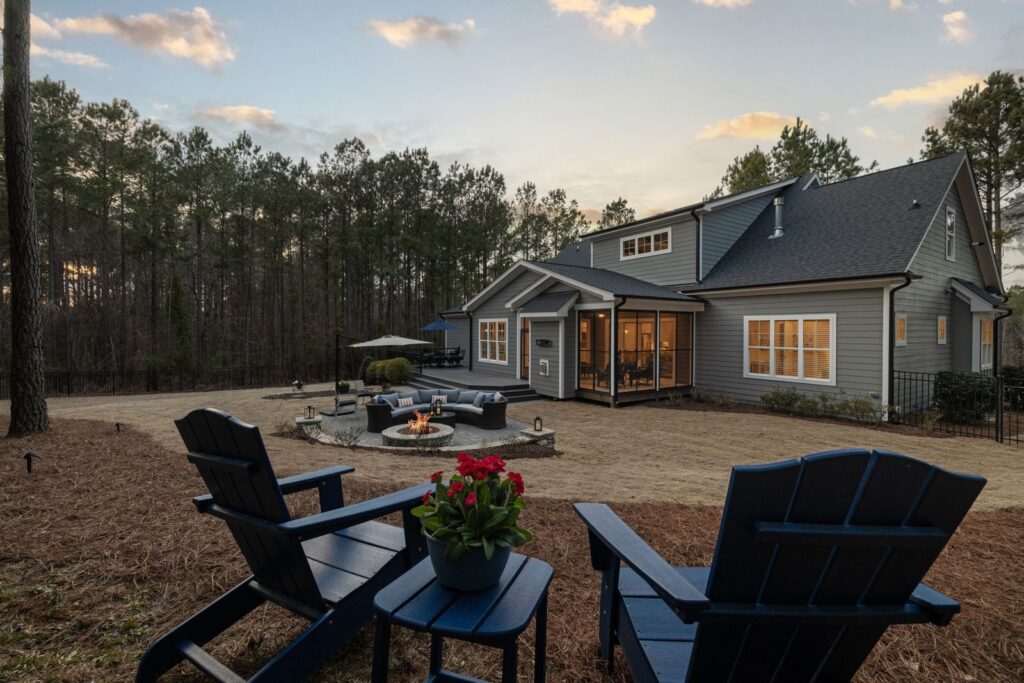
Check your local fire code and HOA rules first, since some towns limit or ban open fires. Then pick the spot. The Kansas State Fire Marshal gives clear guidelines that make a good starting point:
- Keep the pit at least 10 feet from any structure or neighboring yard, and 25 feet if you can.
- Never put it under a covered porch or low branches, on a wooden deck, or directly on grass.
- Clear flammable material for about 5 feet around it.
- Make the pit at least 6 inches deep at the center and 2 feet across, so embers stay contained.
For any pit you dig into the ground, call 811 first to have buried utility lines marked.
10 DIY Fire Pit Ideas
1. Stone or Block Ring With a Steel Insert
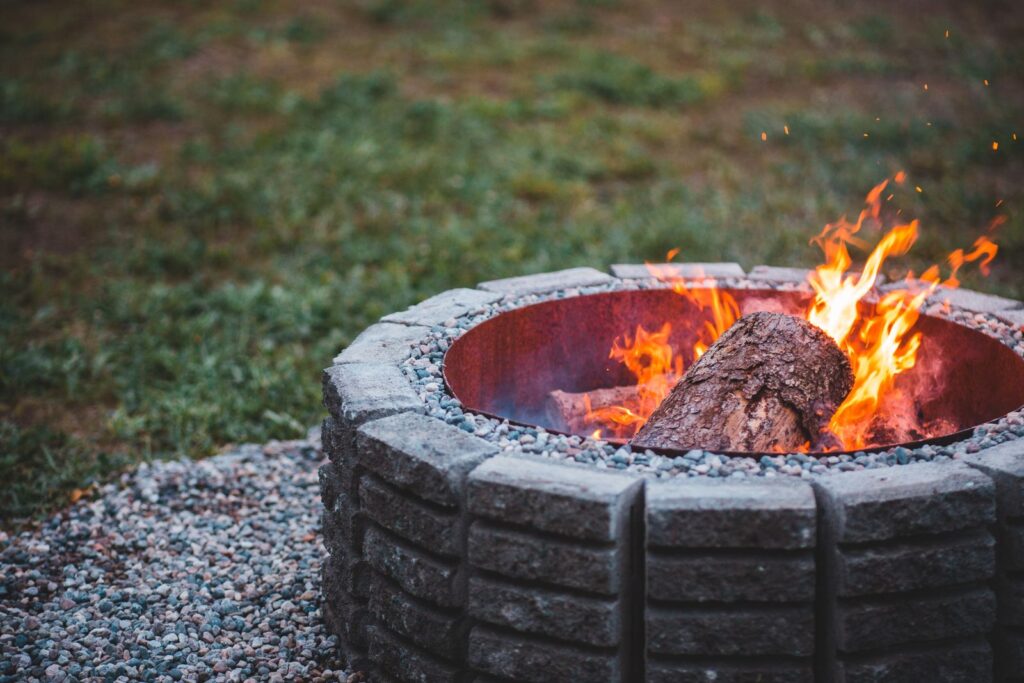
This is the most popular DIY fire pit and a good first project. Dig a shallow circle, lay a gravel base, and stack retaining wall blocks or flat natural stone around a steel fire ring insert. No mortar is needed. The insert keeps direct flame off the blocks, which aren’t made to take that heat on their own. Our step-by-step guide to building a stone ring fire pit walks through it.
2. Brick Fire Pit Lined With Fire Brick
A mortared brick pit looks permanent and classic. Use ordinary brick or stone for the outside, but line the inside with fire brick set in refractory mortar, which is made for high heat. Regular bricks and mortar can crack when exposed to direct flame. Build it on a compacted gravel or concrete base, and let the mortar cure fully before the first fire. This one takes intermediate masonry skills.
3. Steel Fire Bowl
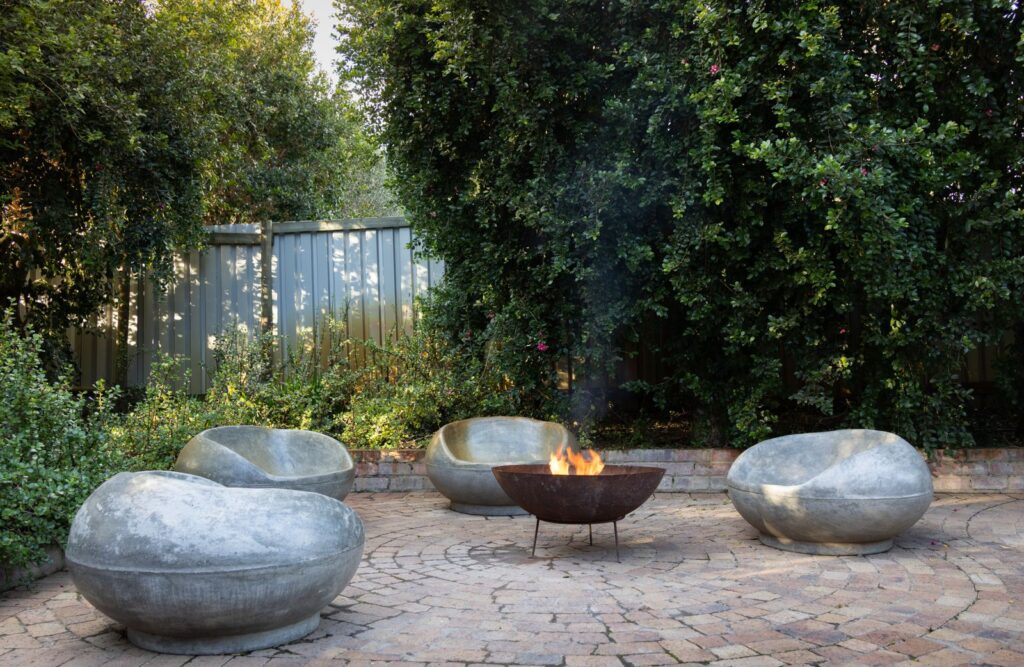
The fastest option: buy a steel or cast iron bowl and set it on a level, non-flammable surface like pavers, concrete, or a gravel pad. It’s done in an afternoon and can move if you change the layout. Use the spark screen that comes with it, especially on breezy nights.
4. Portable Steel Fire Pit
A lightweight steel pit on legs, store-bought or built from a kit, works for renters and small yards. Legs keep heat off the surface below, but it still belongs on stone, pavers, or gravel, not a deck or lawn. Stainless steel resists rust if the pit lives outside.
5. Budget Concrete Block Fire Pit
Concrete blocks stacked two courses high around a steel ring make a very cheap pit. Ordinary concrete blocks aren’t built for direct flame and can crack or spall, so the steel insert isn’t optional here. Fill the base with gravel for drainage, and replace any block that cracks.
6. Sunken Fire Pit
Setting the pit and seating area below grade blocks the wind and feels sheltered. The catch is water: a sunken area collects rain, so it needs a deep gravel base and a way for water to drain out, or it will turn into a pond. Retaining walls around the seating area must be built to hold back soil. This is the most involved project on the list.
7. Gabion Fire Pit
Wire gabion baskets filled with stone make a modern, heavy surround that won’t tip or shift. Set a steel fire bowl or insert in the center so the flames never touch the stones in the cages. Use dry, solid stone for the fill.
8. Fire Pit on a Gravel Pad
Whatever pit you choose, a gravel or paver pad around it gives you the non-flammable ground the Kansas guidelines call for, keeps chairs level, and stops grass from creeping toward the fire. Edge the pad with stone, steel, or pavers. Skip railroad ties, a common idea for this. Old ties are usually treated with creosote, and the EPA warns never to burn creosote-treated wood at home because of the toxic smoke and ash. A wooden border next to a fire pit is also one stray ember away from smoldering. See our garden path guide for how to lay a gravel base.
9. Fire Pit With a Seating Wall
A curved wall of stone or retaining wall block around part of the pit doubles as built-in seating. Build it about 18 to 20 inches high, which is standard seat height, and keep it far enough back that people aren’t sitting in the heat. Leave an open side for access, and plan a spot nearby to stack firewood. Our cozy fire pit area ideas cover seating layouts.
10. Washing Machine Drum Fire Pit
The stainless steel drum from an old washer makes a fire pit with built-in airflow from all those holes. Strip off every plastic part and the hub, file sharp edges, and run a small first fire to burn off any coatings before anyone sits around it. Mount it on steel legs or set it on stone or gravel, never on grass.
Materials to Use and Avoid
| Material | Use it for | Note |
|---|---|---|
| Steel fire ring or bowl | The burning area | Protects the surrounding stone or block |
| Fire brick and refractory mortar | Lining a masonry pit | Made for direct flame |
| Retaining wall block, brick, natural stone | The outer ring or wall | Keep direct flame off them with an insert or liner |
| Gravel, pavers, concrete | The pad around the pit | Non-flammable ground |
| River rock or stone from a creek | Avoid near the fire | Trapped water can turn to steam and crack it |
| Railroad ties or treated wood | Avoid | Flammable, and creosote smoke is toxic |
Fire Pit Safety Every Time You Light It
- Check the wind. If it’s too windy, don’t light it, and move anything flammable from the downwind side.
- No lighter fluid or gasoline. The Kansas State Fire Marshal recommends a commercial fire starter with kindling on top.
- Burn only dry firewood. No trash, plastic, or treated lumber.
- Keep water or an extinguisher close, and never leave the fire unattended.
- Put it out completely. Drown the coals, stir, and drown again until everything is cool to the touch.
If you’re planning a full weekend project, our weekend backyard projects guide pairs a fire pit with other easy upgrades.
Frequently Asked Questions
What is the easiest DIY fire pit to build?
A ring of retaining wall blocks around a steel fire ring insert. It needs no mortar, goes together in a weekend, and the insert protects the blocks from direct flame. A store-bought steel bowl on pavers or gravel is even quicker.
How far should a fire pit be from the house?
The Kansas State Fire Marshal recommends at least 10 feet from any structure or neighboring yard, with 25 feet preferable, and never under a covered porch or low branches. Check your local code, which may differ.
Can I use regular bricks or concrete blocks for a fire pit?
Yes for the outside, but keep direct flame off them. Ordinary bricks and concrete blocks can crack in high heat, so use a steel insert or line the inside with fire brick and refractory mortar.
Is a railroad tie border safe around a fire pit?
No. Old railroad ties are usually treated with creosote, and the EPA warns never to burn creosote-treated wood at home. Use a gravel, paver, or stone border instead.
What should I put under a fire pit?
A non-flammable surface such as gravel, pavers, or concrete. Don’t set a fire pit on a wooden deck or directly on grass, and clear flammable material for about 5 feet around it.