
A cozy fire pit area is mostly about what surrounds the fire: a safe, open spot, a hard surface underfoot, seating arranged in a circle so everyone can talk, soft lighting, and a little shelter from wind. This guide covers designing that space. To build the fire pit itself, see our step-by-step guide to a stone ring fire pit, and for different styles of pit, our DIY fire pit ideas.
Pick a Safe Spot
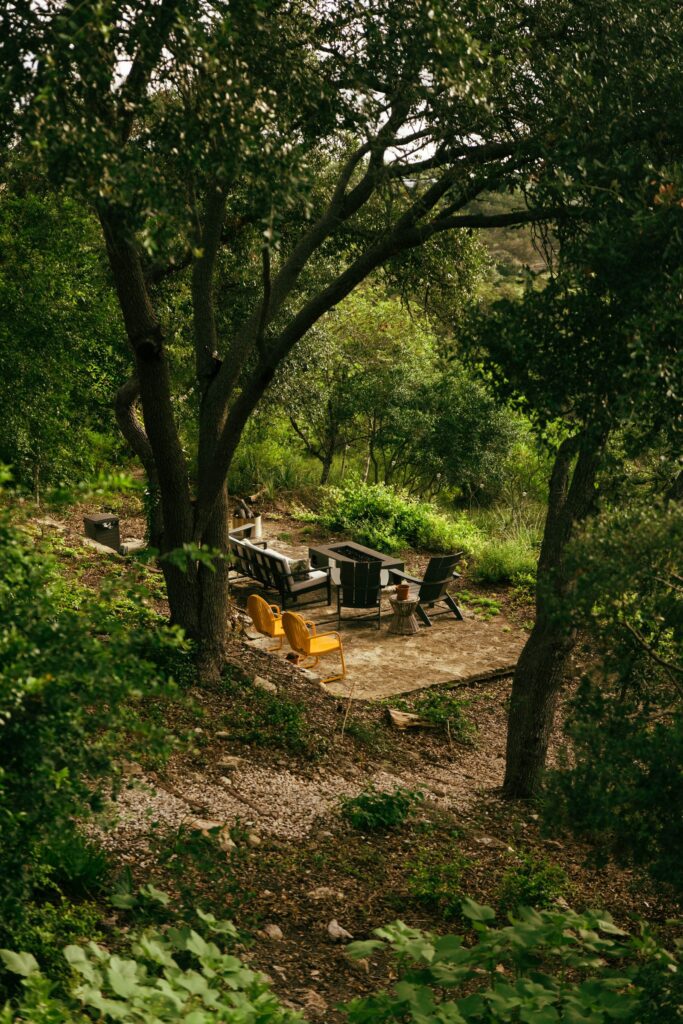
Start with placement, because it limits everything else. The Kansas State Fire Marshal recommends keeping a fire pit at least 10 feet from any structure or neighboring yard, with 25 feet preferable. It shouldn’t sit under a covered porch or low branches, or on a wooden deck or grass, and you should clear flammable material for about 5 feet around it. Check your local fire code and HOA rules, which may be stricter. Within those limits, pick a spot you can see from the house, out of the strongest wind, and with a short path from the back door.
Wood or Gas?
| Wood-burning | Gas (propane or natural gas) | |
|---|---|---|
| Feel | Crackle, smell, real heat | Clean, steady flame |
| Starting | Kindling and patience | A switch or button |
| Smoke and sparks | Yes | Very little |
| Upkeep | Hauling wood, cleaning ash | Refilling or a gas line |
| Rules | More likely to be limited by burn bans | Often allowed where wood fires aren’t |
| Install | DIY-friendly | Follow the manufacturer’s instructions. A natural gas line needs a licensed installer. |
Lay a Fire-Safe Surface
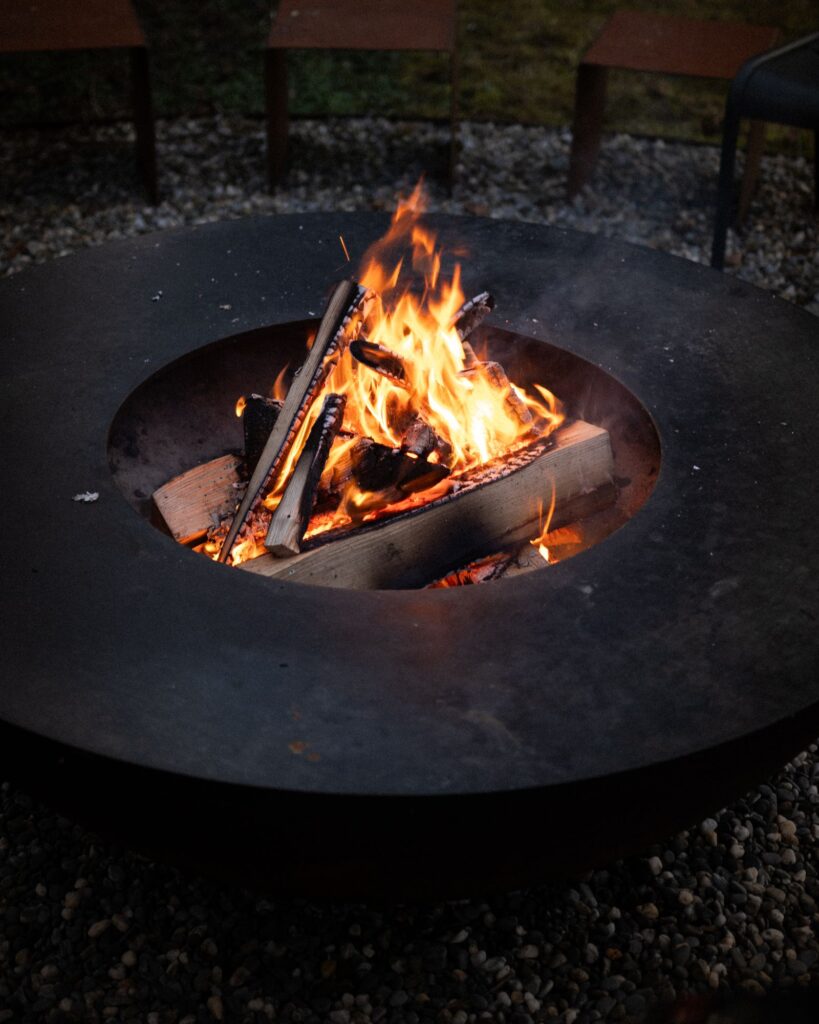
The ground around the pit should be non-flammable and level enough for chairs: gravel, pavers, flagstone, or concrete. A circle of pea gravel or crushed stone is the cheapest and quickest option. Pavers give a cleaner look and an easier surface for chair legs. Our garden path guide covers laying a gravel base, and a stepping-stone or gravel path from the house ties the area into the yard.
Arrange the Seating
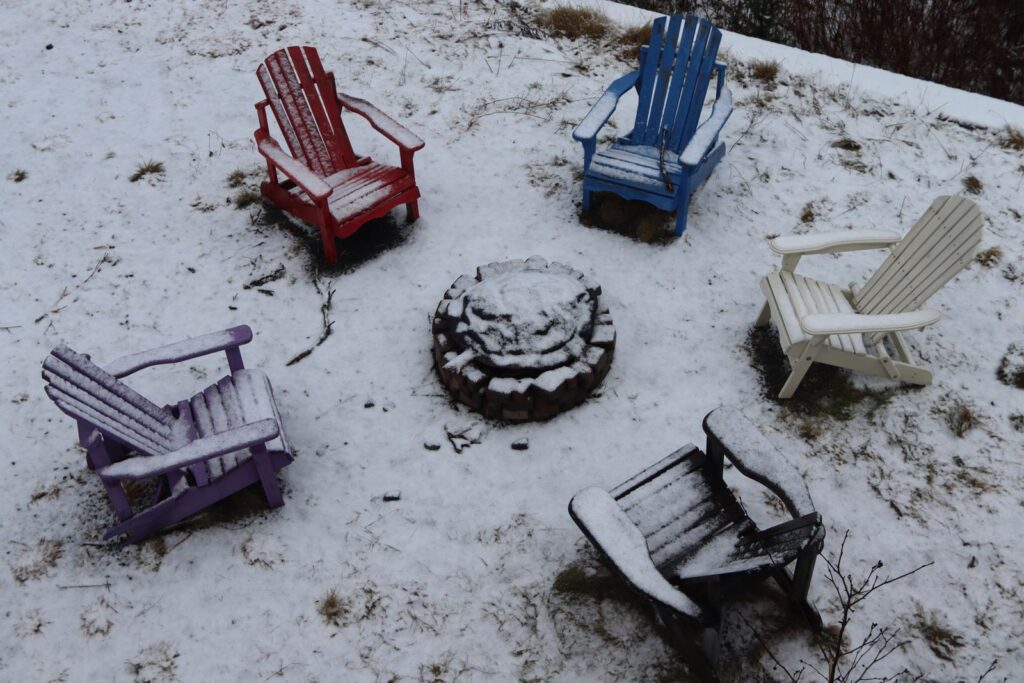
- Circle or semicircle. Arrange seats so everyone faces the fire and each other. A semicircle leaves one side open for tending the fire and for a view.
- Room to move. Set seats far enough back to feel the warmth without getting too hot, and leave a clear walkway between the seats and the fire so no one has to step close to it.
- Movable chairs. Adirondack chairs, metal chairs, or heavy plastic lumber chairs can be pulled back when the fire is big or pushed in on cold nights. Avoid lightweight plastic chairs and wicker close to the flames.
- Built-in seating. A low stone or block seat wall around part of the circle adds permanent seating. About 18 to 20 inches high is a comfortable seat height.
- Sloped yards. Level a terrace for the fire pit and step seating up the slope, so people sit at different heights but all face the fire.
Keep cushions, blankets, and pillows clear of sparks, and skip outdoor rugs right next to the pit, where an ember can land on them. Our guide to durable outdoor furniture compares materials.
Add Light and Shelter
Soft lighting makes the area usable before and after the fire: string lights on posts or a nearby tree, a few path lights from the house, and lanterns on a side table. Keep it low and warm so it doesn’t compete with the fire. Our landscape lighting guide explains how to light paths without glare.
For shelter, a fence, a hedge, or a row of tall grasses on the windward side, set well outside the 5-foot clearance, blocks breezes and adds privacy. Choose plants that aren’t resin-rich, and keep them watered and trimmed back. Never put a roof, pergola, or umbrella over an open wood fire.
Store Firewood the Right Way
Dry wood lights easily and makes far less smoke, which your neighbors will appreciate. The EPA’s Burn Wise program recommends seasoning wood for at least six months and storing it outdoors, off the ground, with only the top covered so the sides can breathe. Wood burns best below 20 percent moisture, which a cheap moisture meter can check. Keep the woodpile a safe distance from the fire and away from the house, and never burn trash, plastic, or treated lumber.
Enjoy It Safely
- Check the wind before lighting. If it’s gusty, skip the fire.
- Don’t use lighter fluid or gasoline. The Kansas State Fire Marshal recommends a commercial fire starter with kindling on top.
- Keep a hose, a bucket of water, or an extinguisher within reach.
- Keep children and pets back from the edge, and never leave the fire unattended.
- Put it out completely before bed: drown the coals, stir, and drown them again until everything is cool.
- Cover the pit when you’re not using it, and clean out ash once it’s cold.
Want a fire pit as part of a bigger yard refresh? Our weekend backyard projects pair it with a gravel patio and lighting.
Frequently Asked Questions
How far should a fire pit be from the house?
The Kansas State Fire Marshal recommends at least 10 feet from any structure or neighboring yard, with 25 feet preferable, and never under a covered porch or low branches. Check your local code, which may be stricter.
What should go around a fire pit?
A non-flammable surface such as gravel, pavers, flagstone, or concrete, with about 5 feet cleared of anything that can burn. Arrange seating in a circle or semicircle with a clear walkway between the chairs and the fire.
Is a wood or gas fire pit better?
Wood gives real crackle, smell, and heat but makes smoke and sparks and is more often limited by burn bans. Gas lights at a switch with little smoke. A natural gas line needs a licensed installer.
How dry should firewood be?
The EPA’s Burn Wise program says wood burns best below 20 percent moisture. Season it for at least six months, stored off the ground with only the top covered.
Can I put a fire pit under a pergola?
Not an open wood fire. Keep wood fires out from under any roof, pergola, umbrella, or low branches. Some gas fire tables are rated for covered spaces, so check the manufacturer’s clearance requirements.