
The most durable outdoor furniture is made from materials that shrug off your particular weather: teak, powder-coated aluminum, and recycled plastic lumber (HDPE) last the longest in most yards, while bare steel, cheap molded plastic, and PVC wicker wear out fastest. Beyond the material, look for rust-proof hardware, frames that drain, and cushions with solution-dyed fabric. Here’s how the main materials compare, which suit your climate, and how to make them last.
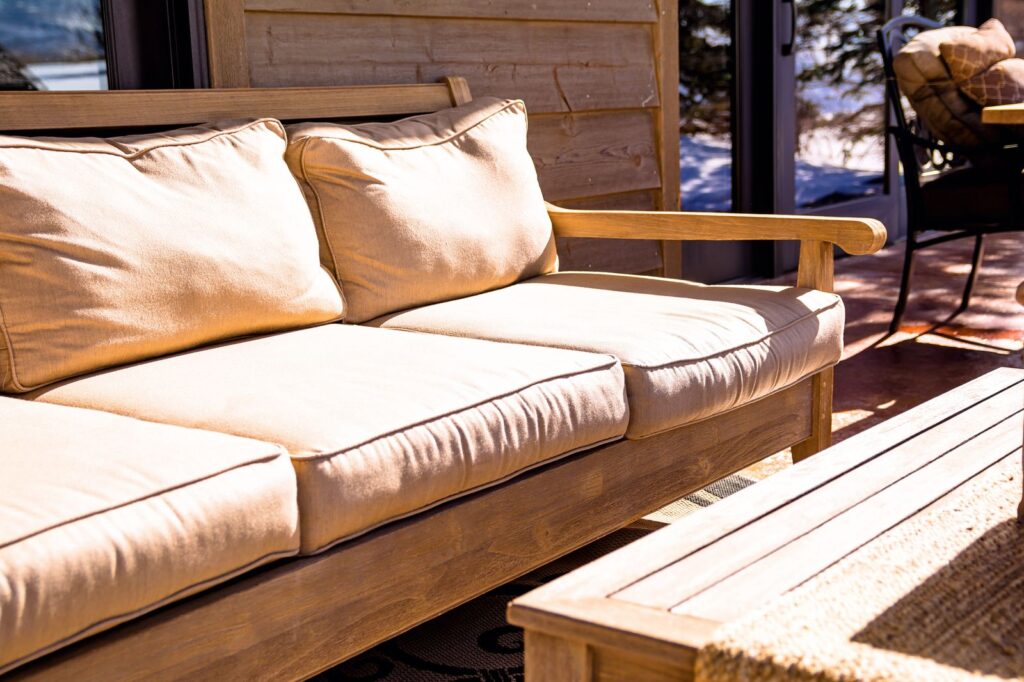
Outdoor Furniture Materials Compared
| Material | Weight | Upkeep | Strengths | Watch out for |
|---|---|---|---|---|
| Teak | Heavy | Low | Natural oils resist rot and insects | Expensive. Turns silver-gray unless oiled. |
| Acacia, eucalyptus, cedar | Medium | Medium | Cheaper wood look | Needs sealing to avoid cracking and graying |
| Powder-coated aluminum | Light | Low | Won’t rust, easy to move | Can blow around in wind. Chips in the coating show. |
| Wrought iron and steel | Very heavy | Medium | Stays put in wind | Rusts wherever the paint chips |
| Recycled plastic lumber (HDPE) | Heavy | Very low | Color runs all the way through, no painting | Higher price, can feel bulky |
| Resin wicker (HDPE) | Light | Low | Wicker look that handles weather | Cheaper PVC wicker cracks and fades in sun |
| Stainless or galvanized steel | Heavy | Low | Strong and dent-resistant | Plain, uncoated steel rusts quickly |
| Concrete and stone | Very heavy | Very low | Weatherproof and won’t move in wind | Hard to move. Porous pieces can crack in freeze-thaw. |
| Molded plastic | Light | Low | Inexpensive | Fades and turns brittle in a few seasons |
Match the Material to Your Climate
- Coastal and salt air: choose powder-coated aluminum, HDPE, or teak with stainless or coated hardware. Salt spray rusts bare steel and iron quickly.
- Hot, sunny climates: UV is the main enemy. HDPE and teak hold up best. Avoid PVC wicker and cheap plastic, and remember that dark metal gets too hot to sit on in full sun.
- Humid or rainy climates: pick frames that shed water, slatted seats, and quick-dry cushions. Softer woods need regular sealing to resist mildew.
- Windy sites: heavier pieces like iron, teak, and HDPE stay put. Lightweight aluminum and umbrellas need weighting or anchoring.
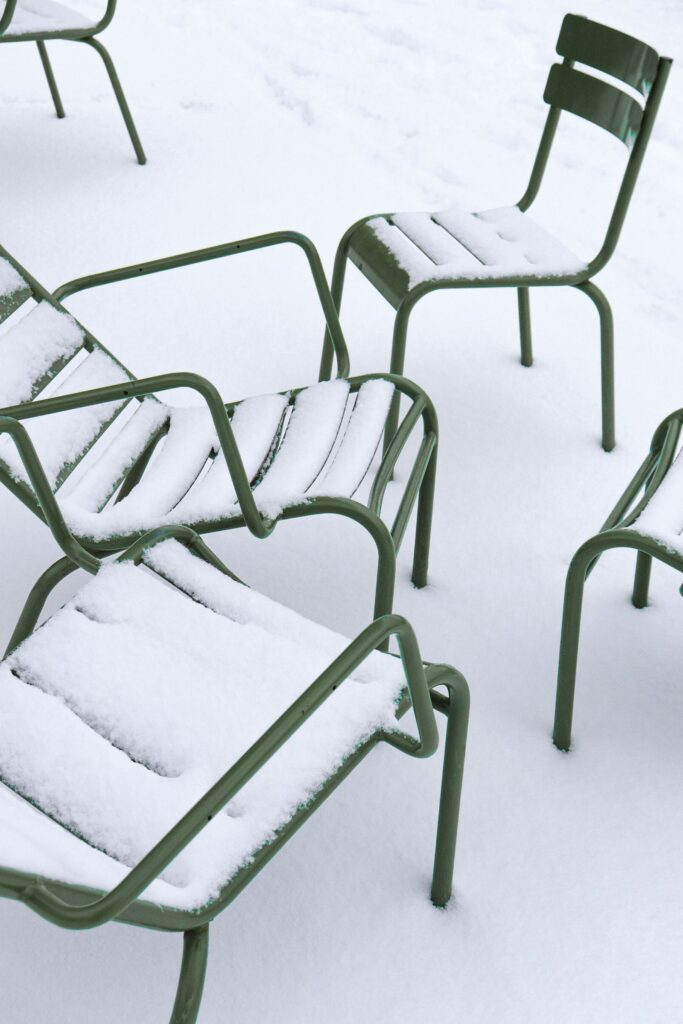
- Cold and snowy winters: aluminum, teak, and HDPE can stay out under covers. Bring cushions inside, and store wicker and softer woods if you can.
What to Check Before You Buy
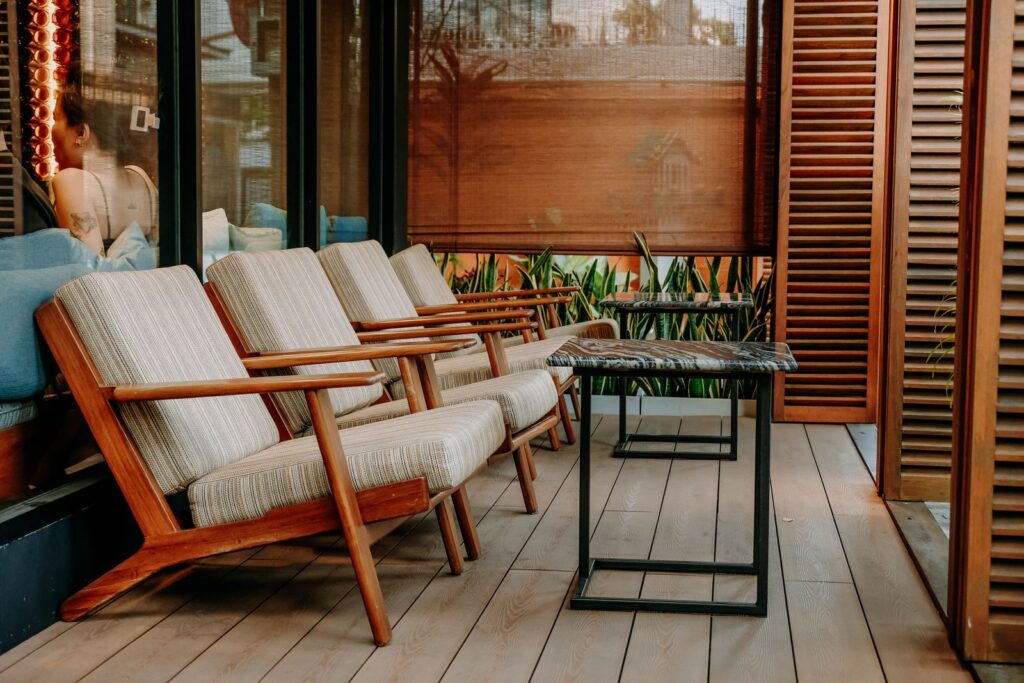
- Hardware: stainless steel or coated screws and bolts. Plain steel hardware rusts and stains even on rot-proof frames.
- Joints: welded joints on metal frames, and tight, glued and screwed joints on wood. Sit on the piece and check that it doesn’t rack or wobble.
- Drainage: seats and tubular frames need gaps or weep holes so water doesn’t pool inside.
- Finish: an even powder coat with no thin spots on metal. On wood, ask whether it’s teak heartwood or a cheaper species stained to look like teak.
- Cushions: solution-dyed acrylic or polyester fabric resists fading better than printed fabric. Quick-dry foam and zippered covers make them easier to clean.
- Warranty: a long frame warranty is a good sign the maker expects the piece to last outdoors.
Size matters as much as material. Measure your patio and leave room to walk around the furniture. Our guides to planning a patio and outdoor dining areas cover layout.
How to Care for Each Material
- Teak: wash with mild soap and water. Leave it to weather to silver-gray, or clean and oil it once or twice a year to keep the honey color.
- Other woods: clean, let dry, and reseal every year or as the finish starts to wear.
- Aluminum: mild soap and water. Avoid abrasive pads that scratch the coating.
- Iron and steel: check for chips each spring, sand any rust, and touch up with rust-resistant paint before it spreads.
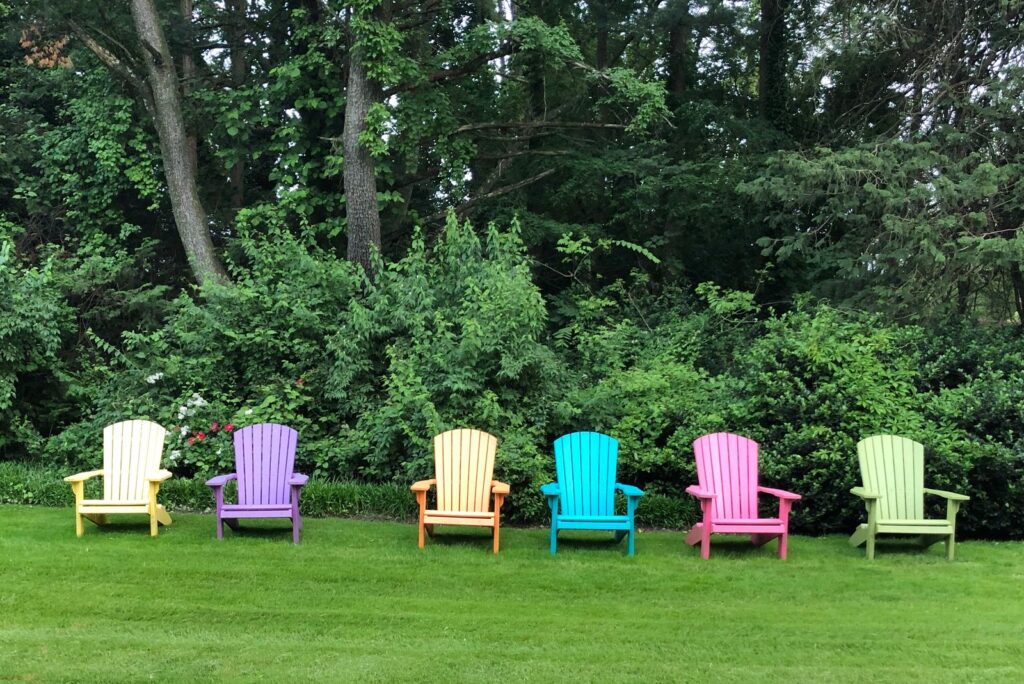
- HDPE lumber: POLYWOOD, one of the main makers, recommends mild dish soap, a little bleach, and warm water, scrubbed with a soft-bristle brush and rinsed with a hose.
- Resin wicker: brush or vacuum out dirt, then rinse with a hose.
- Cushions: brush off dirt, wash with mild soap and water, rinse thoroughly, and air dry. Follow the fabric maker’s instructions for stains and mildew.
Protect It Through the Off-Season
Breathable, fitted covers keep off rain, pollen, and sun without trapping moisture. Clean and dry everything before covering or storing it. Store cushions somewhere dry. Lift furniture off wet ground with feet or pads so legs don’t sit in water, and a shade sail, umbrella, or pergola cuts UV damage in summer. For seating around a fire, see our fire pit area ideas, and keep cushions and fabric well back from the flames.
Frequently Asked Questions
What is the most durable outdoor furniture material?
Teak, powder-coated aluminum, and recycled plastic lumber (HDPE) last longest in most climates. Teak resists rot, aluminum won’t rust, and HDPE holds its color without painting.
What outdoor furniture is best near the ocean?
Powder-coated aluminum, HDPE, or teak with stainless or coated hardware. Salt air rusts bare steel and iron quickly.
Can outdoor furniture stay outside in winter?
Aluminum, teak, and HDPE can stay out under breathable covers. Bring cushions inside and store wicker and softer woods if you can.
How do I keep teak from turning gray?
Clean it and apply teak oil or a teak sealer once or twice a year. Left alone, teak weathers to a silver-gray, which doesn’t harm the wood.
Is resin wicker durable?
Resin wicker made from HDPE handles sun and rain well. Cheaper PVC wicker tends to crack and fade, so ask what the wicker is made from.