
Good backyard design isn’t about expensive materials. It comes from a handful of principles that landscape designers use to make a space feel comfortable and put together: plan for how you’ll use the yard, keep things in proportion, create balance, repeat what works, tie it all together, give the eye somewhere to land, and make it look good in every season. Here’s each one in backyard terms.
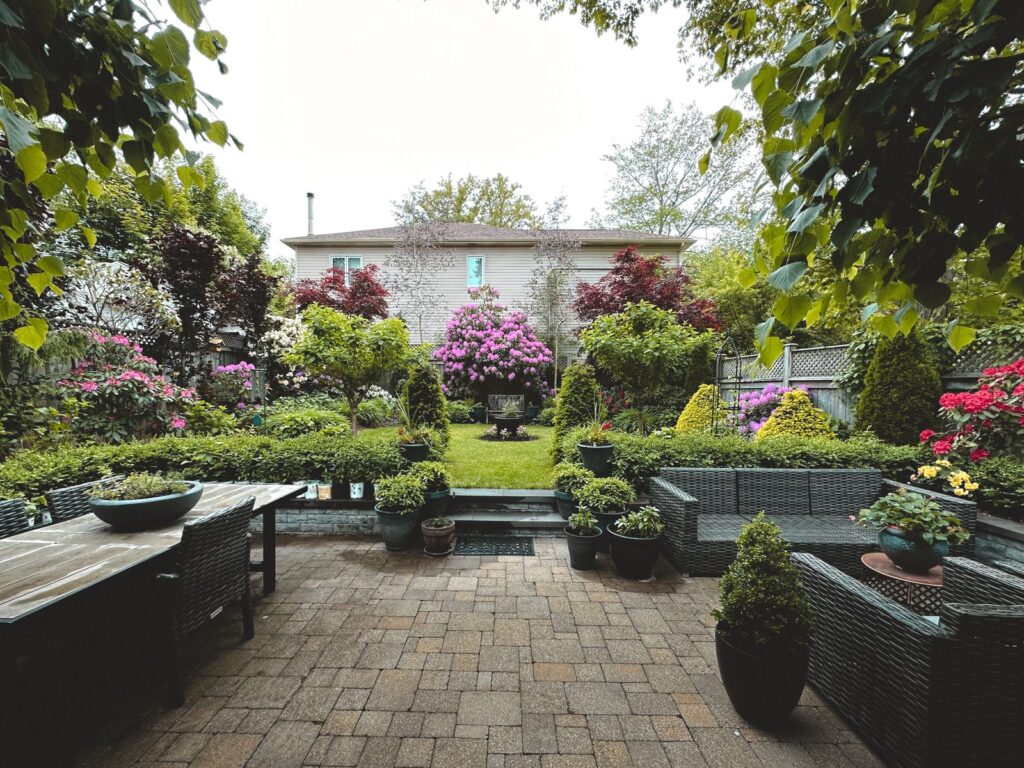
Several of these come straight from Basic Principles of Landscape Design, a University of Florida IFAS Extension publication that’s a good free read if you want to go deeper.
1. Start With How You’ll Use the Space
Design starts with the people and the site, not the plants. List what you want the yard to do: eat outside, let the kids play, grow vegetables, sit by a fire. Then look at the site itself, including where the sun falls, where water collects, and which views you want to show off or hide.
Sketch the yard and draw rough circles for each use. Put the dining area near the kitchen door, the vegetable beds in the sunniest spot, and play space where you can see it from the house. Then connect the circles with paths that follow the routes people will actually walk.
2. Keep Things in Proportion
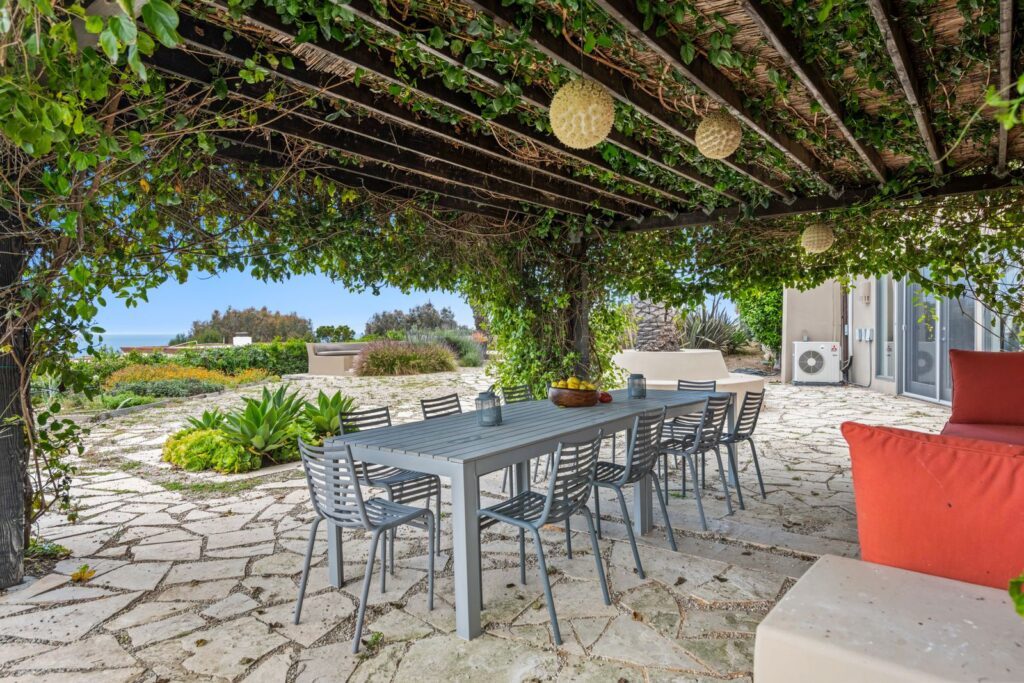
Proportion is how the size of each element relates to the people, the house, and the yard. UF/IFAS Extension points out that people feel most comfortable in spaces built to human scale. A patio sized for the furniture you’ll actually use feels better than a vast slab, and some kind of overhead, such as tree branches or a pergola, makes a seating area feel sheltered.
In practice, that means choosing furniture that leaves room to walk around it, picking trees and shrubs by their size at maturity, and keeping a balance between open space, like lawn or patio, and planted space.
3. Create Balance
Balance means both sides of a view carry similar visual weight. Symmetrical balance mirrors the same plants and features on either side of a central line, which gives a formal look. Asymmetrical balance uses different elements with similar weight, like a single large shrub on one side and a group of smaller plants on the other, which feels more relaxed. Large sizes, dense shapes, bright colors, and coarse textures look heavier, so use them sparingly. Our comparison of formal and informal landscapes shows both in practice.
4. Repeat What Works
Repeating a plant, color, shape, or material creates rhythm and leads the eye through the yard. The same grass planted at intervals along a path or a color echoed in pots and flowers ties separate areas together. UF/IFAS Extension warns that too much repetition becomes monotonous, while too little looks confused. Planting in groups of three or five of the same plant, rather than one of everything, is the easiest way to get it right.
5. Tie It All Together
Unity is the sense that everything belongs to one design. The simplest way to get it is a short material palette: two or three hardscape materials that suit the house, used throughout. A brick house might pair brick edging with gravel paths and cedar, for example. Matching the garden style to the house helps too. Our guide to landscape design styles can help you choose one.
6. Give the Eye Somewhere to Land
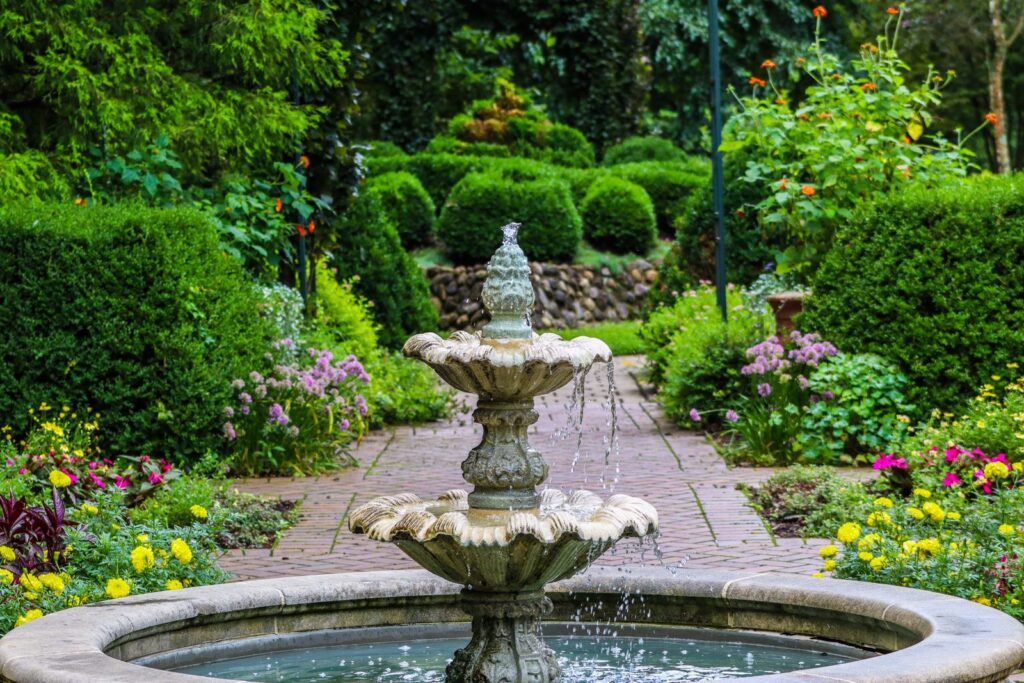
A focal point, such as a specimen tree, a water bowl, a sculpture, or a fire pit, gives a view a destination. One strong focal point per area works better than several competing ones. Place it at the end of a path or where you’ll see it from a window or your favorite chair, and use contrast in size, color, or texture to make it stand out.
7. Plan for Every Season
A yard designed only for June looks empty for half the year. Give it structure that lasts through winter, such as evergreens, a hedge, a path, a bench, or a pergola, and choose plants that offer more than one season of interest: spring flowers, fall color, winter berries, or striking bark. Our seasonal landscaping guide covers what to plant and do through the year.
Putting the Principles to Work
- Measure and sketch the yard, including the house, doors, windows, trees, and slopes.
- Map sun, shade, and drainage over a few days.
- Draw zones and paths based on how you’ll use the space.
- Choose a style and a short material palette that suit the house.
- Build the hardscape first, then plant, then add lighting and furniture.
- Work in phases if the budget is tight. A good plan lets you build one zone at a time without redoing work later.
For a tight budget, see our cheap backyard ideas. For a small yard, see our small garden design guide, and when you’re ready for lighting, our landscape lighting guide.
Frequently Asked Questions
What are the 7 principles of landscape design?
Lists vary, but most include unity, balance, proportion or scale, repetition or rhythm, emphasis (a focal point), simplicity, and sequence or transition. This guide puts those ideas in backyard terms, starting with planning around how you’ll use the space.
What is the most important principle of backyard design?
Planning around how you’ll actually use the yard. A beautiful layout that puts the dining table in full afternoon sun or the path where nobody walks won’t get used, however well it follows the other principles.
How do I make a small backyard feel bigger?
Keep the palette short, repeat a few plants, hide the boundaries with planting, and choose one focal point. Our guide to small garden design has more ideas.
How can I redesign my backyard on a budget?
Make a full plan first, then build it in phases, starting with the hardscape and the zone you’ll use most. Mulch, gravel paths, and plants grown from divisions keep costs down.
Do I need a landscape designer?
Not for most backyards. You can plan zones, paths, and planting yourself using these principles. Consider professional help for complicated drainage, steep slopes, or retaining walls.