
You don’t need a shed full of gadgets to start gardening. Twelve basic tools cover almost every job a beginner will face: gloves, hand pruners, a trowel, a hori-hori knife, a spade, a shovel, a digging fork, two rakes, loppers, a way to water, and something to haul with. Here’s what each one does, what to buy first, and how to keep them working.
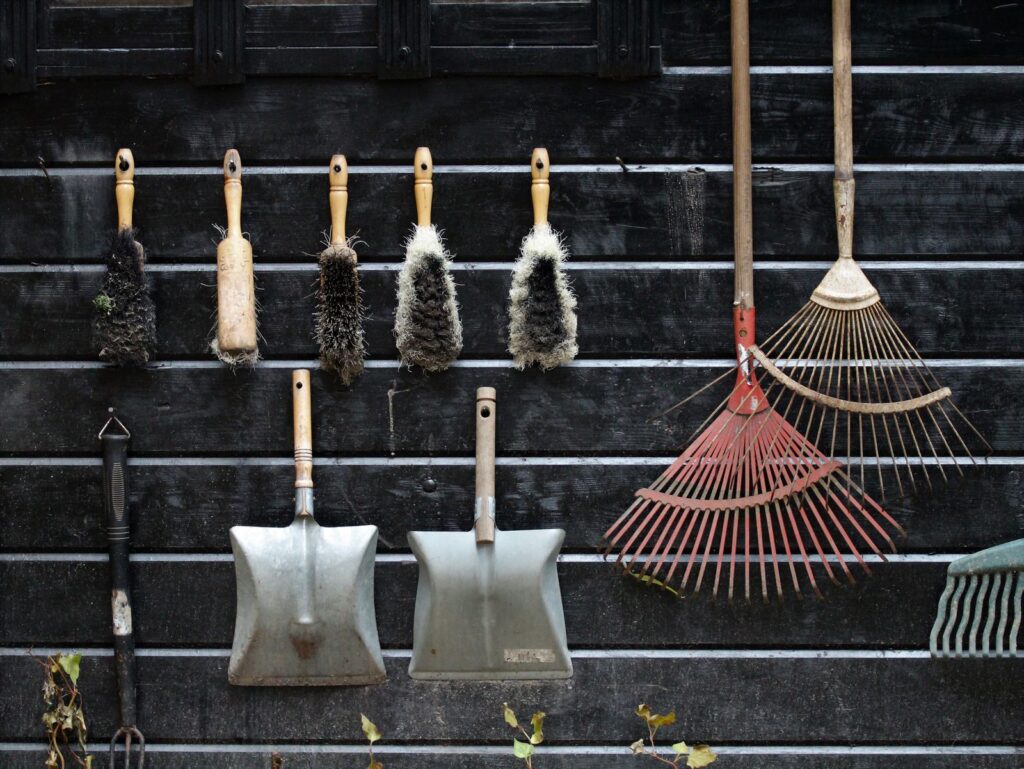
The 12 Tools at a Glance
| Tool | Main job | Buy first? |
|---|---|---|
| Gloves | Protect hands from thorns, blisters, and soil | Yes |
| Hand pruners | Cut stems and small branches | Yes |
| Hand trowel | Plant small plants and bulbs | Yes |
| Hori-hori knife | Weed, dig, cut, and divide | Nice to have |
| Spade | Dig straight holes, edge beds, divide plants | Yes |
| Round-point shovel | Dig and move loose soil and mulch | Yes |
| Digging fork | Loosen soil, lift plants, turn compost | Soon |
| Hard rake | Level soil and spread mulch | Soon |
| Leaf rake | Gather leaves and light debris | When needed |
| Loppers | Cut branches too thick for pruners | When needed |
| Hose and watering can | Water beds and containers | Yes |
| Wheelbarrow or cart | Haul soil, mulch, and debris | For bigger yards |
Hand Tools
1. Gloves
A good pair of gloves is the cheapest upgrade you’ll make. Get snug, flexible gloves for planting and weeding, and a heavier leather pair if you’ll handle roses, brambles, or firewood.
2. Hand Pruners
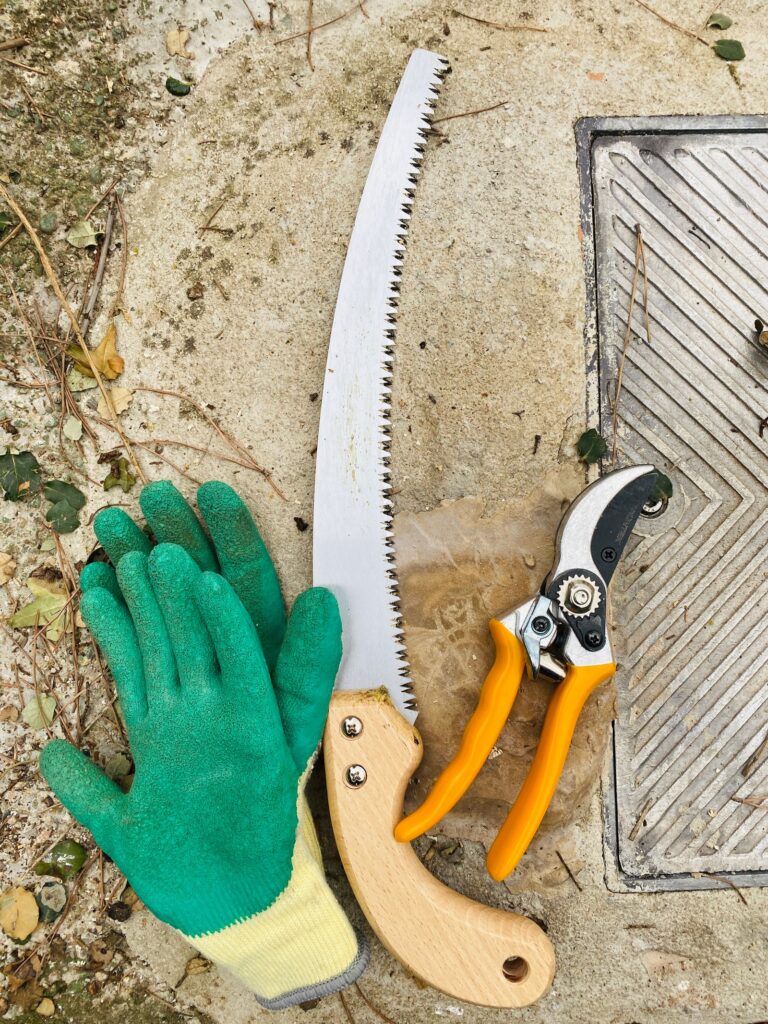
Pruners cut stems, deadhead flowers, and harvest vegetables and herbs. University of Minnesota Extension puts their limit at branches about 3/4 to 1 inch thick. Choose bypass pruners, which cut like scissors and leave a clean cut on live stems. Anvil pruners, where one blade presses against a flat surface, can crush live tissue and are better kept for dead wood. Make sure they fit your hand and the spring opens easily.
3. Hand Trowel
A trowel is a small, hand-held scoop for planting seedlings, bulbs, and containers. Pick one with a one-piece or firmly riveted blade, since cheap trowels bend at the neck. Depth markings on the blade help when planting bulbs.
4. Hori-Hori Knife
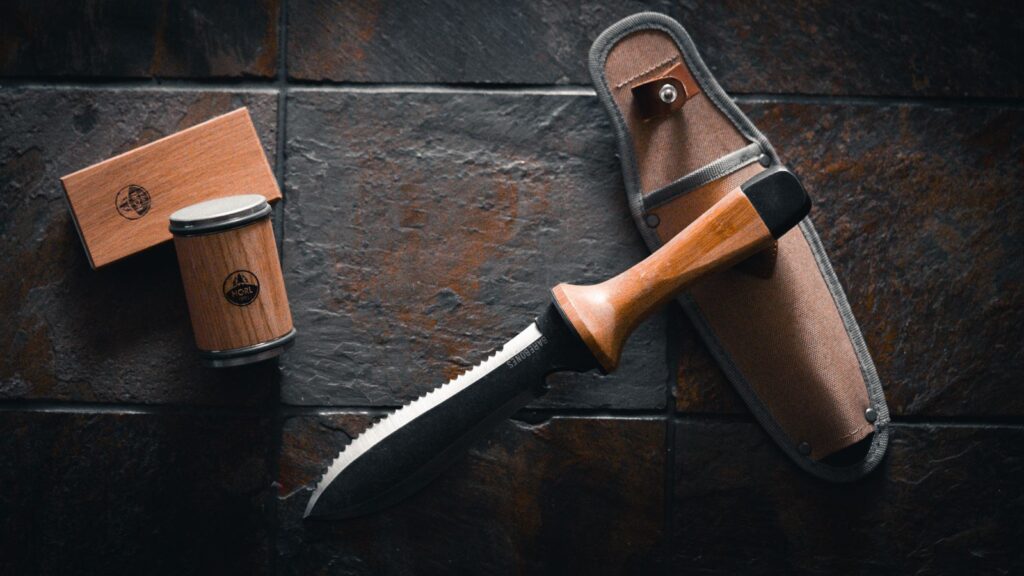
This Japanese garden knife has a heavy, slightly dished blade, often with one sharp and one serrated edge and depth markings. It digs out deep-rooted weeds like dandelions, cuts through roots, divides perennials, and slices open bags of soil. It’s sharp, so buy one with a sheath and keep it out of children’s reach.
Digging Tools
5. Spade
A spade has a flat, squarish blade and usually a shorter handle. It digs clean, straight-sided holes, cuts a crisp edge between lawn and beds, slices through roots, and splits clumps of perennials.
6. Round-Point Shovel
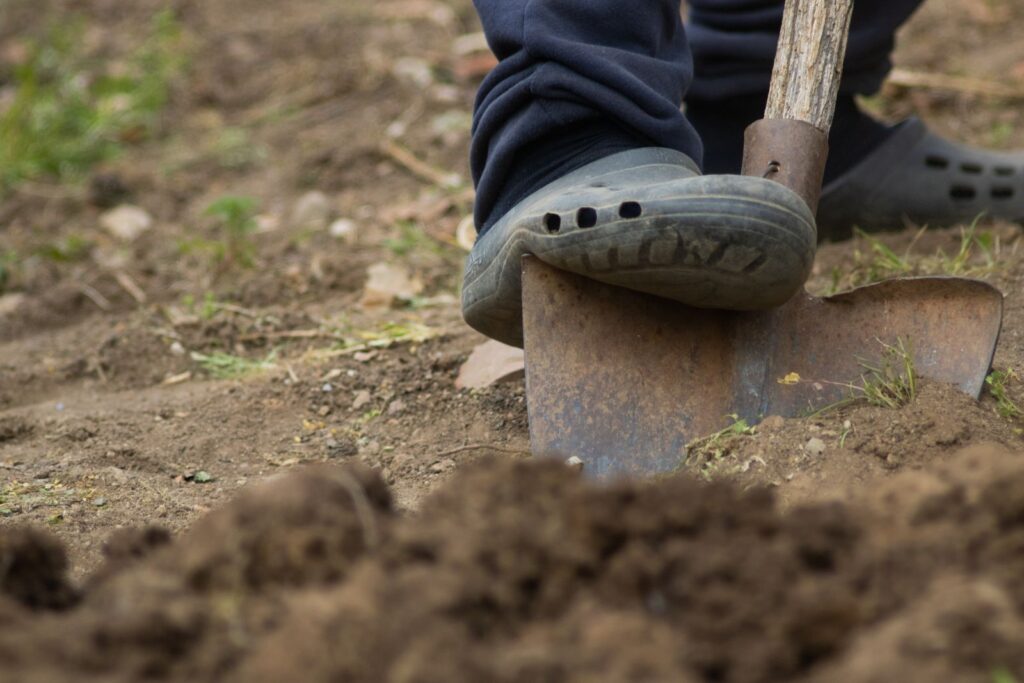
A shovel has a curved, pointed blade and a long handle. The point breaks into hard ground, and the curve scoops and throws loose material like soil, compost, gravel, and mulch. If you can only buy one digging tool, this is the more versatile choice. Look for a forward-turned step on top of the blade for your foot, and a fiberglass or ash handle.
7. Digging Fork
A digging fork has four thick, square tines. It loosens compacted soil, lifts plants and root crops like potatoes with less damage than a blade, and turns a compost pile. Choose a fork with strong tines that won’t bend in clay.
Rakes and Cutting Tools
8. Hard Rake
Also called a bow rake, this has short, rigid metal tines. Use it to break up clods, pull out stones, level a seedbed, and spread compost, mulch, or gravel evenly.
9. Leaf Rake
A leaf rake has long, flexible tines that fan out. It gathers leaves, grass clippings, and light debris without tearing up the lawn. Shredded leaves make good mulch, or add them to the compost.
10. Loppers
Loppers are long-handled pruners for branches too thick for hand pruners, up to about 1.5 to 2 inches according to the same UMN guide. The long handles give leverage and reach into shrubs. As with pruners, bypass loppers are best for live branches. Anything thicker calls for a pruning saw.
Watering and Hauling
11. Hose and Watering Can
A hose long enough to reach every bed, with an adjustable nozzle, handles most watering. A watering can with a fine rose is gentler for seedlings and handier for a few pots. If you have several beds, a soaker hose or simple drip line under the mulch saves time and water.
12. Wheelbarrow or Garden Cart
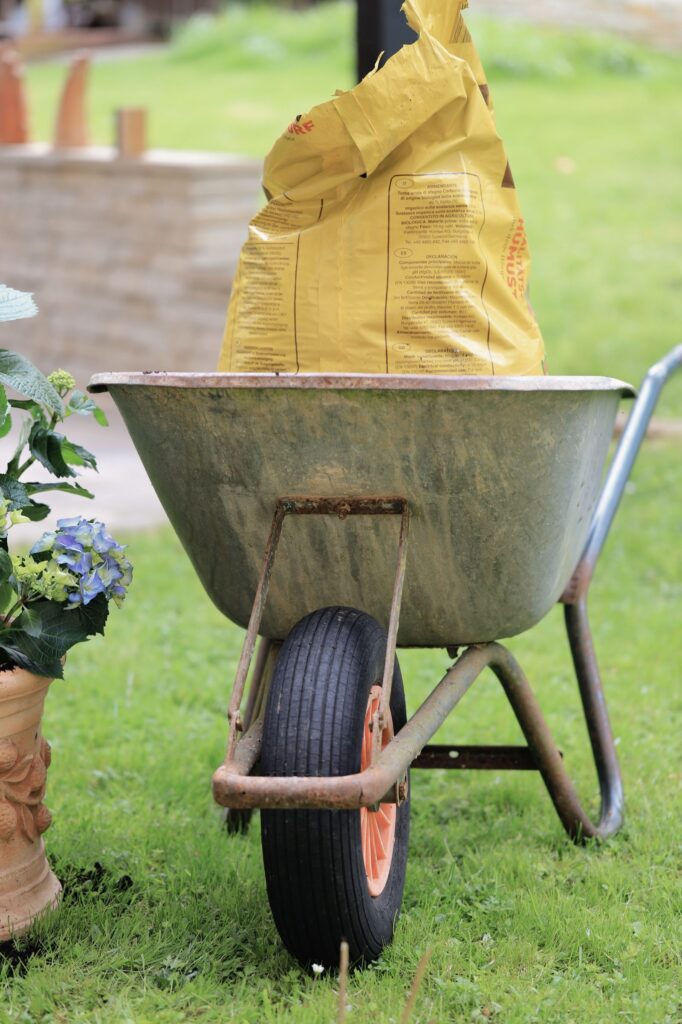
A wheelbarrow moves soil, mulch, plants, and debris without wrecking your back. A single-wheel barrow turns tightly on narrow paths, while a two-wheel cart is more stable with heavy loads. In a small yard or on a patio, a sturdy bucket or tarp may be all you need.
Nice to Have Later
Once you know what your garden needs, consider a pruning saw for larger branches, a hoe for weeding vegetable rows, a kneeling pad, and a soil test kit. A compost bin isn’t a tool, but it turns yard waste into free soil improver. Our guide to building a compost bin shows how.
How to Choose and Care for Garden Tools
- Buy fewer, better tools. A solid trowel, pruners, and shovel will outlast several cheap ones. Hold tools before buying to check weight and grip.
- Clean after use. Knock off soil and let tools dry before putting them away.
- Disinfect pruners. After cutting diseased plants, University of Minnesota Extension suggests wiping blades with 70% rubbing alcohol or a disinfectant like Lysol. It advises against vinegar, which can cause rust.
- Keep edges sharp. Sharpen pruners along their existing bevel, and file the edges of spades and shovels now and then.
- Store them dry. Hang tools in a shed or garage, and wipe metal parts with a little oil before winter.
Putting Your Tools to Work
Start with the soil. Test its pH, since most plants do well between 6.0 and 7.0, and work in compost before planting. If you have heavy clay, add organic matter rather than sand. USask’s gardening program warns that sand mixed into clay in small amounts can produce a concrete-like soil. Mulch beds 2 to 3 inches deep, keeping it off plant stems.
Check soil moisture with a finger before watering, and water deeply rather than a little every day. For what to plant and when, see our seasonal planting guide and our guide to choosing the right plants. If you’re starting with a few beds, raised garden beds make digging and weeding easier, and our composting guide covers the soil side.
Frequently Asked Questions
What garden tools does a beginner really need?
Start with gloves, bypass hand pruners, a hand trowel, a round-point shovel or spade, and a hose or watering can. Add a digging fork, hard rake, and loppers as your garden grows.
What is the difference between a spade and a shovel?
A spade has a flat, squarish blade for digging straight-sided holes, edging beds, and dividing plants. A shovel has a curved, pointed blade that breaks into hard ground and scoops loose material like soil and mulch.
Should I buy bypass or anvil pruners?
Bypass pruners for most gardeners. They cut like scissors and leave a clean cut on live stems. Anvil pruners can crush living tissue, so they are better for dead wood.
How thick a branch can hand pruners cut?
University of Minnesota Extension puts the limit for hand pruners at branches about 3/4 to 1 inch thick. Use loppers for branches up to about 1.5 to 2 inches, and a pruning saw for anything larger.
How do I clean and disinfect garden tools?
Knock off soil and dry tools after each use. After cutting diseased plants, wipe pruner blades with 70% rubbing alcohol or a disinfectant like Lysol. Avoid vinegar, which can cause rust, and store tools somewhere dry.