
A landscape style is a set of choices that work together, from the shape of the beds to how tidy or wild the planting looks. Pick one that suits your house and climate, and the time you want to spend gardening, and every later decision gets easier.
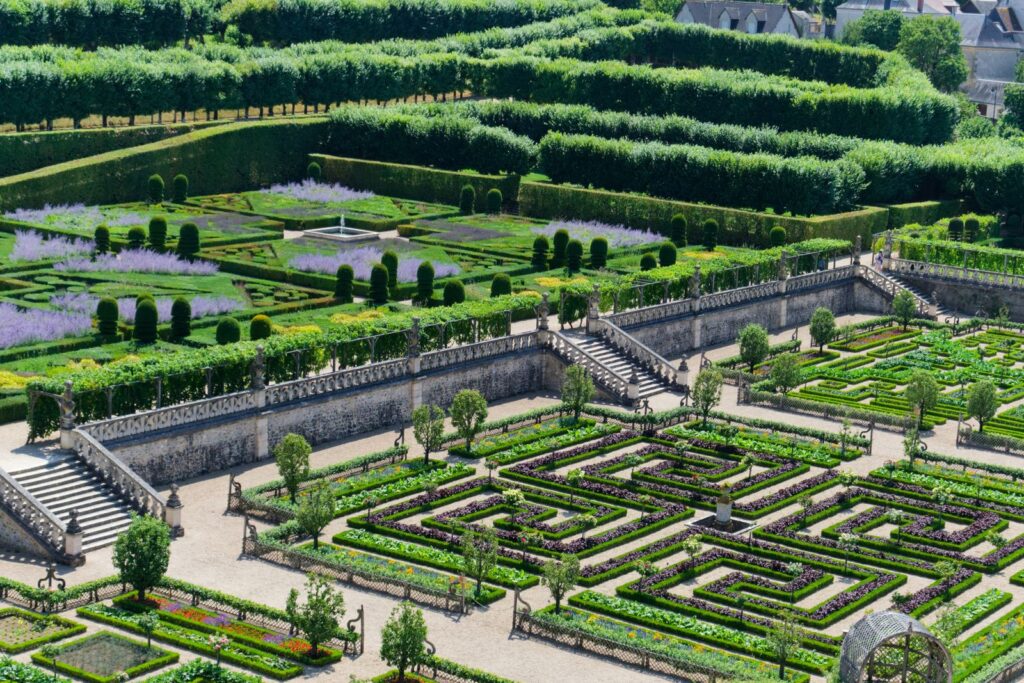
Some styles, like the symmetry of a French formal garden, go back centuries. Others, like prairie planting and modern minimalism, are much newer. This guide traces where the main styles came from, the design principles they share, and how to choose one for your yard.
Key Takeaways
- Formal styles rely on symmetry and clipped plants. Informal styles copy nature and are usually easier to keep up.
- Climate narrows the choice. A Mediterranean or desert garden thrives in dry heat, while a cottage or woodland garden wants more rain.
- Be honest about maintenance. A formal parterre needs constant clipping, and a prairie planting needs one cut a year.
Historical Development of Landscape Design Styles
Ancient Landscape Traditions
Ancient Egyptian gardens were laid out in straight lines and geometric beds around pools. Persian gardens were walled enclosures divided by water channels. The old Persian word for such an enclosed garden is the root of our word “paradise,” and the layout shaped Islamic gardens for centuries. Chinese gardens went the other way, arranging rocks, water, and plants to suggest wild landscapes in miniature.
Influence of Renaissance and Baroque Periods
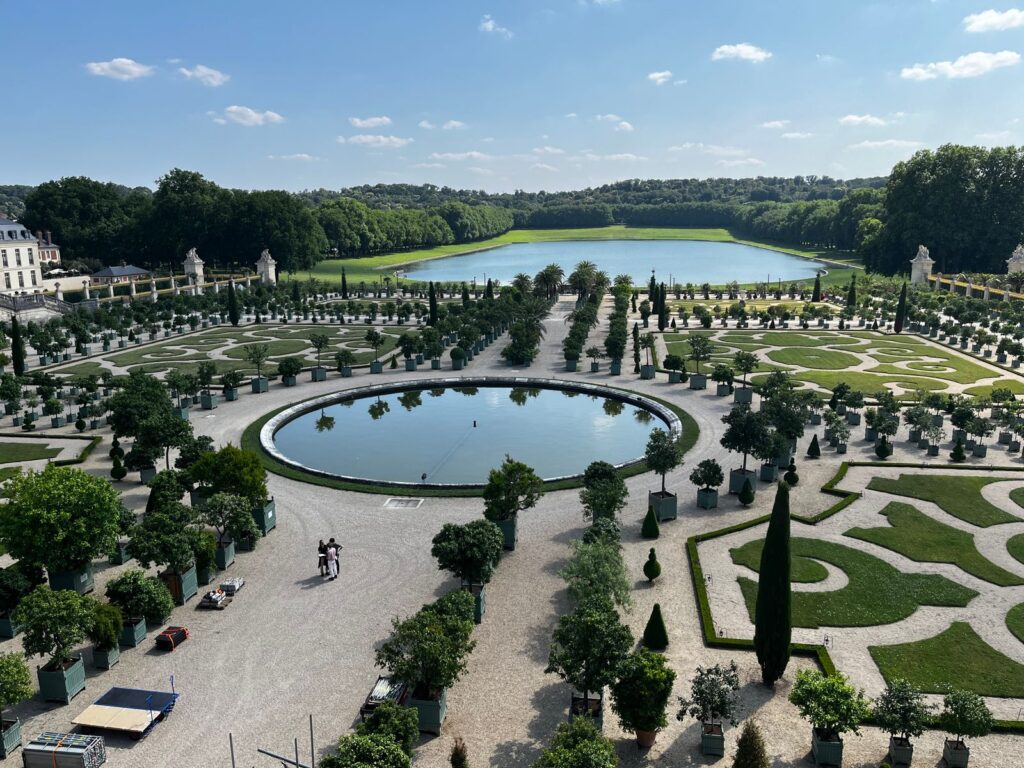
Renaissance Italy turned gardens into works of art. Villa d’Este near Rome is the classic example, with terraces stepping down a hillside and dozens of fountains. Baroque France took the idea further. André Le Nôtre’s gardens at Versailles stretch symmetry and perspective to the horizon, with clipped hedges, parterres, and long reflecting pools.
In 18th-century England, designers like Lancelot “Capability” Brown rejected that formality. Their landscape gardens used rolling lawns, lakes, and clumps of trees to look natural, and they shaped the public parks we still walk in.
Modern Landscape Movements
Around 1900, Gertrude Jekyll and the Arts and Crafts movement brought relaxed, cottage-style planting and carefully planned color into home gardens. In the 20th century, concrete and steel opened up new shapes, and Brazilian designer Roberto Burle Marx blended modern art with bold tropical planting. More recently, the Dutch designer Piet Oudolf, known for the planting on New York’s High Line, popularized naturalistic gardens of grasses and perennials chosen for how they look in every season, including winter.
Principles of Landscape Design
Unity and Harmony
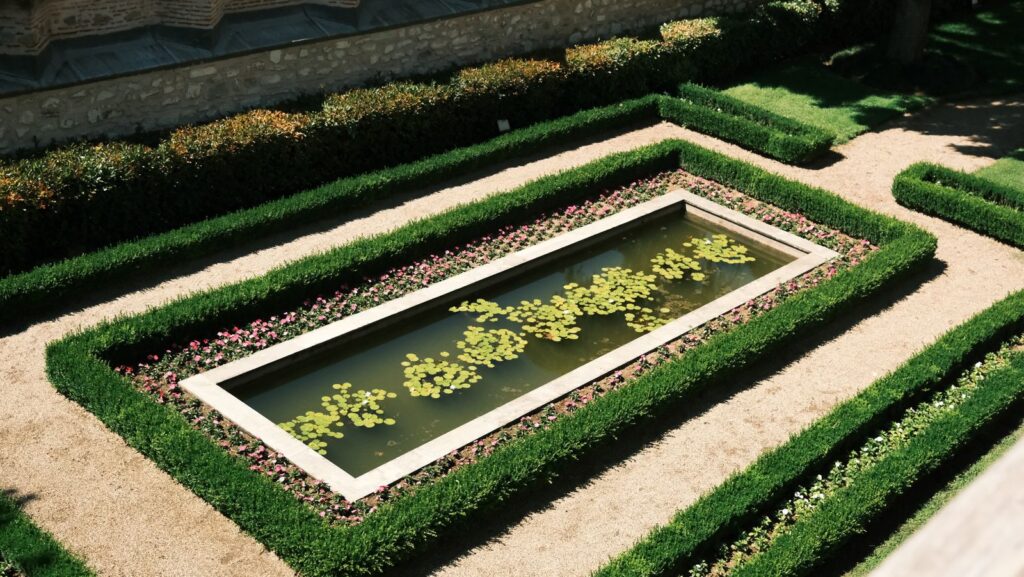
A garden feels unified when its parts repeat. Repeat a few plants and materials in several places, and let one style guide the decisions. That’s what makes a yard look designed rather than collected.
Balance and Proportion
Balance can be symmetrical, with each side mirroring the other, as in formal gardens. Or it can be asymmetrical, with different elements of similar visual weight on each side, as in most informal gardens. Proportion means sizing everything to the house and to each other.
Color and Texture
Warm colors like red and orange feel energetic and seem closer. Cool blues and purples feel calm and seem farther away, which can make a small garden look bigger. Texture matters as much as color: soft, feathery grasses next to a rough stone path create contrast even when everything is green.
Focal Points and Emphasis
A focal point, like a statue, a water feature, or a specimen tree, gives the eye somewhere to land and pulls people through the space. Make it stand out through contrast, and limit yourself to one or two per view.
Popular Landscape Design Styles
English Garden Style
“English garden” covers two quite different looks. The English landscape garden is broad and pastoral: lawns, trees, water, and long views. The English cottage garden is the opposite, a dense mix of roses, hollyhocks, foxgloves, and herbs spilling over paths, often with a picket fence and a bench. Most home gardeners mean the cottage version. See our guide to classic English garden designs.
Japanese Zen Gardens
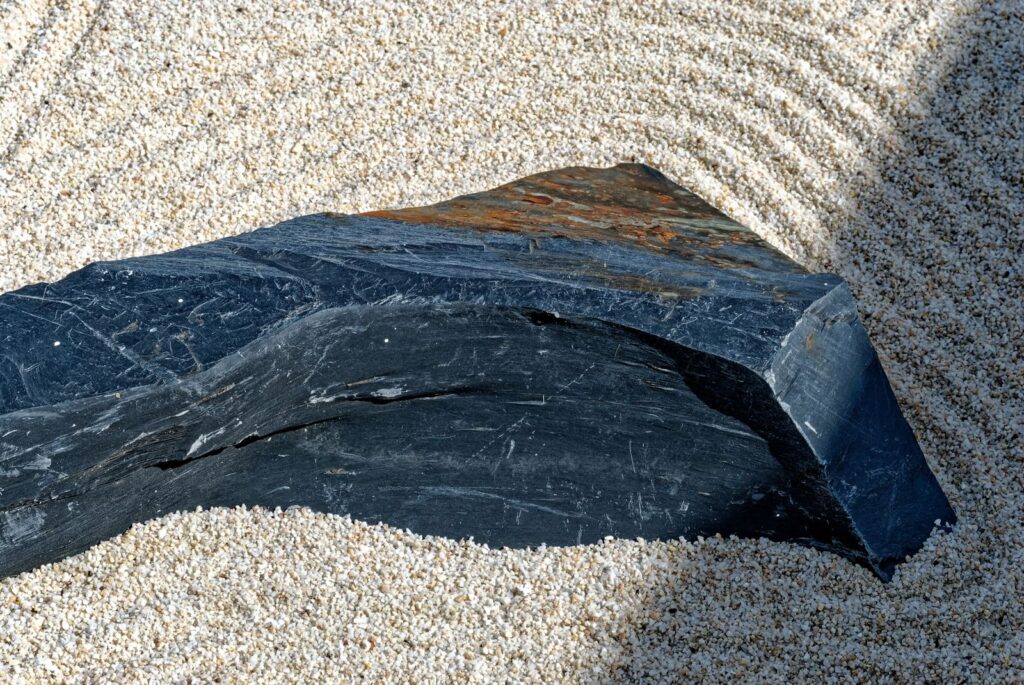
Japanese gardens come in several types. The Zen dry garden, or karesansui, like the famous rock garden at Ryoan-ji in Kyoto, uses no water at all. Raked gravel stands in for water, with rings and lines suggesting ripples, and rocks suggest islands or mountains. It’s made to be viewed from one spot, for contemplation.
Ponds, streams, and bridges belong to a different tradition, the stroll garden, which you walk through. Both use moss, carefully pruned trees, and restraint. A small dry garden is one of the easiest Japanese styles to build at home.
French Formal Style
French formal gardens are all about control: strict symmetry, geometric parterres of clipped boxwood, gravel walks, topiary, and long reflecting pools or fountains. They look spectacular and take steady clipping to keep sharp. Our comparison of formal vs. informal landscapes helps you decide how much order you want.
Contemporary Minimalist Style
Minimalist gardens use clean lines, a short plant list, and plenty of open space. Grasses, succulents, and trees with a strong shape stand out against concrete, stone, or steel. A sleek water feature or reflecting pool is often the centerpiece. The style suits small urban yards well. See our ideas for modern garden design in small spaces.
Mediterranean Style
Mediterranean gardens are built for hot, dry summers: olive trees, lavender, rosemary, and other drought-tolerant plants, with terracotta pots, gravel, and stone walls. A shaded patio for eating outdoors is central. Our guide to Mediterranean garden elements has the details.
Prairie and Naturalistic Style
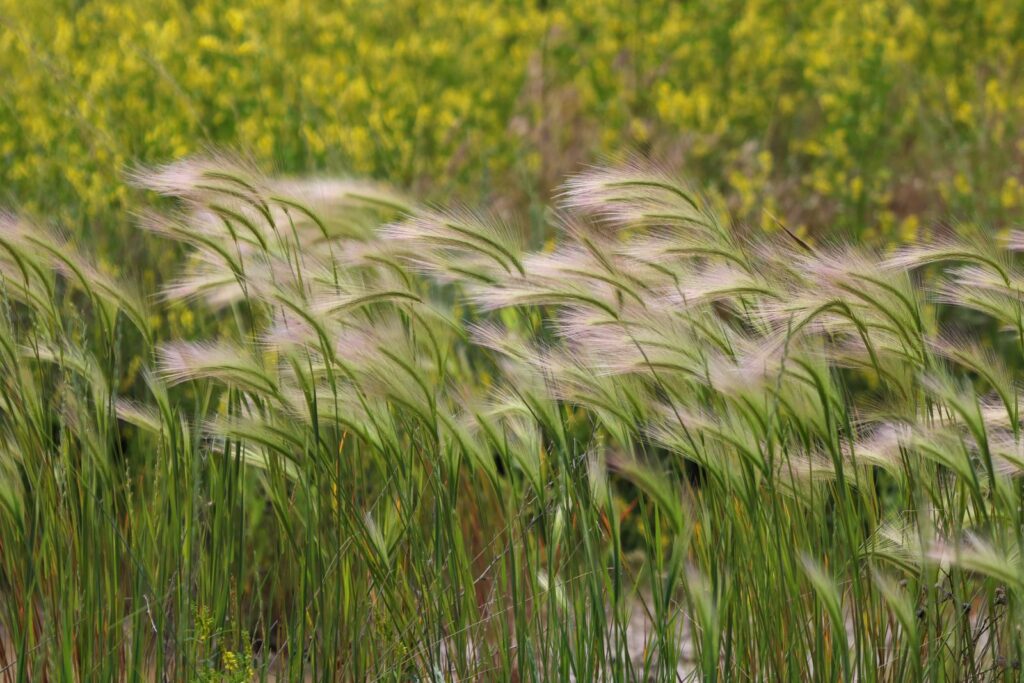
Naturalistic gardens use drifts of native grasses and perennials like coneflowers, black-eyed Susans, and little bluestem, planted to look like a meadow. They support pollinators and birds, need little water once established, and are usually cut back just once a year.
Desert and Xeriscape Style
Desert gardens pair cacti, agave, yucca, and other water-wise plants with gravel, boulders, and dry riverbeds. Xeriscaping applies the same water-saving thinking anywhere. Read our guide to desert landscaping for plant choices.
Tropical Style
Tropical gardens are about big leaves and bold color: palms, bananas, canna, elephant ears, and hibiscus. In frost-free climates they grow year-round. Elsewhere, grow the tender plants as annuals or in pots you bring inside for winter. See our tropical landscaping ideas.
Woodland Style
A woodland garden copies the layers of a forest: a tree canopy, an understory of small trees and shrubs, and shade-loving ferns, hostas, and wildflowers underneath, with leaf litter left in place. It’s a natural fit for shady, tree-filled lots and needs little upkeep.
Landscape Style Selection
Considering Climate and Topography
Start with what your site will support. Dry climates suit desert, Mediterranean, and xeriscape styles. Humid, rainy regions suit cottage, woodland, and tropical looks. On a slope, terraces or a naturalistic planting handle erosion better than a lawn. Check sun and soil before committing. Our guide on how to choose plants for your climate walks through it.
Incorporating Personal Taste and Cultural Context
Then think about what you love. If you like color and abundance, a cottage garden will make you happy. If you like calm and order, look at minimalist or Japanese styles. Let the house guide you too: a Spanish-style house looks right with a Mediterranean garden, and a Craftsman bungalow with a cottage garden.
Assessment of Maintenance and Sustainability
Be realistic about time. Formal gardens and lawns need weekly attention. Prairie, woodland, and desert gardens need far less once established, and they use less water and fewer chemicals. Native plants and a compost pile make any style more sustainable.
Implementation in Modern Landscaping
Ecological Landscaping and Biodiversity
Whatever the style, a mix of native plants gives wildlife food and shelter and cuts the need for fertilizer and pesticides. A bird feeder and a little leaf litter make it even more welcoming. Our guide to wildlife-friendly gardens shows how.
Water Features and Irrigation Systems
Ponds and fountains add sound and draw birds, and our water features guide covers the options. For plants, drip irrigation puts water at the roots and wastes far less than sprinklers, especially with a timer or soil moisture sensor.
Hardscaping and Outdoor Structures
Hardscape gives every style its bones, and pergolas and gazebos add shade. Choose materials that match the style: clipped stone for formal, rough flagstone for cottage, steel and concrete for modern. See our hardscaping guide.
Native Plantings and Local Materials
Native plants and local stone make any style look like it belongs where it is. Natives need less care in their home climate, and locally sourced materials cut shipping. Pick plants that bloom at different times so there’s always something in flower.
Frequently Asked Questions
What are the main types of landscape design styles?
The most common are English (cottage and landscape), Japanese, French formal, contemporary minimalist, Mediterranean, prairie or naturalistic, desert and xeriscape, tropical, and woodland. Many yards blend two or three.
What is the easiest landscape style to maintain?
Prairie, woodland, and desert gardens need the least work once established. They use plants suited to the site and need little watering, and prairie plantings are usually cut back just once a year. Formal gardens need the most, because hedges and topiary must be clipped regularly.
How do I choose a landscape style for my home?
Start with your climate, then match the house: a Spanish-style home suits a Mediterranean garden, and a cottage or bungalow suits a cottage garden. Finally, be honest about how much time you’ll spend gardening. Our guide on choosing plants for your climate helps with the first step.
What is the difference between formal and informal garden design?
Formal gardens use symmetry, straight lines, and clipped plants. Informal gardens use curves, looser planting, and asymmetrical balance that looks more natural. See our comparison of formal vs. informal landscapes.
Can I mix different landscape styles?
Yes. A common approach is to keep the area nearest the house more formal and let the garden grow looser farther out. Repeating the same materials and a few signature plants ties the different areas together.
What is the difference between a Zen garden and other Japanese gardens?
A Zen dry garden, or karesansui, uses no water. Raked gravel represents it, and rocks suggest islands or mountains. Japanese stroll gardens are the ones with real ponds, streams, and bridges, designed to be walked through.