
Moving water changes how a yard feels. Even a small fountain brings in birds and softens traffic noise, and a pond with a waterfall can become the center of the garden. Which one fits depends mostly on your space and how much upkeep you’ll put up with.
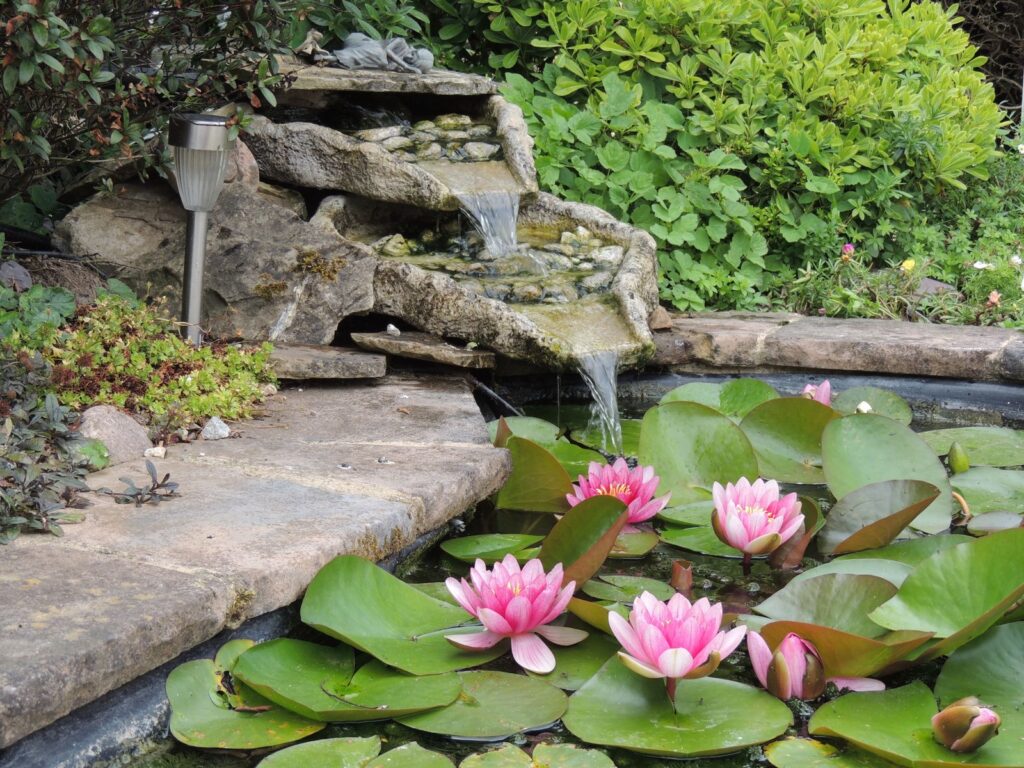
A tabletop fountain takes ten minutes to set up. A koi pond with a waterfall means days of digging and care in every season. Below are the main types, what installing them involves, and the upkeep that keeps water clear and mosquito-free.
Key Takeaways
- Match the feature to your space and the time you have: fountains are easiest, fish ponds take the most care.
- Keep water moving. Circulation is what keeps it clear and keeps mosquitoes from breeding.
- Winter care depends on the feature. Drain fountains, but never drain a pond with fish in it.
Planning Your Water Feature
Assessing Your Space
A large backyard can take a pond or waterfall. A smaller area suits a pondless waterfall or wall fountain. Put the water where you will see and hear it, like beside a patio or an outdoor dining area.
Most features need a pump, so you’ll need power nearby. Choose level, stable ground away from overhanging trees if you can. Every leaf that lands in the water is one more thing to skim.
Safety First
- Use a GFCI-protected outdoor outlet for pumps and lights, and follow the pump maker’s instructions on extension cords.
- Call 811 before you dig. It’s the free national call-before-you-dig service, and it gets buried gas, power, and water lines marked.
- Think about children and pets. Young children can drown in a few inches of water. Check with your city, since some treat deeper ponds like pools and require a fence.
Choosing a Style
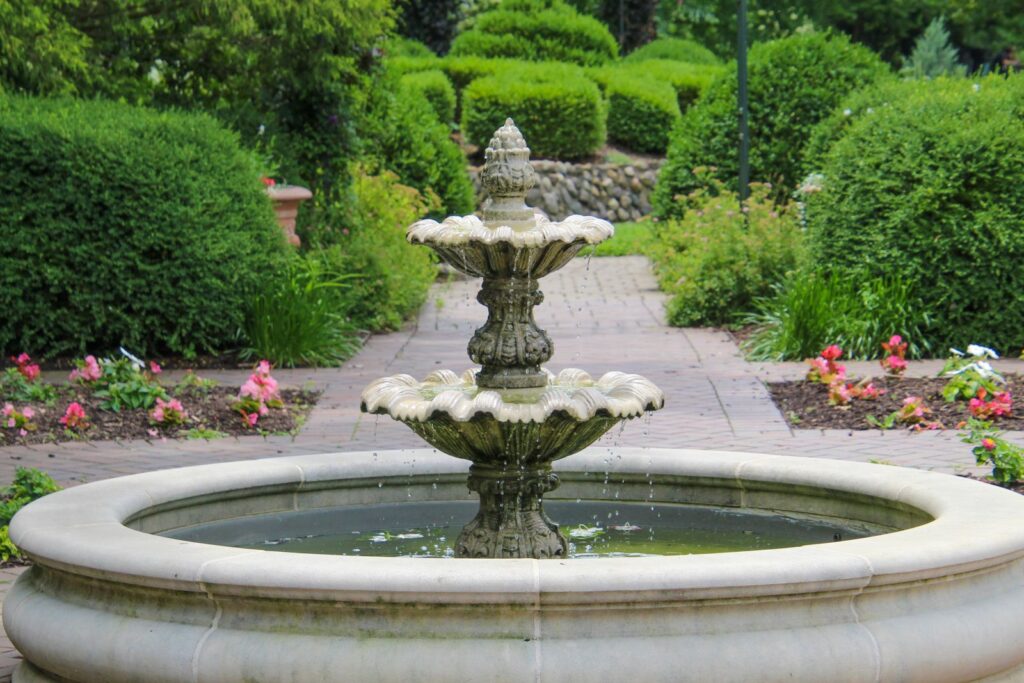
Classic tiered fountains suit formal gardens. A plain basin or spillway, lit with LEDs at night, suits a modern house. For a natural look, go with a rock waterfall or a stream, and use stone that matches your patio and paths.
Budget Considerations
Budget for three things: the feature itself, installation, and upkeep. Upkeep is the one people forget. Pumps wear out, filters need replacing, and ponds need water treatments and electricity every month they run.
Cheaper materials often cost more in the long run. A thin liner or bargain pump that fails in two years means draining and rebuilding. Compare prices at a couple of local garden centers before you buy.
Types of Water Features
Ponds and Water Gardens
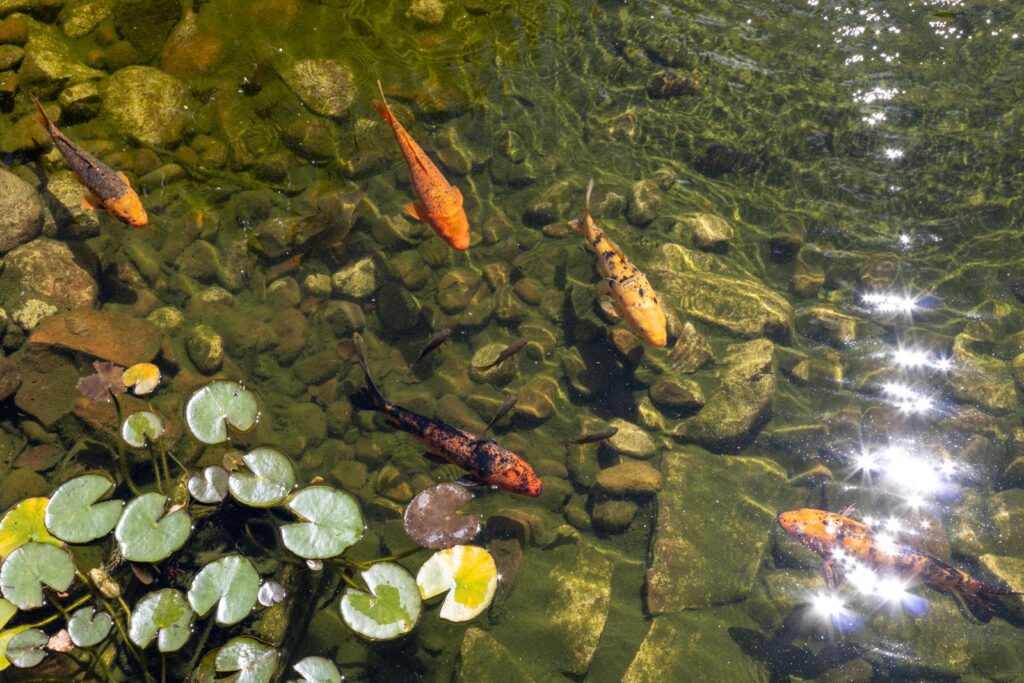
A pond can hold water plants and fish, and frogs will find it on their own. A koi pond is the classic choice, but koi are demanding. They need strong filtration, enough depth to stay cool and safe, and care year-round.
Water lilies and reeds add color and help shade the water, which slows algae. Add a small waterfall and you get sound plus circulation.
Fountains and Birdbaths
Fountains range from classic tiered garden fountains to minimalist modern pieces. A wall-mounted fountain works well in small spaces.
Birdbaths are the simplest water feature of all, and birds use them year-round. Put yours in partial shade to keep the water cool, and refresh it every few days.
Streams and Waterfalls
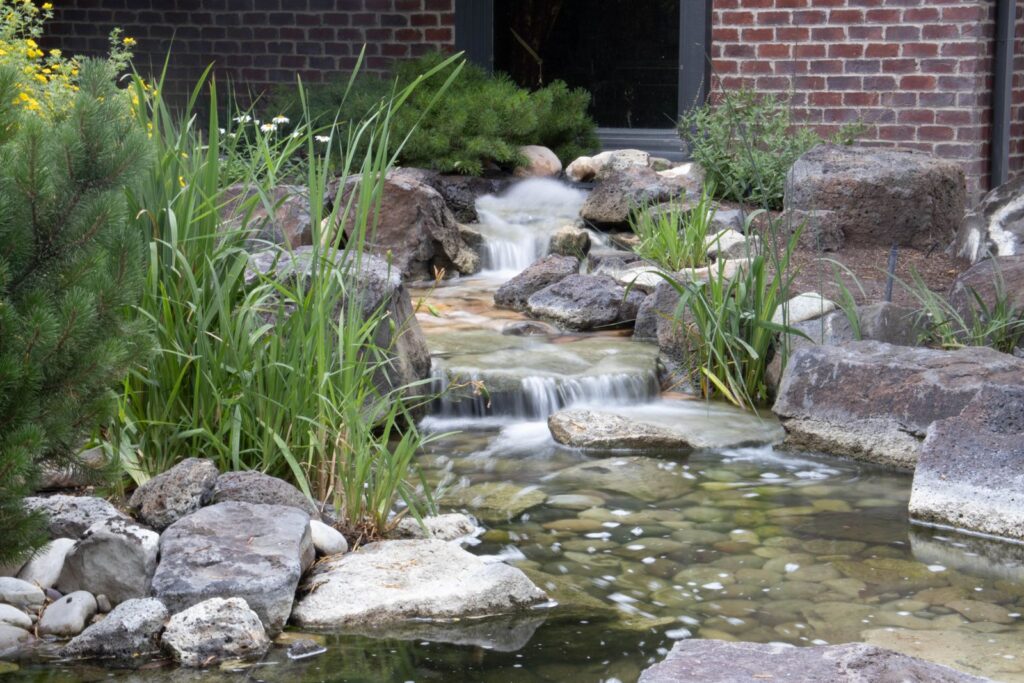
A stream adds movement and can wind along a garden path into a garden pond. A cascading waterfall built from natural rock gives the look of a spring.
If you want the sound without the pond, look at a pondless waterfall. The water drops into a gravel-filled basin underground and is pumped back up, so there is no open pool to clean or fence.
Installation Tips
DIY Installation
Fountains and small ponds are realistic DIY projects. Pick a spot with the right light and power nearby, then gather the basics: a pump, a liner, rocks, and a shovel.
Use a level as you go, especially for fountains, since a tilted bowl spills water and drains the reservoir. For a pond, add a filter before you add plants or fish. Once it’s running, check the pump and water level every week or two.
Hiring a Professional
For anything with plumbing, buried wiring, or heavy rock, a professional is worth it. They’ll handle the electrical and plumbing work, size the pump correctly, and avoid the edging and liner mistakes that cause slow leaks.
Get at least three quotes, ask to see finished projects, and call a couple of references before you sign.
Water Feature Maintenance
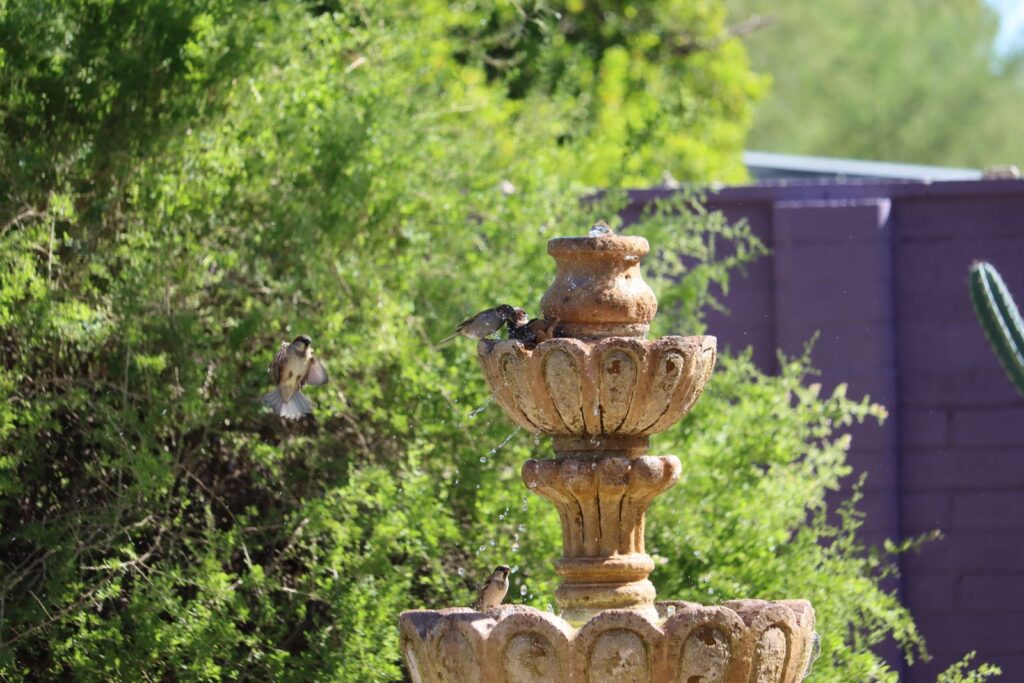
Maintenance is different for fountains and ponds. A fountain is a decoration you can scrub. A pond is a small ecosystem, and over-cleaning does more harm than good.
Pump and Filtration Care
The pump keeps everything moving, so check it monthly and clear leaves and debris from the intake. Clean or replace filters before they clog, following the manufacturer’s schedule. Ponds with fish, heavy leaf fall, or lots of sun need more frequent checks.
Regular Cleaning
Fountains and birdbaths: skim debris often and scrub the bowl every couple of weeks with a soft brush. A vinegar and water mix shifts stubborn mineral and algae buildup. Rinse well before refilling.
Ponds: skim leaves and debris, but don’t scrub the liner or rocks, and never use vinegar or cleaners where fish live. The film on pond surfaces holds the beneficial bacteria that keep water clear. Plants that shade the surface are your best algae control.
Keeping Mosquitoes Out
Any still water can breed mosquitoes, and egg to adult can take as little as a week. University of California pest experts note that even an ounce of standing water can support larvae. Their mosquito guide for water features comes down to three steps:
- Keep the water moving with a fountain, waterfall, or bubbler.
- Build ponds deeper than 2 feet with steep sides. Larvae prefer shallow water.
- Use Bti larvicide dunks or bits in still water. Bti only affects fly larvae, so it won’t harm fish, pets, or the dragonflies that also eat mosquitoes. A dose lasts about a month.
Winterizing Your Feature
Fountains and birdbaths: if you get hard freezes, drain them, bring the pump indoors, and cover or store the bowl. Water that freezes in a ceramic or concrete basin can crack it. Small tabletop fountains can simply come inside.
Ponds with fish: do not drain them. Fish overwinter on the bottom, and they need gas exchange through the ice. Michigan State University Extension recommends keeping at least 10% of the surface open with a floating de-icer or an air bubbler, and stopping feeding once the water drops to about 45°F. Never chip or smash the ice, since the shock travels through the water to the fish. Drain a pond only after the fish and plants have been moved.
Plants and Wildlife
Choosing Aquatic Plants
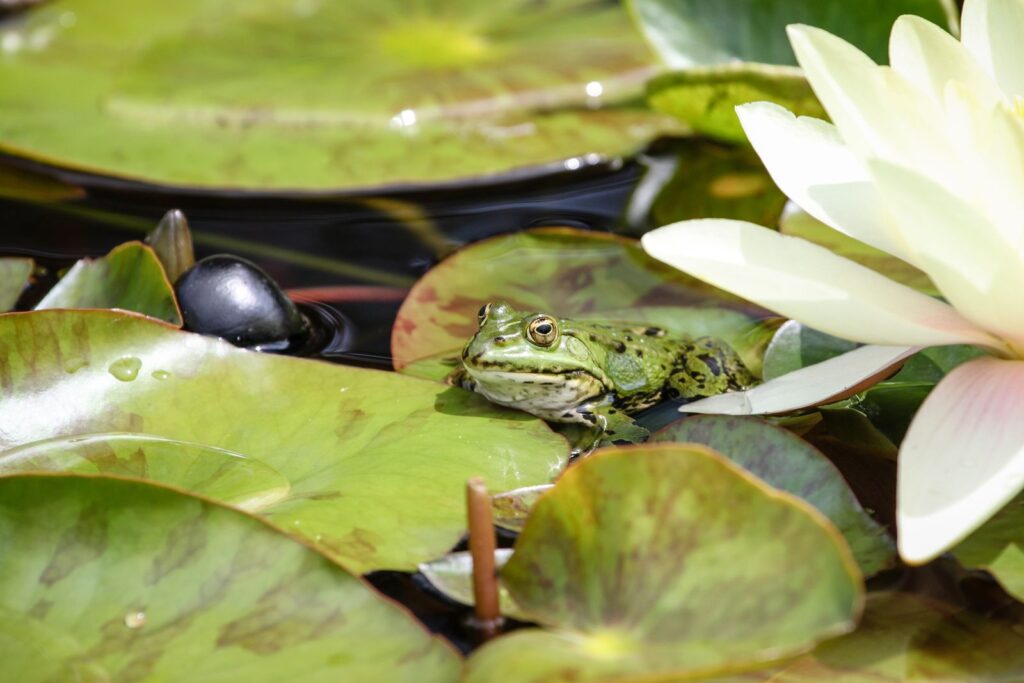
Water lilies float on the surface and shade the water, which keeps it cooler and gives fish cover. Lotus adds height and big, dramatic blooms. Canna planted in the shallow margins brings bold reds and yellows.
Match plants to your climate. If your winters freeze, choose hardy water lilies, since tropical varieties won’t survive outdoors. Trim plants back when they start to take over the surface.
Attracting Wildlife
Water draws wildlife fast. Birds come to drink and bathe, and frogs, dragonflies, and other insects move in. Shallow edges or a sloping beach let birds and small animals reach the water safely, and rocks or logs give them somewhere to perch.
One trade-off: fish eat frog spawn, tadpoles, and insect larvae. If wildlife is your main goal, a fish-free pond surrounded by native plants will attract more of it. Our guide to wildlife-friendly gardens shows which plants and features bring in birds and pollinators.
Design Elements and Ideas
Creating a Relaxing Ambiance
Think about sound first. A small fountain burbles quietly, while a waterfall is louder and better at covering road noise. Put either one near where you sit, not at the far end of the yard.
Raised ponds bring water up to seating height. A stone bowl or container water garden fits a corner of a patio. Reflecting pools do the opposite. They make no sound at all and are there for the view.
Rain Chains, Wall Fountains, and Rills
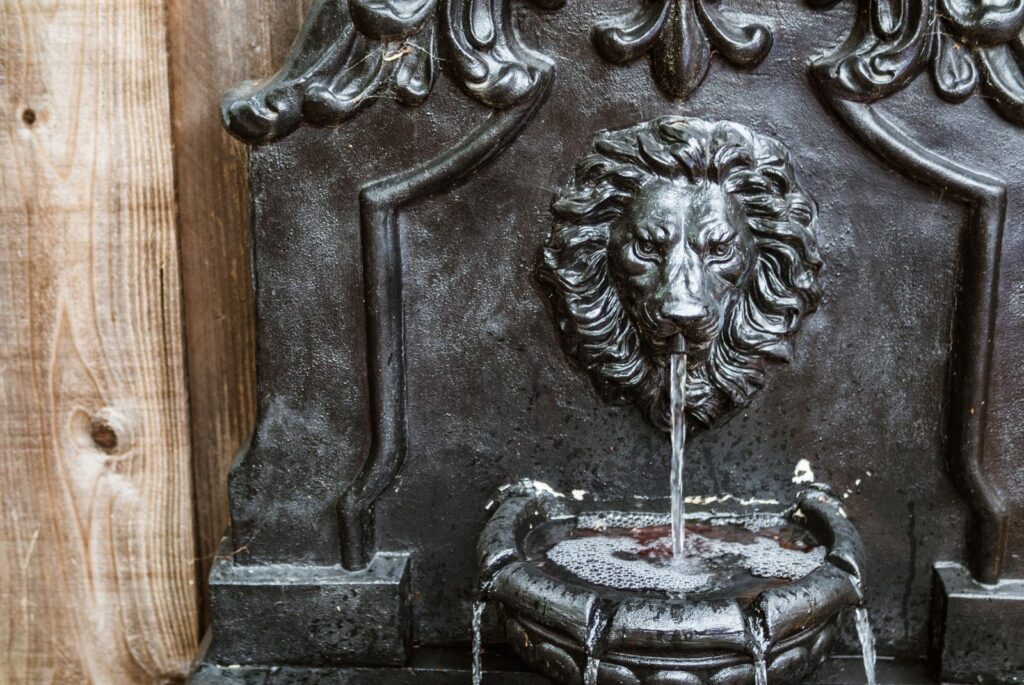
Rain chains replace a downspout and turn every storm into a small water feature. A wall fountain makes a striking focal point on a fence or courtyard wall. A rill, a narrow channel of water running through paving, suits formal designs.
Frequently Asked Questions
How can I create a Zen garden in my backyard to enhance tranquility?
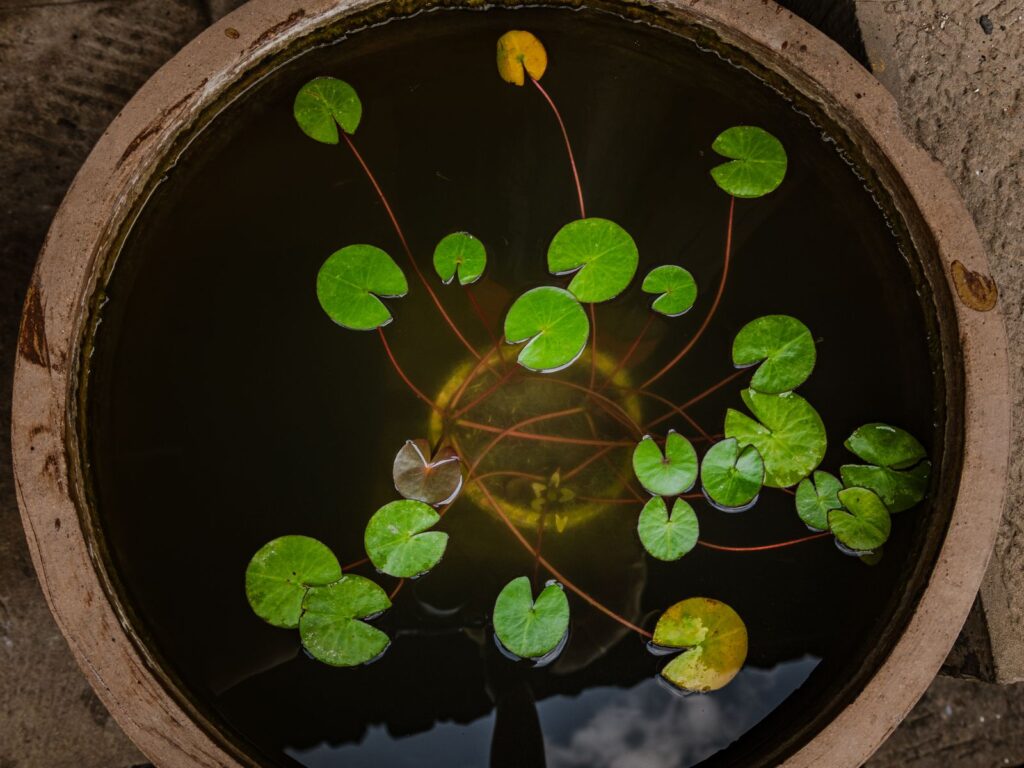
Keep it simple: rocks, raked sand or gravel, and a little water. A small fountain or basin is enough. Add moss or a few simple shrubs, and rake the gravel in lines that suggest flowing water.
What are some water feature ideas suitable for small spaces?
Wall fountains, tabletop fountains, birdbaths, and container water gardens all fit tight spots. For more ideas, see our guide to small garden design.
Can water features in the yard contribute to a calming atmosphere?
Yes. Moving water masks traffic and neighbor noise, and many people find the sound relaxing.
Do water features have a positive impact on a home’s property value?
It depends on the feature and the buyer. A well-kept fountain or small water garden can make a yard more memorable. A large pond can put off buyers who see upkeep, safety concerns, or higher insurance costs. Build one because you’ll enjoy it, not as an investment.
What are the best practices for maintaining clear water in backyard water features?
Keep the water moving with a pump, keep the filter clean, and shade at least part of the surface with plants like water lilies. Skim leaves before they sink and rot. In a pond, don’t overfeed fish, since uneaten food feeds algae.
Will a water feature attract mosquitoes?
Only if the water sits still. Moving water, ponds deeper than 2 feet, and Bti dunks in any still areas keep larvae from developing. See the mosquito section above for details.
Are there any budget-friendly DIY options for adding water features to my yard?
Yes. A large glazed pot with a small submersible pump makes an easy bubbling fountain. A solar-powered fountain needs no wiring at all, though most only run while the sun is on the panel. Both take an afternoon to set up.