
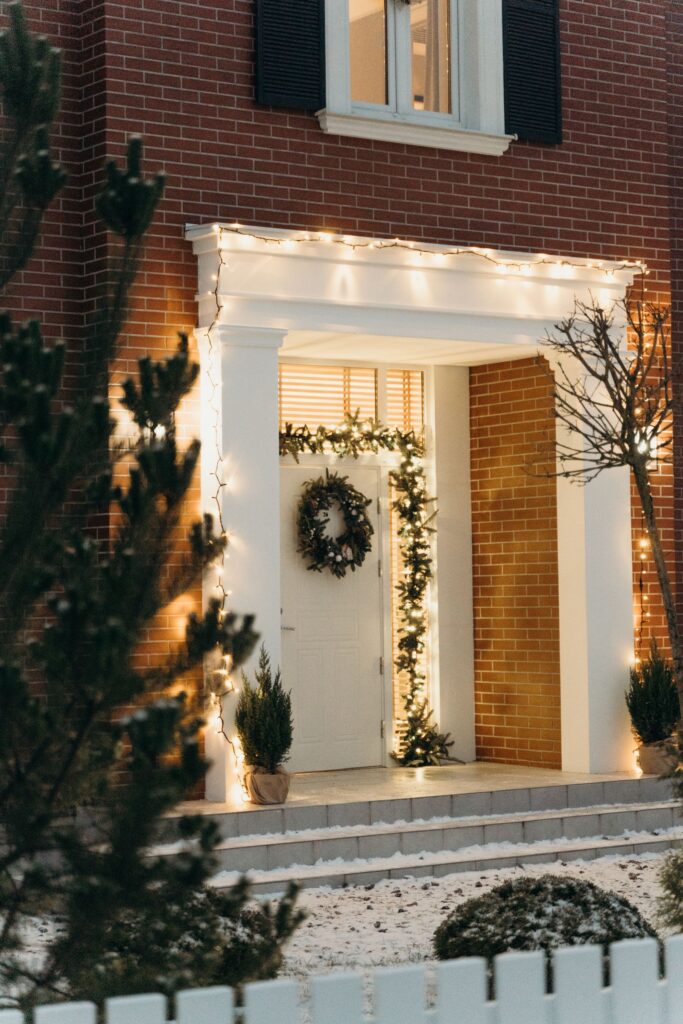
A holiday yard looks best when it’s planned around a few focal points instead of covered edge to edge: the front door, one or two trees, and the porch or walkway. Pick two or three colors, use outdoor-rated LED lights on a timer, add fresh evergreens in containers and wreaths, and secure everything against wind. Just as important, follow a few electrical and ladder safety rules. The U.S. Consumer Product Safety Commission estimated about 14,700 emergency-room visits from holiday decorating in one recent season, and falls were the most common cause.
Plan the Display
- Choose focal points. Start with the front door, then add one or two features such as a tree, the porch railing, or a lamppost. A few well-lit spots look better than lights scattered everywhere.
- Pick a color scheme. Two or three colors that suit the house hold the display together. Warm white with red and green is classic, while cool white with silver and blue reads as winter.
- Map your power. Note where your outdoor outlets are and how far cords will run. It’s easier to plan around outlets than to string extension cords across the lawn.
- Check the rules. Some HOAs set dates or limits for displays.
Choose and Hang the Lights
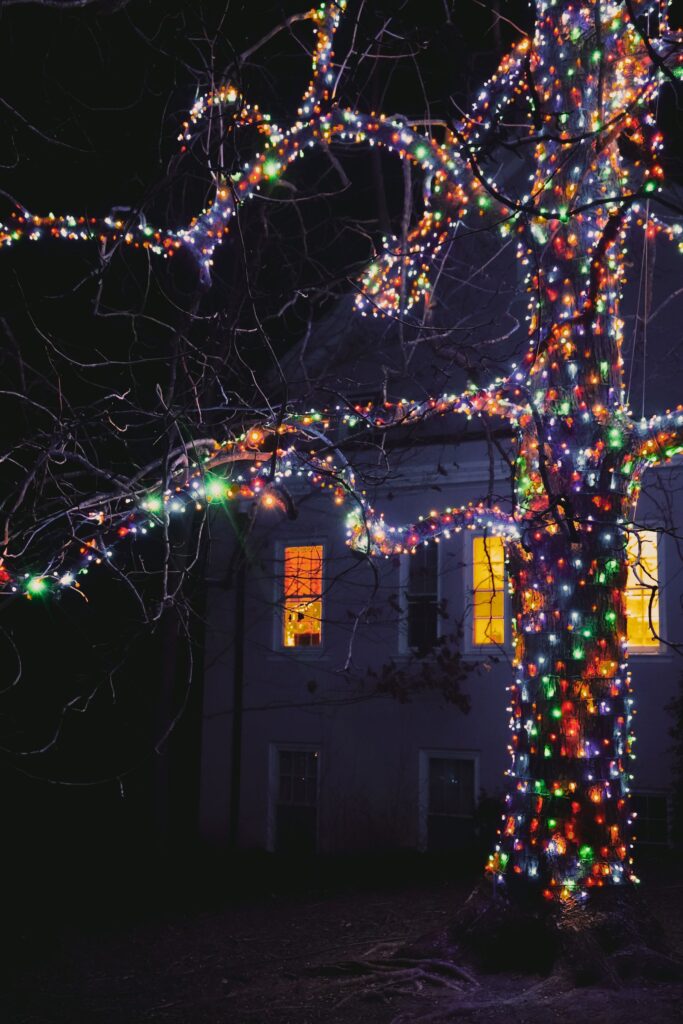
LED holiday lights use much less electricity than old incandescent strings and stay cool, so more strands can run on one circuit. Whatever you buy, make sure it’s marked for outdoor use. Put the display on a timer so it runs only in the evening.
| Light type | Best for |
|---|---|
| String lights | Rooflines, railings, tree trunks and branches |
| Icicle lights | Eaves and gutters |
| Net lights | Covering shrubs and hedges quickly |
| Stake or pathway lights | Lining the walk to the door |
| Spotlights | Lighting a wreath, tree, or yard figure |
| Projectors | Washing a wall with patterns, with no climbing |
On evergreens, weave strands through the inner branches as well as the tips so the whole tree glows rather than just its outline. Hang lights on the house with plastic gutter clips or hooks, not nails or staples, which can cut the insulation. For year-round outdoor lighting ideas, see our landscape lighting guide.
Decorate With Fresh Greenery
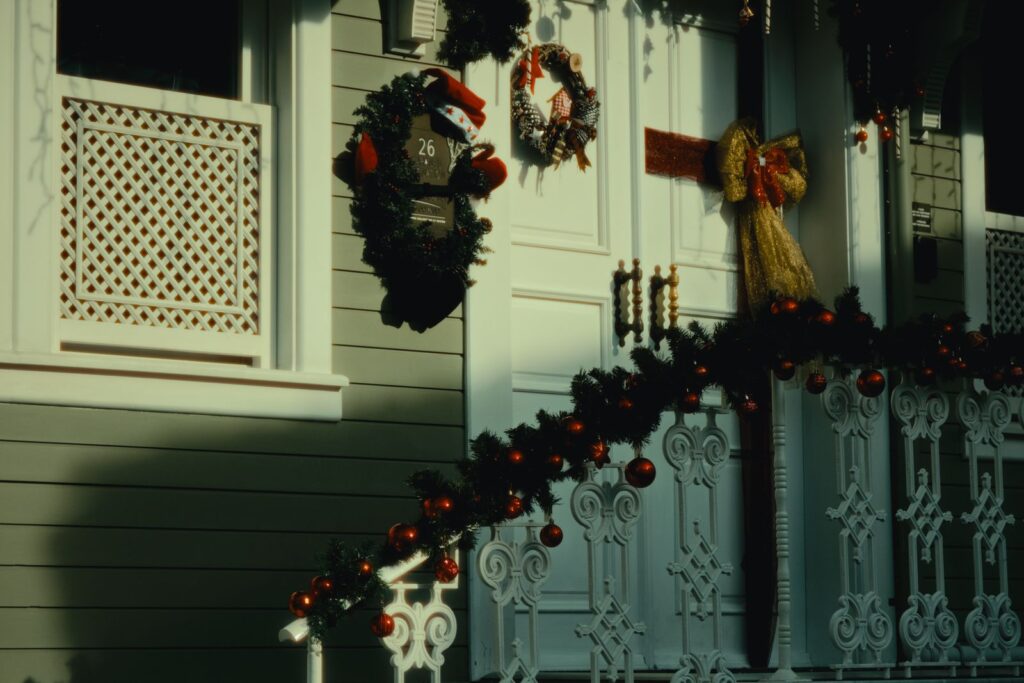
Evergreen boughs, berries, and branches look good day and night and don’t need power. Penn State Extension suggests turning summer containers into winter arrangements in mid to late November:
- Store terracotta and pottery for winter so they don’t break in freezing weather. Plastic or metal pots need plenty of drainage holes.
- Leave the root mass in last season’s containers. Cut annuals off at the soil line and push the evergreen stems into the old soil for support.
- Use boxwood, false cypress, holly, spruce, pine, yew, and arborvitae. Add branches with berries or seed pods as the tall focal point and trailing evergreens over the edge.
Add a wreath to the front door and garland along the railing to tie the greenery into the display. If you have pets, keep holly out of reach: the ASPCA lists it as toxic to dogs, cats, and horses.
Yard Figures and Inflatables
Group figures where they’re seen from the street and the door, and set them at different heights and distances so the scene has depth. Stake down every inflatable and use all the tethers it came with, since wind is what knocks most of them over. Light figures with a spotlight from the ground rather than wrapping them in lights, and keep cords out of the path people walk on.
Easy DIY Ideas
- Light balls: roll chicken wire into spheres, wrap them in LED mini lights, and hang them from tree branches or set them on the lawn.
- Lit potted evergreens: a pair of dwarf conifers in pots by the door, wrapped in mini lights, frames the entrance.
- Lantern path: line the walk with lanterns holding battery-powered LED candles instead of open flames.
- Window silhouettes: cut shapes from cardboard or foam board and backlight them from inside.
Protect Your Plants
Wrap lights loosely around trunks and branches so they don’t cut into the bark, and take them down before spring growth starts. Don’t nail or staple anything into trees. Avoid tramping across a frozen lawn or beds while you set up. Our winter landscaping tips cover protecting your yard through the cold months.
Safety Checklist
These tips come from the Electrical Safety Foundation International:
- Use only extension cords and decorations marked for outdoor use, and match the cord’s amperage rating to what you plug into it.
- Plug outdoor lights into GFCI-protected outlets. Portable outdoor GFCIs are available where electrical supplies are sold.
- Inspect every strand, decoration, and cord for damage before using it.
- Don’t overload outlets, and don’t pinch cords in doors or windows.
- Use a wooden or fiberglass ladder outdoors, since metal conducts electricity, and make sure it extends at least three feet past the roof edge.
- Keep yourself and your equipment at least 10 feet from power lines.
- Turn off all decorations before you go to bed or leave home.
Taking It Down
Pick a dry day. Wind each light strand around a piece of cardboard or a reel so it doesn’t tangle, toss any strands with damaged wires, and store everything dry. Compost the greenery, or leave the evergreen containers in place through winter. For what to plant and tidy as spring arrives, see our seasonal landscaping guide.
Frequently Asked Questions
What lights should I use for outdoor holiday decorating?
LED lights marked for outdoor use. They use far less electricity than old incandescent strings and stay cool. Plug them into a GFCI-protected outlet and put the display on a timer.
How do I hang outdoor Christmas lights safely?
Hang them with plastic clips or hooks instead of nails or staples. The Electrical Safety Foundation International advises using a wooden or fiberglass ladder that extends at least three feet past the roof edge and staying at least 10 feet from power lines.
Can I leave holiday lights on all night?
No. ESFI recommends turning off all indoor and outdoor decorations before you go to bed or leave home. A timer makes this automatic.
What greenery can I use in outdoor winter containers?
Penn State Extension suggests boxwood, false cypress, holly, red-cedar, spruce, pine, yew, and arborvitae, with berried branches or seed pods for height. Holly is toxic to pets, so keep it out of their reach.
How do I keep inflatables from blowing over?
Use every stake and tether that came with them, set them on level ground out of the strongest wind, and check them after storms.