
A relaxing hot tub area comes down to four things: a level base strong enough for the weight, a spot that’s private but close to the back door, a little screening and soft lighting, and the safety basics that keep everyone comfortable. Here’s how to plan each one before the tub arrives.
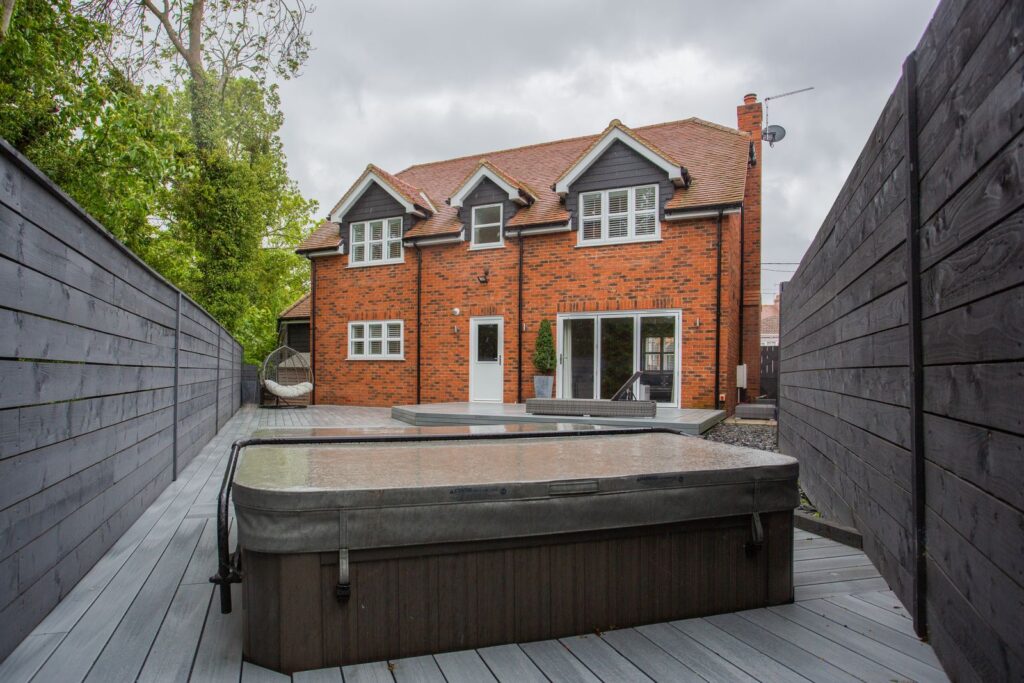
Choose the Spot
- Close to the house. A short, well-lit path from the back door means you’ll actually use it in cold weather and at night.
- Private. Check sight lines from neighbors’ windows and the street, then plan screening around them.
- Clear of messy trees. Leaves, needles, and seed pods end up in the filter. Keep the tub out from under overhanging branches.
- Sheltered from wind. A fence, wall, or hedge on the windward side keeps you warmer and cuts heat loss.
- Reachable for delivery. Measure gates and paths. Tubs are often delivered on their side, and some need a crane.
- Near power. Most hot tubs need a dedicated circuit with GFCI protection. Have a licensed electrician do the wiring and pull any required permit.
Build a Base That Can Take the Weight
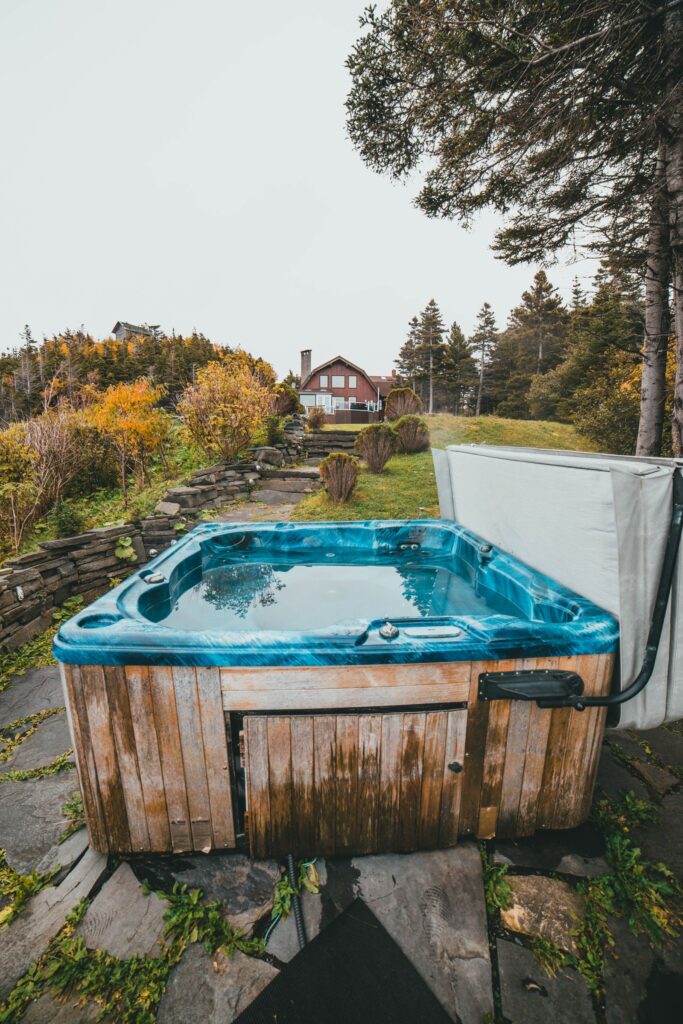
Water weighs about 8.3 pounds per gallon, so a 400-gallon tub holds well over 3,000 pounds of water before anyone gets in. The base has to be flat, level, and strong. Follow your manufacturer’s requirements, since they can affect the warranty.
| Base | Pros | Watch out for |
|---|---|---|
| Concrete slab | Strongest and most permanent | Needs proper thickness and reinforcement |
| Compacted gravel with pavers | Drains well, easier DIY | Must be compacted firmly and dead level |
| Prefab spa pad | Quick to install | Only on firm, level, compacted ground |
| Deck | Can set the tub at deck height | Needs a structural check before adding the load |
Never set a hot tub on an existing deck without having a builder or engineer confirm it can carry the weight. For laying a compacted gravel and paver base, our paver installation guide covers the method.
Add Privacy
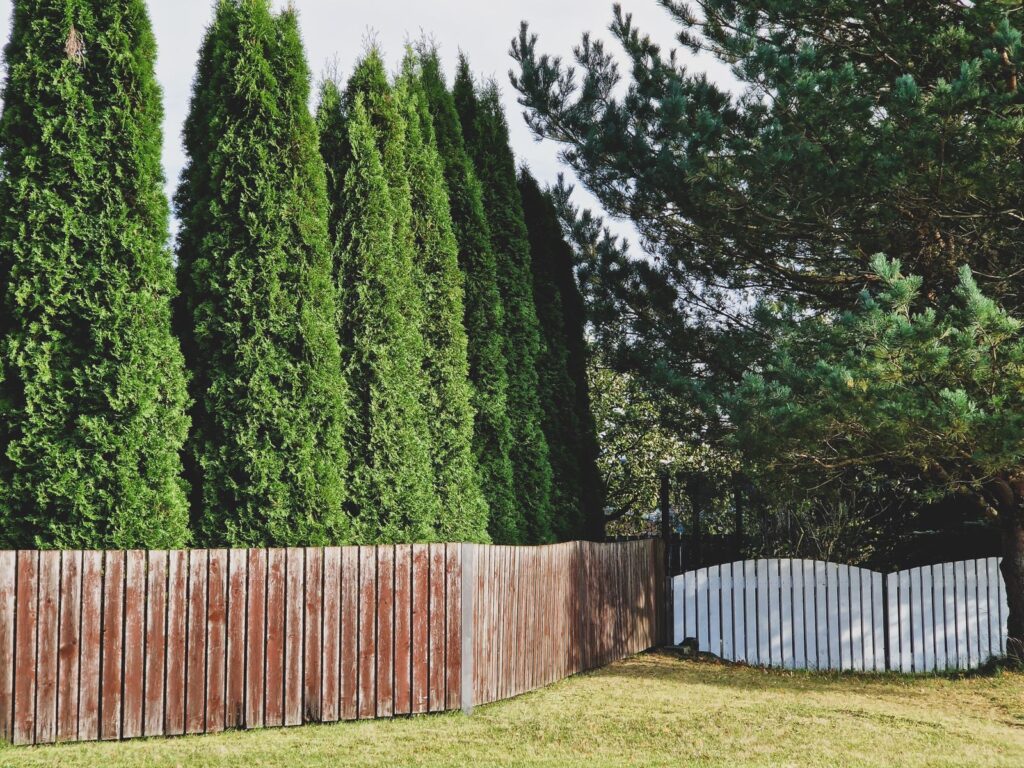
Screening makes a hot tub area feel like a retreat. Good options include:
- Privacy panels or fencing in cedar, composite, or slatted metal, placed only where you need to block a view.
- A pergola with a slatted roof, lattice sides, or a retractable shade, which also hides the tub from upstairs windows.
- A trellis with climbing vines, or roll-up bamboo or outdoor fabric screens you can lower only when you’re using the tub.
- Evergreen plants such as upright junipers, arborvitae, or clumping grasses in large planters. Keep thorny plants away from where people step out barefoot, and skip plants that drop flowers, berries, or needles into the water.
Our guide to choosing plants can help you match screening plants to your sun and climate.
Make It Comfortable
- Steps and a handrail make getting in and out safer, especially when surfaces are wet.
- Slip-resistant surfaces around the tub, such as textured pavers or grooved decking, not smooth tile.
- A cover lifter so one person can open and close the cover easily.
- Towel hooks, a bench, and a weatherproof storage box for towels, robes, and water-care supplies.
- Low, warm lighting on steps and the path, not floodlights. Our landscape lighting guide explains how to light paths without glare.
For seating nearby that holds up to splashes, see our guide to durable outdoor furniture.
Hot Tub Safety
The CDC recommends keeping the water no hotter than 104°F, not letting children under 5 use hot tubs, avoiding alcohol before or during a soak, and talking to a healthcare provider first if you’re pregnant. The CPSC’s Pool Safely campaign adds a few more essentials:
- Make sure the tub has compliant drain covers, and teach children to stay away from drains.
- Install safety devices such as a cover, barrier, or alarm. A cover with locking straps keeps the tub closed when no one is using it.
- Always watch children in or near the water.
- Learn CPR for children and adults.
It also helps to know where the pump’s shutoff switch is, so you can cut power quickly in an emergency.
Keep the Water Clean
Test the water regularly with test strips. The CDC’s recommended levels are chlorine at least 3 parts per million, or bromine between 4 and 8 ppm, with pH between 7.0 and 7.8. Shower before getting in, clean the filter on the manufacturer’s schedule, and drain and refill the tub periodically. Your hot tub’s manual will give specific intervals.
For more ideas on making the patio around it inviting, see our guide to planning an outdoor patio.
Frequently Asked Questions
What is the best base for a hot tub?
A reinforced concrete slab is the strongest option. A firmly compacted, level gravel base with pavers also works for many tubs. Follow your manufacturer’s requirements, and have a builder or engineer check any deck before putting a hot tub on it.
How hot should a hot tub be?
No hotter than 104°F, according to the CDC. Many people find a few degrees lower more comfortable for longer soaks.
Can children use a hot tub?
The CDC advises against letting children under 5 use hot tubs. Older children should always be supervised, and the tub should have compliant drain covers and a safety cover when not in use.
Can I use a hot tub while pregnant?
The CDC recommends talking to a healthcare provider before using a hot tub if you are pregnant.
Do I need an electrician to install a hot tub?
Usually, yes. Most full-size tubs need a dedicated circuit with GFCI protection, which a licensed electrician should install, and many areas require a permit. Smaller plug-and-play models run from a standard outdoor GFCI outlet.