
A good outdoor dining area is close to the kitchen, sits on a level surface, has room to pull chairs out, and gets shade at the time of day you actually eat. Add a grill set safely away from the house, soft lighting for evenings, and a plan for bugs and cool nights, and it becomes the most-used part of the yard. Here’s how to plan each piece.
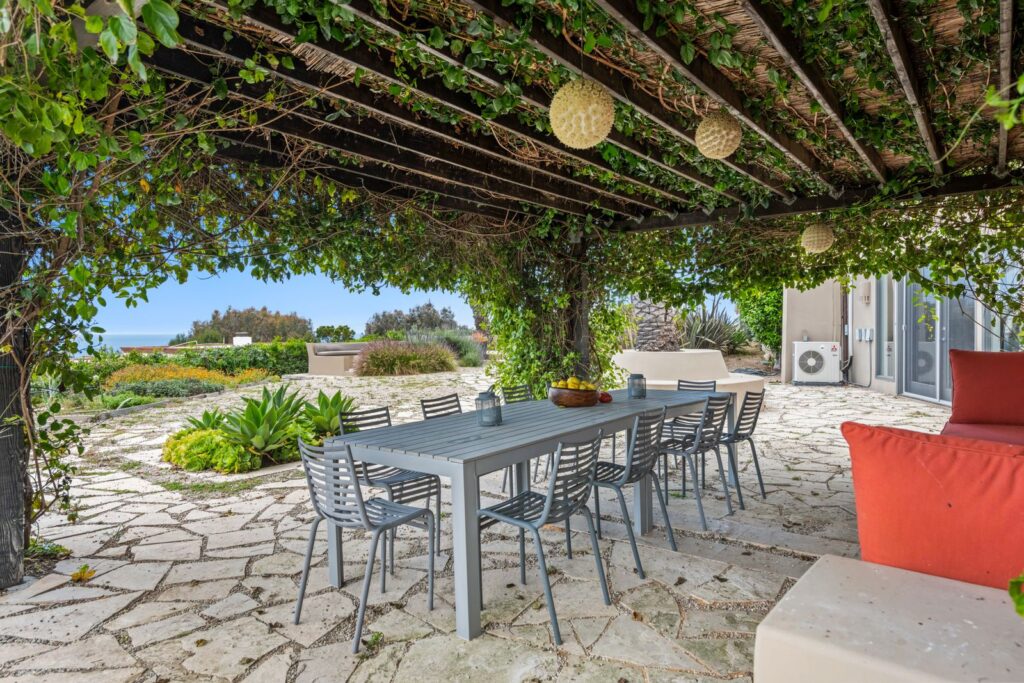
Pick the Spot
- Near the kitchen door. Every trip with plates and leftovers is shorter, so you’ll eat outside more often.
- Level and firm. A patio, deck, or compacted gravel pad keeps chairs from wobbling. Lawn works for a picnic table but turns muddy under daily use.
- Shade at mealtime. Watch where the sun falls at dinner time in summer. A west-facing patio can be too hot in the evening without shade.
- Out of the wind. A wall, fence, or hedge on the windward side keeps napkins on the table and candles lit.
No patio yet? Our patio planning guide covers materials, and a gravel dining pad is one of our weekend backyard projects.
Size the Table to the Space
Measure the area before you shop. Leave about 3 feet between the table edge and any wall, step, railing, or planter so people can pull chairs out and walk behind seated guests. That clearance usually decides the table size, not the other way around. Round tables suit square spaces and small groups and make conversation easier. Rectangular tables fit long, narrow patios and seat more people. Extending tables and benches handle the occasional big gathering without crowding the space the rest of the year. On a small patio or balcony, a bistro table for two tucked into a corner, or a narrow counter along a railing, still makes room to eat outside. Our small garden design guide has more space-saving ideas.
For materials that last outdoors, from teak to aluminum and recycled plastic, see our guide to durable outdoor furniture. Cushions on dining chairs make long meals more comfortable, as long as you can bring them in when it rains.
Add Shade
| Option | Best for | Keep in mind |
|---|---|---|
| Market umbrella | Small tables, renters | Needs a heavy base, and close it in wind |
| Cantilever umbrella | Shade without a pole through the table | Needs a weighted base sized to the canopy |
| Shade sail | Covering a wider area cheaply | Needs strong anchor posts or walls |
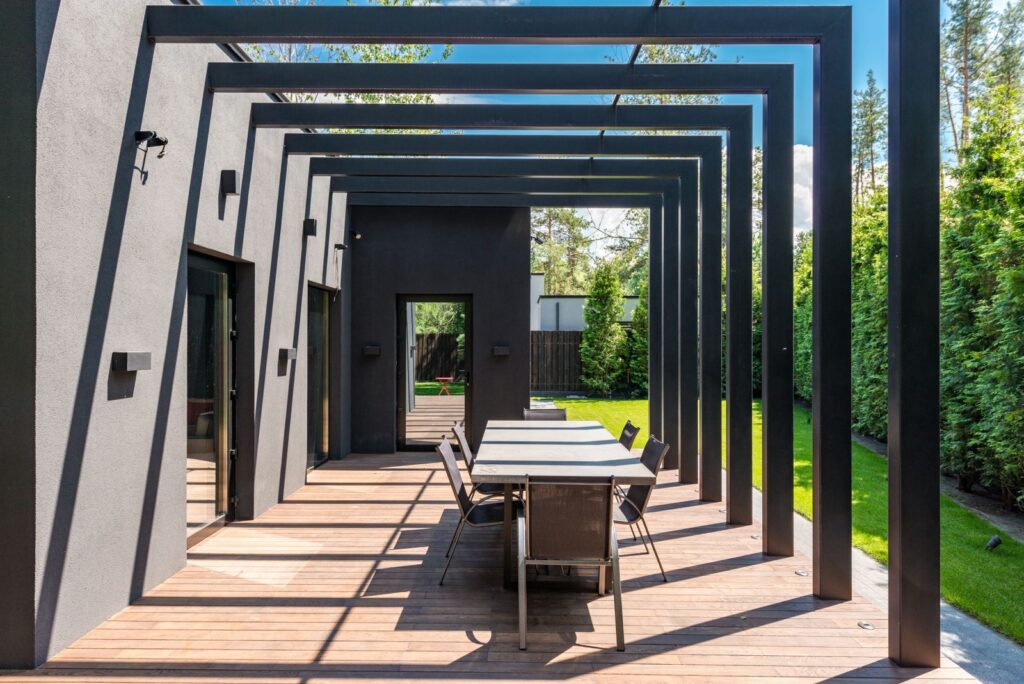
| Pergola | A permanent outdoor room | Slatted roofs give partial shade unless you add a cover or vines |
| Shade tree | Long-term, cooling shade | Takes years, and drops leaves and fruit on the table |
Set Up the Grill Safely
Put the grill close enough that the cook can talk to the table, but where smoke drifts away from guests. The National Fire Protection Association recommends:
- Placing the grill well away from the house and deck railings, and out from under eaves and overhanging branches.
- Keeping children and pets at least three feet from the grilling area.
- Cleaning grease and fat buildup from the grates and trays.
- Opening a gas grill’s lid before lighting it, and checking connections for leaks with soapy water at the start of the season.
A small prep counter or rolling cart next to the grill saves trips back to the kitchen. A full outdoor kitchen with a sink, fridge, or gas line is a bigger project that usually needs a plumber, an electrician, and a permit.
Light It for Evening Meals
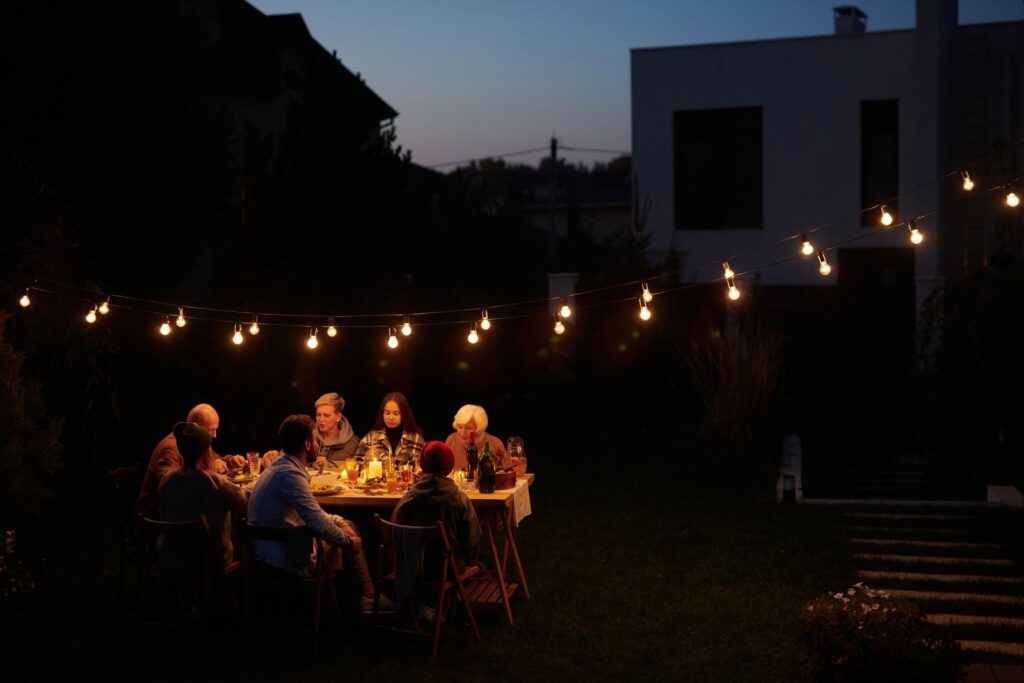
String lights over the table give a warm glow without glare. Add a few path lights from the door so people aren’t carrying dishes in the dark, and lanterns or battery candles on the table. Keep bright task light for the grill only. Our landscape lighting guide covers fixtures and warm bulb colors.
Plan for Bugs and Cool Nights
- Mosquitoes: the EPA stresses removing standing water from gutters, buckets, toys, plant saucers, and anything else that holds water, since that’s where mosquitoes breed. A fan blowing across the table also helps keep them off.
- Cool evenings: keep a basket of throws nearby, or add a fire pit or patio heater. Give any heater the clearances its manufacturer specifies, and never use an outdoor propane heater in an enclosed space.
For a fire pit near the dining area, see our guide to cozy fire pit areas.
Finishing Touches
An outdoor rug defines the dining zone on a big patio. Pots of herbs near the table look good and are handy for cooking, and our edible landscaping guide has more ideas. Shatterproof tableware, such as melamine plates and acrylic or polycarbonate glasses, is safer on a stone patio. Keep a weatherproof storage box nearby for cushions, napkins, and serving pieces so setting up for dinner takes minutes.
Frequently Asked Questions
How much space do I need for an outdoor dining table?
Measure the table, then add about 3 feet on every side where people will sit, so chairs can slide out and others can walk behind them. That clearance usually decides the table size.
Where should I put the grill?
Close enough that the cook can talk to the table, but where smoke drifts away from guests. The NFPA recommends placing it well away from the house and deck railings, and out from under eaves and overhanging branches.
What is the best shade for an outdoor dining area?
It depends on the space. Umbrellas suit small tables, cantilever umbrellas avoid a pole through the table, shade sails cover wider areas cheaply, and a pergola creates a permanent outdoor room.
How do I keep mosquitoes away from the patio?
Remove standing water from gutters, buckets, toys, and plant saucers, which the EPA calls an important part of mosquito control around homes. A fan blowing across the table also helps.
Can I use a patio heater under a covered patio?
Only if the manufacturer allows it and you keep its specified clearances. Never use an outdoor propane heater in an enclosed space.