
An outdoor living space is a room without walls, somewhere to eat and spend an evening that feels as comfortable as the inside of your house. The recipe is simple: a level floor, furniture that can live outside, shade for the day, privacy, and light for the night. Get those five right and you’ll use the space far more than you expect.
Below is each piece in turn, with links to our more detailed guides.
Key Takeaways
- Decide how you’ll use the space first. Dining, lounging, and entertaining each need a different layout.
- Buy furniture and fabrics made for outdoors, or they’ll fade, rust, or mildew within a season or two.
- Shade and privacy are what make people stay. Plan both before you buy decor.
Designing Your Ideal Outdoor Living Space
Assessing Your Space and Needs
Start with what you have. A balcony, a small patio, and a big backyard call for very different plans. Note the trees and slopes, and where the sun sits in the late afternoon, when you’re most likely to be outside.
Then decide what the space is for. Family dinners need a table near the kitchen door. Lounging needs deep seating and shade. Entertaining needs room to move and, ideally, an outdoor-rated outlet for lights, music, or a heater. Make a short list of must-haves before you shop. If you’re starting from bare ground, our guide to planning an outdoor patio walks you through size and placement.
Choosing a Theme or Style
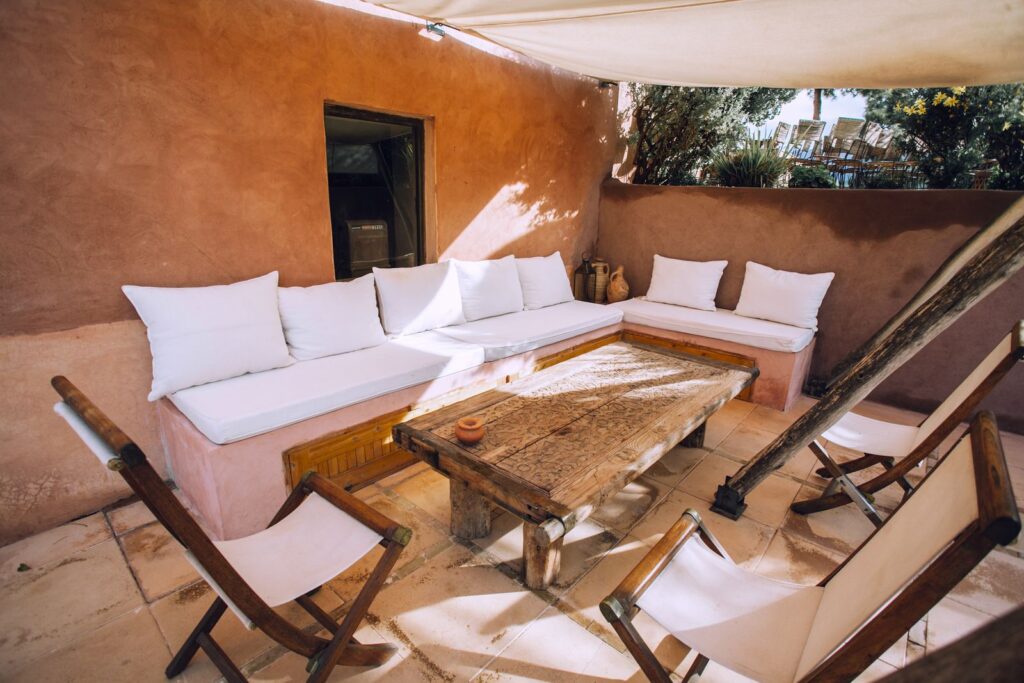
Take your cue from the house. Metal, glass, and clean lines suit a modern home. Wood and stone suit a rustic or cottage style. Light, weathered finishes suit a coastal look. Keep colors to a short palette, and let cushions and planters tie it together. For more on matching style to the house, see our guide to landscape design styles.
Selecting the Right Materials
Durable Flooring Options
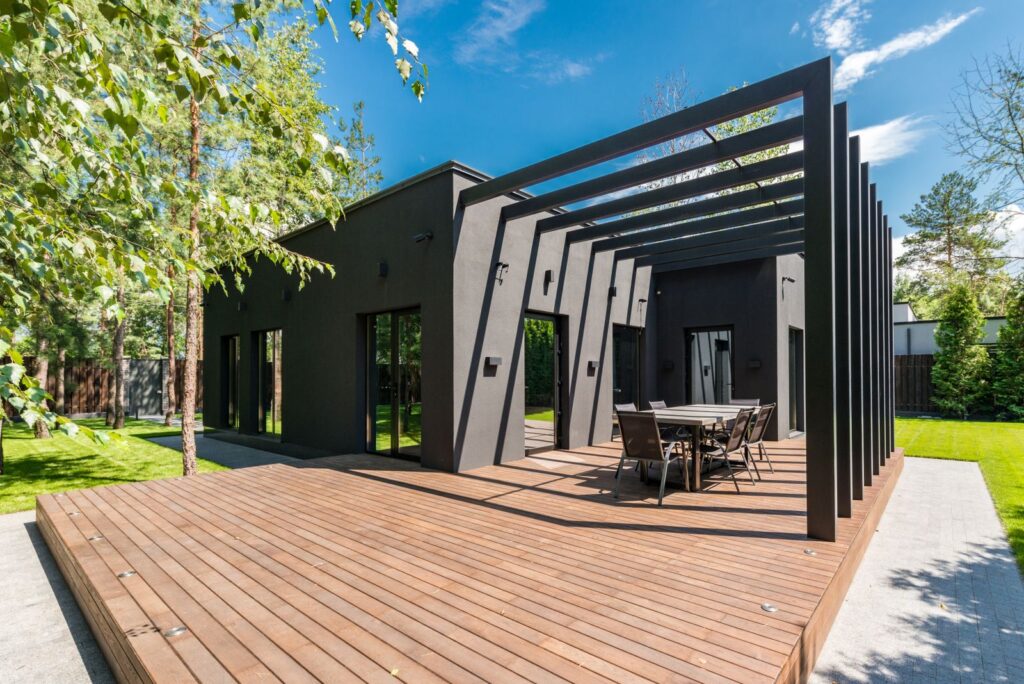
Concrete is strong, easy to clean, and can be stamped or stained to look like stone. Outdoor porcelain tile comes in many styles, but choose a textured, exterior-rated tile so it isn’t slick when wet. Wood decking is warm but needs regular sealing, and composite decking costs more up front but skips the upkeep. Our hardscaping guide covers stone and pavers in depth.
| Material | Pros | Cons |
|---|---|---|
| Concrete | Durable, affordable, can be stamped or stained | Can crack over time |
| Outdoor porcelain tile | Many styles, very low upkeep | Choose a textured finish, or it can be slippery when wet |
| Wood decking | Classic look and warmth | Needs sealing; can rot without it |
| Composite decking | Long-lasting, low maintenance | Higher upfront cost; can get hot in sun |
Weather-Resistant Furnishings
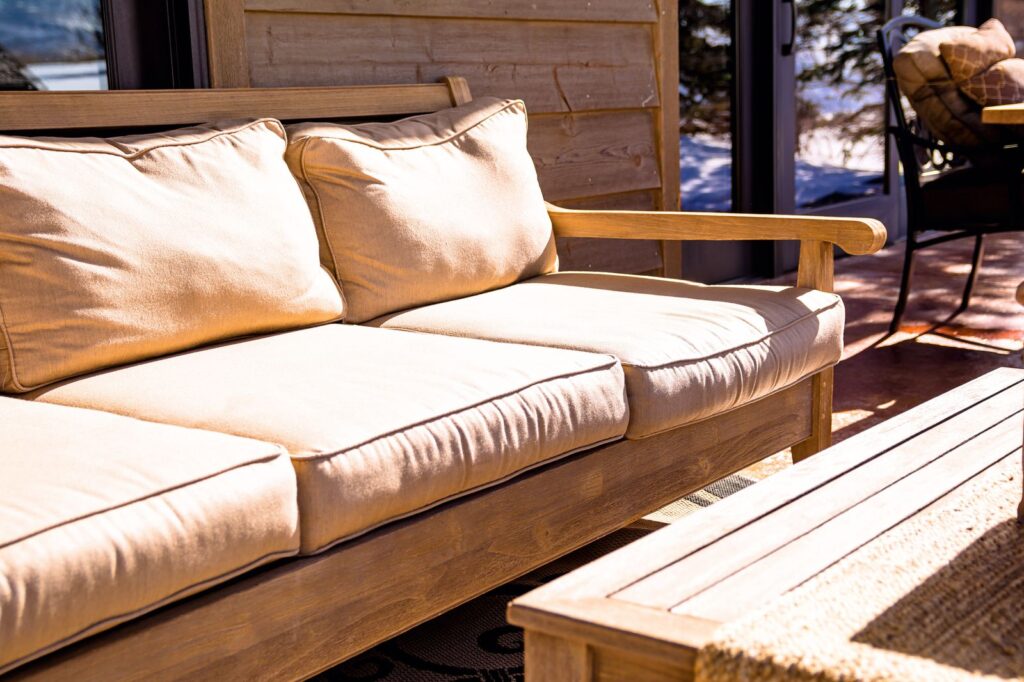
Aluminum is light and won’t rust. Teak’s natural oils let it sit outside for years, weathering to a silver gray unless you oil it. All-weather resin wicker resists fading and cleans easily. For cushions, look for fabric labeled for outdoor use, such as solution-dyed acrylic, which resists fading and mildew. Covers or a storage bench add years to everything. Our guide to choosing durable outdoor furniture compares materials in detail.
Choosing Materials for Aesthetics and Functionality
Natural stone always looks good on patios and paths. Reclaimed wood and recycled composites are greener choices and often cheaper. Mixing two materials, like a stone path leading to a wood deck, adds interest. Just keep everything easy to clean, because a space that’s a chore to maintain won’t get used.
Creating Comfortable Seating Areas
Arranging Furniture for Flow and Function
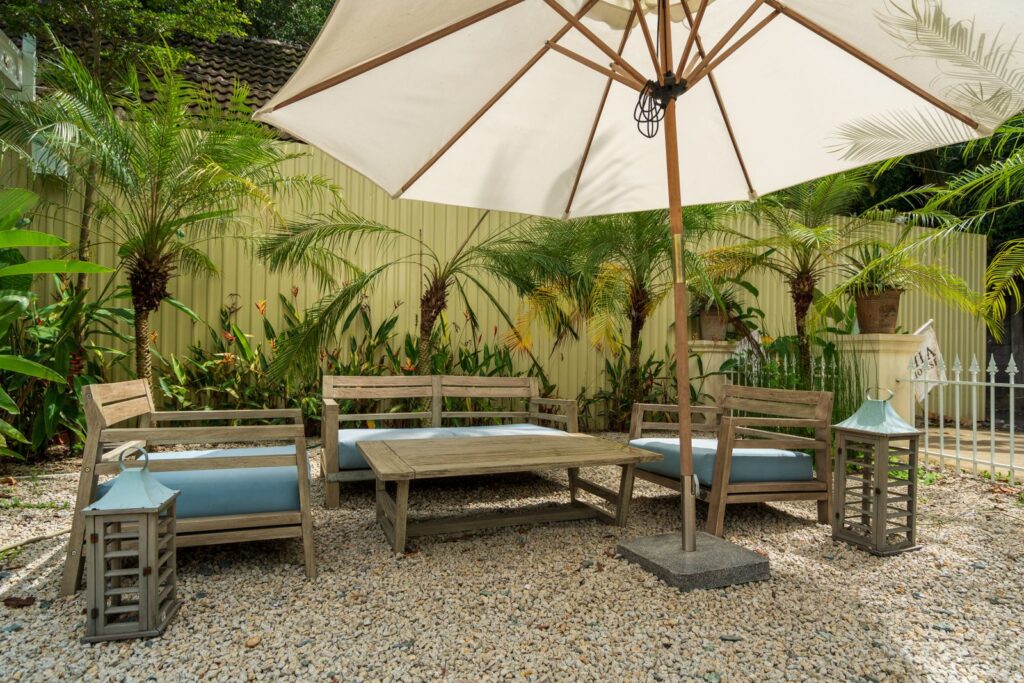
Leave clear walkways through the space, and face seats toward each other so conversation comes easily. A corner sofa seats a lot of people in a small footprint. Put a side table within reach of every seat. If you have a good view of the garden or the sunset, point the main seating at it. For eating outside, see our ideas for an outdoor dining area, and for evenings, a cozy fire pit area.
Incorporating Shade Solutions
A sunny patio sits empty on a hot afternoon. Umbrellas are flexible and cheap. A pergola gives permanent, partial shade and can carry climbing plants or a retractable canopy. Shade sails cover larger areas and look best stretched at different angles. Mature trees are the best shade of all, so note where their shadows fall at different times of day before placing seating.
Landscaping for Beauty and Privacy
Selecting Plants and Trees
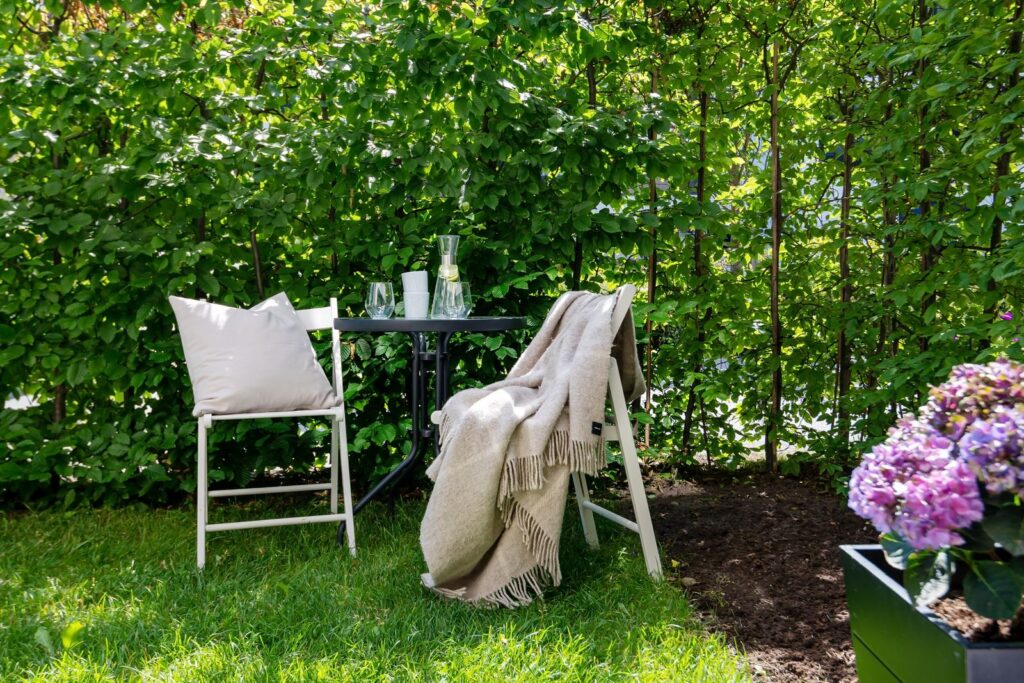
Plants make a patio feel like a garden room. Fragrant plants like roses and lavender near seating are a bonus. Evergreens like pine and cedar keep the space green all year. Choose plants that suit your conditions, and pick trees that won’t block a view or drop fruit on the patio. Our guide on how to choose plants for your climate covers the details.
Creating Privacy with Natural Elements
Dense evergreen hedges like boxwood, holly, or arborvitae make a living wall that blocks views and softens noise. For a quicker screen, put up a trellis or slatted panel and grow a climber on it. Choose native American wisteria or crossvine rather than Chinese or Japanese wisteria and English ivy. UF/IFAS Extension recommends American wisteria as the best replacement for invasive Chinese wisteria.
Bamboo grows fast, but running types spread underground into neighbors’ yards, and some towns regulate them. If you want bamboo, choose a clumping variety.
Outdoor Lighting and Ambiance
Layering Lights for Safety and Beauty
Use three kinds of light. Path and step lights keep people from tripping. String lights and lanterns over the seating area set the mood. A couple of uplights on a tree or a wall give the space depth. Mixing heights and directions keeps it from looking like a parking lot. Our landscape lighting design guide goes further.
Choosing Energy-Efficient Options
LED bulbs use little power and last for years. Solar lights need no wiring and switch on by themselves at dusk, though they’re dimmer and fade on cloudy days. Motion sensors suit spots you only need lit now and then, like a side gate or driveway. Anything you plug in outside should use a weatherproof, GFCI-protected outlet.
Putting It All Together
Build in stages. Start with a level floor and a few good chairs, then add the rest as you learn how you actually use the space. A small, comfortable outdoor room gets used every evening. A big, half-finished one rarely does.
Frequently Asked Questions
How much does an outdoor living space cost?
It ranges widely. New cushions, a rug, and string lights on an existing patio can cost a few hundred dollars. A new patio is the big expense: in the 2023 Remodeling Impact Report from the National Association of Realtors, a new 18-by-16-foot paver patio was estimated at about $10,500. See our patio planning guide.
What is the best flooring for an outdoor living area?
Pavers and natural stone last the longest and are easy to repair. Concrete is the most affordable. Composite decking suits raised areas and skips the sealing that wood needs. In wet climates, choose a textured surface so it isn’t slick.
How can I make my backyard more private?
Plant a dense evergreen hedge like arborvitae, holly, or boxwood, or put up a slatted screen or trellis with a climber. Choose native climbers such as American wisteria or crossvine, and avoid running bamboo, English ivy, and Asian wisteria, which spread aggressively.
What outdoor furniture lasts the longest?
Teak, powder-coated aluminum, and all-weather resin wicker hold up best. Choose cushions made with outdoor fabric such as solution-dyed acrylic, and cover or store them in bad weather. Our guide to durable outdoor furniture compares the options.
How can I use my outdoor space when it gets cold?
Add a fire pit or a patio heater, keep throws handy, and hang string lights for the early darkness. Follow the heater maker’s clearance rules, and check local burn rules for wood fires. Our fire pit area ideas can help.
Do I need a permit for a patio or deck?
Ground-level patios often don’t need one, but decks, covered structures, and any new wiring or gas lines usually do. Rules vary by city, so check with your local building department and HOA before you start.